

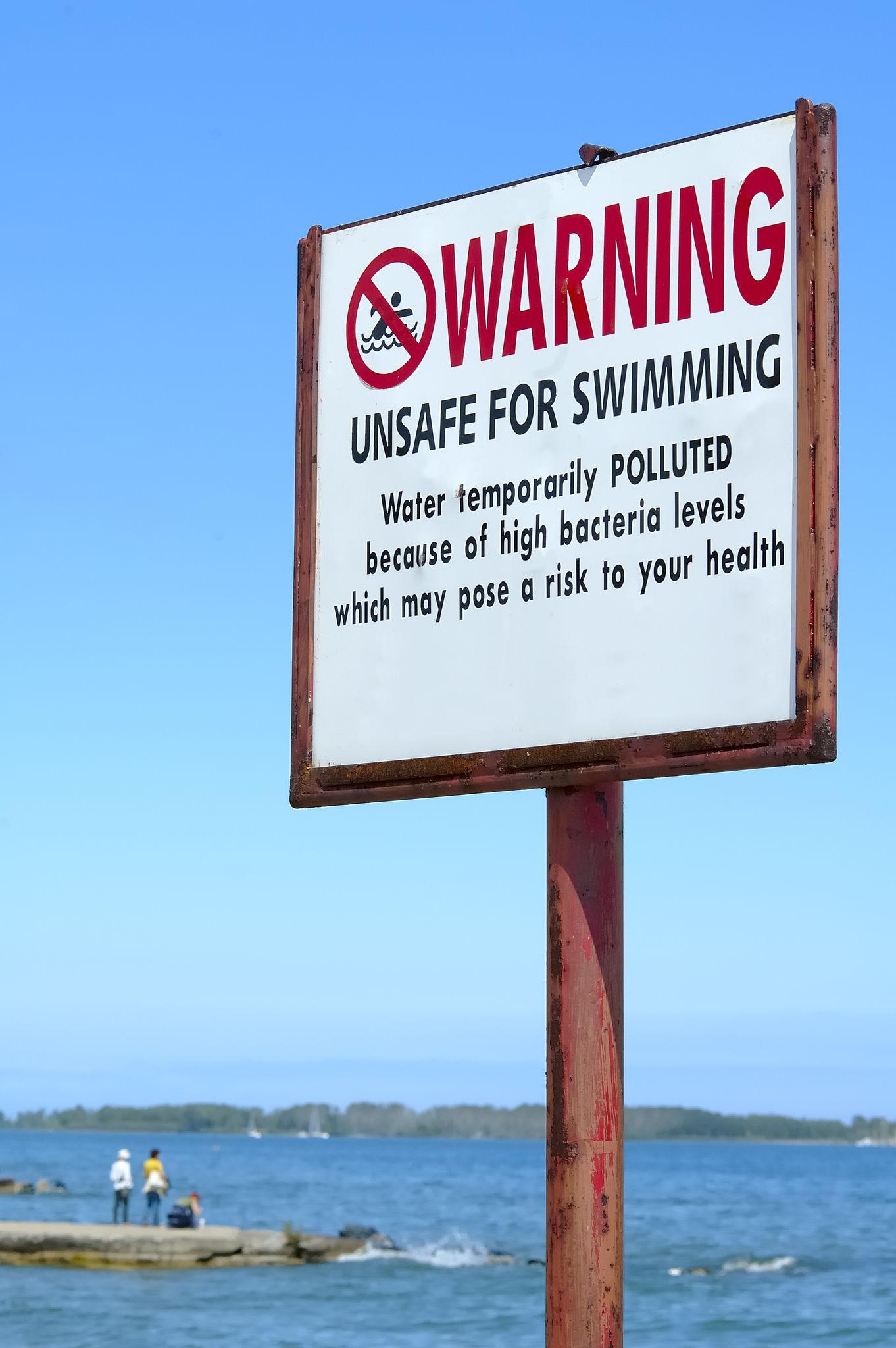
In the early mornings of the 1820s, before the city shook off its mud and mosquitoes, John Quincy Adams would stride down to the banks of Tiber Creek, peel off his clothes, and plunge into the water.


The sixth President of the United States believed in cold-water vigor. He swam nearly every day in Tiber Creek—a tributary that once flowed openly through Washington before it was buried beneath Constitution Avenue. The water was bracing, wild, and very much alive. Adams wrote about it in his diary. He reveled in it. Legend has it a persistent journalist once sat on his clothes to secure an interview.
Back then, Washington was raw, unfinished, and unsanitary in the most primitive sense. Human waste ran in privies, gutters, and open channels. The city stank in summer. Disease was common. But at least everyone knew what they were dealing with.
Fast forward two centuries.
For the past month, more than 245 million gallons of raw sewage have poured into the Potomac River after a break in a major sewer line. The volume is staggering—enough to fill hundreds of Olympic swimming pools. Unlike Adams’ Tiber Creek, today’s Potomac runs past a metropolitan region of millions. It feeds drinking water systems. It supports recreation, wildlife, tourism, and interstate commerce.

What’s new about sewage in Washington?
Scale. Density. And law.
This is not a frontier city improvising around chamber pots. It is a modern capital governed by the Environmental Protection Agency under the Clean Water Act. It is bordered by Maryland, whose environmental regulators have authority downstream. It is served by complex, aging infrastructure built for a smaller population and a different climate. And when something fails, the discharge is not anecdotal—it is quantifiable, litigable, and politically combustible.
Raw sewage is not merely unpleasant. It carries pathogens: E. coli, norovirus, hepatitis A, parasites. Exposure can lead to gastrointestinal illness, skin infections, respiratory issues, and in vulnerable populations, far more severe outcomes. Combined sewer overflows are not new to Washington, but 245 million gallons over a month elevates concern from nuisance to public health event.
And so the arguments begin.
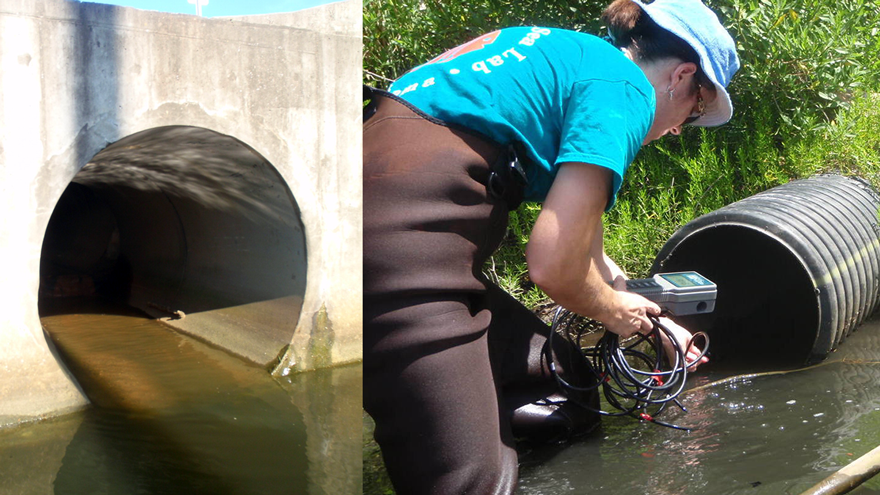
District officials point to infrastructure challenges and emergency responses. Maryland officials warn about downstream contamination, fisheries impacts, and beach closures. Each side invokes jurisdiction, funding responsibility, federal oversight. Lawyers parse consent decrees and permit conditions. Engineers measure flow rates and bacteria counts. Meanwhile, the river keeps moving, carrying what the city failed to contain.
Adams swam naked in Tiber Creek because the young republic had not yet imagined modern sanitation. Today, we possess the science, the statutes, and the budgets—yet still find ourselves debating responsibility while untreated waste moves through a national symbol. Not to worry, it could be fixed in 5 or 6 weeks and then finally done in 6 months. Nothing is ever fast in Washington – only about half-fast.
Perhaps what’s new is not the sewage itself. Cities have always struggled with it. What’s new is our expectation that we should have outgrown it—and our impatience when, two centuries later, the capital of the United States still cannot keep its waste out of the water.
