

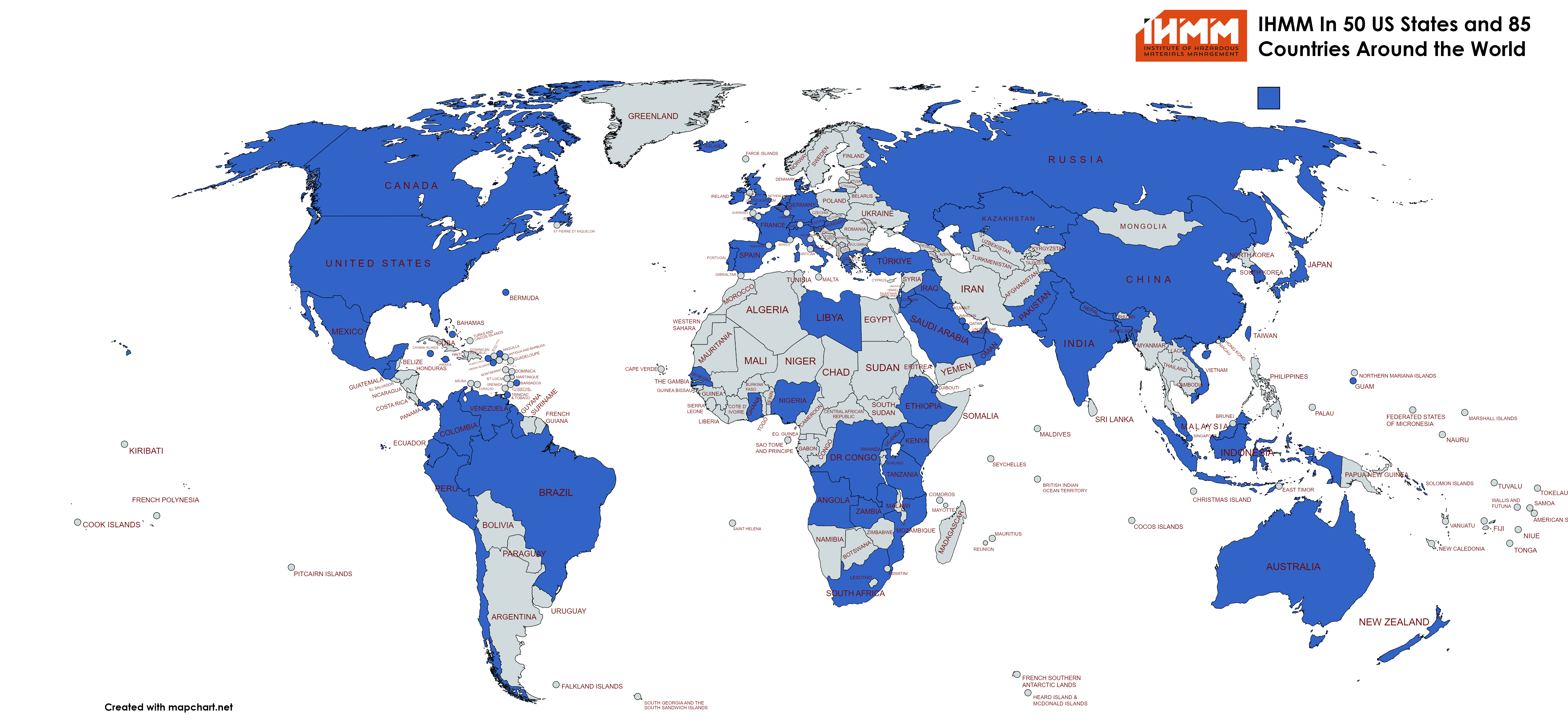
IHMM Global DG Transport Compliance Matrix (2025–2026)
IHMM Certificant Compliance Checklist
June 24-30, 2026
For the period of June 24–30, 2026, dangerous goods and hazardous materials transportation regulation across North America continued to evolve through administrative modernization, special-permit activity, incident-reporting obligations, fuel and LPG safety enforcement, and continued alignment with international dangerous-goods standards.
Because June 30 falls just after the preparation date of this report, developments for June 30 should be understood as scheduled, pending, or already-announced matters rather than completed regulatory action.
United States
PHMSA Registration, Special Permits, and Digital Modernization
In the United States, the Pipeline and Hazardous Materials Safety Administration continued moving hazardous-materials compliance toward more digital, data-driven administration. PHMSA’s 2026–2027 Hazardous Materials Registration cycle remains underway, with the agency emphasizing improvements intended to streamline registration, improve data quality, secure transactions, and support safer hazardous-materials transportation nationwide.
This matters legally because registration is not merely an administrative formality. Entities required to register under the Hazardous Materials Regulations must ensure timely registration, accurate business information, correct activity reporting, and retention of records demonstrating compliance.
PHMSA also continued processing hazardous-materials special permits. Special permits remain an important feature of the U.S. regulatory system because they allow alternative methods of transportation where the applicant demonstrates an equivalent level of safety. In practice, special-permit activity often previews emerging compliance issues involving new packaging systems, battery technologies, pressure vessels, and specialized transportation methods.
International Harmonization
PHMSA’s broader harmonization agenda also remains highly relevant. The pending HM-215R rulemaking continues to represent the principal U.S. effort to align the Hazardous Materials Regulations with updated international standards, including the UN Model Regulations, ICAO Technical Instructions, and the IMDG Code.
This continuing harmonization effort is particularly important for:
- Batteries and battery-powered equipment;
- Multimodal shipments;
- Air and vessel transportation limits;
- Packaging authorizations;
- Proper shipping names;
- Hazard classifications.
Important News and Risk Developments
Recent U.S. hazardous-materials incidents involving fuel spills, rail operations, and industrial chemical releases continue reinforcing the importance of emergency-response readiness and documentation accuracy.
The legal importance of these incidents is that hazardous-materials transportation risk is increasingly evaluated through an integrated lens that includes transportation safety, environmental protection, emergency response, worker safety, and public notification.
Canada
TDG Reporting Obligations and CANUTEC
Canada’s principal dangerous-goods development remains the heightened importance of incident reporting under the Transportation of Dangerous Goods Regulations.
Canadian law requires reporting of releases, anticipated releases, loss, theft, and other dangerous-goods incidents when specified regulatory thresholds or circumstances are met. CANUTEC remains central to Canada’s emergency-response system for dangerous-goods transportation incidents.
For Canadian consignors, carriers, consignees, and importers, this means that field-level personnel must understand when an event triggers immediate reporting obligations. A collision, release, theft, evacuation, road closure, rail closure, or building closure involving dangerous goods may create immediate legal duties.
Technical Standards and Means of Containment
Canada also continues to regulate dangerous-goods transportation through incorporated technical standards governing means of containment. Because Canada incorporates such standards by reference into the TDG Regulations, companies must monitor both regulatory text and referenced technical standards.
This is particularly important for:
- Portable tanks;
- Cylinders;
- Intermediate bulk containers;
- Packaging systems;
- Inspection and testing requirements.
Legal Significance
Canadian dangerous-goods compliance increasingly requires:
- Written incident-response procedures;
- CANUTEC notification protocols;
- Proof of classification;
- Current standards tracking;
- Means-of-containment inspection records;
- Emergency-response training.
Failure to report a qualifying event, or failure to maintain current technical compliance with incorporated standards, can create significant regulatory and civil liability.
Mexico
Dangerous Goods Standards Modernization
Mexico continues modernizing its hazardous-materials transportation framework through UN-aligned standards development.
The proposed PROY-NOM-011-SICT2/2025 remains significant because it would update Mexico’s rules governing dangerous goods transported in limited quantities. The proposed standard reflects the broader movement toward alignment with the UN Model Regulations while preserving national requirements for marking, packaging, quantity limits, and documentation.
LPG and Fuel Transportation Safety
Mexico’s most important continuing safety issue remains fuel and liquefied petroleum gas transportation. Following major LPG and fuel transportation incidents, Mexican authorities continue focusing on:
- Vehicle integrity;
- Tank inspection;
- Hydrostatic testing;
- Driver qualifications;
- Route controls;
- Speed restrictions;
- GPS monitoring;
- Emergency-response planning;
- Insurance and carrier authorization.
Important News Development
Recent tanker and fuel-related incidents in Mexico continue driving enforcement attention. These incidents have reinforced regulatory scrutiny of illegal fuel transport, misdeclared petroleum cargoes, unauthorized storage, and unsafe LPG movement.
Legal Significance
Mexico’s hazardous-materials transportation environment increasingly involves overlapping jurisdiction among transportation regulators, energy authorities, customs officials, environmental agencies, and law enforcement.
For carriers and shippers, particularly those handling petroleum products or LPG, compliance now requires more than proper placards and shipping papers. It requires documented proof of vehicle condition, driver competency, route authorization, cargo legality, and emergency-response capability.
Cross-Border Legal Themes
Several themes define the North American dangerous-goods regulatory environment during this period.
1. Digital Compliance Is Expanding
Regulators increasingly rely on digital systems for registration, reporting, monitoring, and enforcement.
2. Incident Reporting Is a Core Compliance Obligation
Immediate reporting of releases, anticipated releases, theft, loss, and qualifying accidents is increasingly central to dangerous-goods enforcement.
3. International Harmonization Continues
The United States, Canada, and Mexico remain tied to the broader international dangerous-goods system through the UN Model Regulations, ICAO Technical Instructions, IMDG Code, and related standards.
4. Fuel and LPG Transportation Remain High-Risk Priorities
Fuel, LPG, LNG, and petroleum products continue receiving heightened enforcement attention because of their consequences in rollover, explosion, fire, and illegal-diversion scenarios.
5. Documentation Integrity Is Now a Safety Issue
Accurate classification, proper shipping names, test records, emergency-response information, and chain-of-custody documentation are increasingly treated as core safety controls rather than paperwork formalities.
ConclusionFor the period of June 24–30, 2026, North American dangerous-goods transportation law continued moving toward greater digital oversight, stronger emergency reporting, international harmonization, and heightened scrutiny of fuel and LPG movement.
The United States remains focused on PHMSA registration modernization, special permits, and international harmonization. Canada continues emphasizing incident reporting, CANUTEC-centered response, and incorporated technical standards. Mexico remains focused on UN-aligned standards modernization and aggressive fuel and LPG transportation safety enforcement.
For regulated entities, the modern standard of care requires:
- Current hazardous-materials registration;
- Defensible classification decisions;
- Accurate shipping papers;
- Updated incident-reporting procedures;
- Current technical standards compliance;
- Verified tank and vehicle integrity;
- Strong driver qualification systems;
- Emergency-response readiness;
- Cross-border awareness of national differences.
Dangerous-goods compliance in North America is no longer a static regulatory exercise. It is a dynamic, operationally integrated system requiring technical accuracy, digital accountability, and proactive management of transportation risk.
Key source support: PHMSA’s Hazardous Matters update describes the 2026–2027 registration cycle and modernization of the hazmat registration program; PHMSA’s June special-permit notices show continuing special-permit activity; Canada’s TDG reporting guidance and legal updates support the CANUTEC and incident-reporting discussion; and Mexico’s UN-aligned hazardous-materials framework and LPG/fuel incident context support the Mexican section. (PHMSA)
Europe, Africa, Asia, and South America
For the period of June 24–30, 2026, the international regulation of dangerous goods and hazardous materials transportation continued to evolve through implementation, enforcement readiness, digital traceability, maritime risk management, and operational controls imposed by ports, carriers, and aviation authorities.
Because June 30 falls just beyond the preparation date of this report, references to June 30 are limited to scheduled or already-announced activity.
Europe
Europe remains centered on the continued implementation of ADR 2025 while preparing for the next amendment cycle. UNECE activity confirms that the next major dangerous-goods milestone is the 68th session of the ECOSOC Sub-Committee of Experts on the Transport of Dangerous Goods, scheduled for June 30–July 8, 2026. That meeting will help shape future amendments to the UN Model Regulations and, in turn, ADR, RID, ADN, IMDG, and ICAO Technical Instructions.
The European road-transport sector is also preparing for stronger ADR roadside inspection practices. Reports indicate new harmonized ADR roadside check rules beginning June 24, 2026, including more structured inspection checklists and revised infringement classifications. The practical legal consequence is that carriers should expect more consistent enforcement of documentation, placarding, training, equipment, and vehicle-compliance requirements.
Maritime dangerous goods also remained a major European concern. Industry reports this week highlighted that misdeclared and undeclared dangerous goods remain a persistent contributor to container-ship fires, with container fires occurring with troubling frequency. This reinforces a core legal point: misclassification is not paperwork error; it is a safety violation with consequences for seafarers, ports, cargo owners, insurers, and regulators.
Asia
Asia’s dangerous-goods environment continued to be dominated by lithium-ion and sodium-ion battery transportation. The 2026 IATA Dangerous Goods Regulations and ICAO Technical Instructions remain central to air-cargo compliance, particularly for state-of-charge limits, UN 38.3 test evidence, dangerous-goods declarations, packaging, and carrier approvals.
For Asian exporters, especially battery manufacturers and electronics shippers, the legal reality is increasingly clear: compliance with domestic law alone is insufficient. Airlines, ports, freight forwarders, and ocean carriers are enforcing operational requirements that function as practical conditions of market access.
Shipping batteries from China and other Asian manufacturing hubs increasingly requires complete documentation, including UN 38.3 test reports, safety data documentation, and dangerous-goods declarations. Failure to produce that evidence can result in shipment rejection, delays, penalties, or contractual liability.
Maritime routing and fuel-cargo risk also remained significant. Petroleum, LNG, and chemical shipments moving through Asian trade lanes continue to be affected by geopolitical instability, vessel availability, and port controls. Dangerous-goods compliance increasingly includes route-risk assessment and vessel suitability review.
Africa
Africa did not see a major continent-wide dangerous-goods statute adopted during this period, but practical enforcement continues expanding through ports, customs authorities, maritime administrations, and aviation regulators.
South Africa’s dangerous-goods framework continues to reflect the international model: dangerous goods are treated as substances and articles subject to transportation, workplace, storage, consumer, and environmental protection requirements to prevent harm to people, property, and the environment.
Across Africa, dangerous-goods compliance is increasingly determined by operational practice. Ports and carriers apply IMDG, ICAO, IATA, and UN-based requirements even where local legislation may be less frequently amended. Petroleum products, LNG, chemicals, and battery cargoes remain priority areas for inspection and emergency planning.
The legal significance is that African dangerous-goods compliance should not be measured solely by domestic statutory text. Operators must satisfy carrier requirements, port acceptance standards, customs procedures, and emergency-response expectations.
South America
South America continued moving toward stronger traceability and UN-aligned dangerous-goods oversight. Colombia remains a leading example. The Ministry of Transport’s RNDC system continues to serve as a digital regulatory platform for freight movement, including transport of dangerous goods.
Colombia’s 2026 RNDC changes are particularly significant because they expand the responsibilities of cargo generators and strengthen real-time data reporting, electronic cross-checking, and sanctions exposure. For dangerous goods, quantity reporting in gallons and kilograms continues to support stronger oversight of fuels and other hazardous cargoes.
Brazil and Argentina remain broadly tied to UN-style dangerous-goods principles. Brazil’s road transport rules for dangerous products are based on UN Model Regulation concepts and ADR-style architecture. Argentina continues to operate within MERCOSUR and UN-aligned dangerous-goods structures while maintaining transitional measures for certain dangerous-goods transport vehicles through 2026.
The regional trend is toward administrative enforcement, traceability, and data-driven oversight rather than sudden new treaty text.
Key Legal Themes
Several themes define the week.
First, international harmonization continues. ADR, RID, ADN, IMDG, ICAO, IATA, and the UN Model Regulations remain the core architecture of global dangerous-goods transportation law.
Second, misdeclared dangerous goods remain a central enforcement concern. Regulators and carriers increasingly treat inaccurate descriptions, incomplete documentation, and undeclared cargo as high-consequence safety failures.
Third, batteries remain the leading regulatory driver. Lithium-ion and sodium-ion batteries continue to shape air, sea, and road-transport compliance, particularly around state-of-charge controls, test documentation, packaging, and carrier approval.
Fourth, digital traceability is expanding. Colombia’s RNDC system illustrates how regulators are moving from paper-based enforcement toward real-time shipment data, cargo-generator responsibility, and digital compliance oversight.
Fifth, operational risk is now part of legal compliance. Route risk, vessel condition, port congestion, emergency-response readiness, and carrier acceptance standards are increasingly part of the modern standard of care.
Conclusion
For June 24–30, 2026, dangerous-goods and hazardous-materials transportation law across Europe, Africa, Asia, and South America continued moving toward operational accountability, harmonized enforcement, and digital traceability.
Europe is preparing for the next UN and ADR amendment cycle while strengthening roadside enforcement. Asia remains focused on battery and maritime compliance. Africa continues relying heavily on port, customs, aviation, and carrier enforcement. South America is expanding digital oversight and traceability systems.
For regulated entities, compliance now requires more than correct UN numbers and placards. It requires defensible classification, accurate documentation, battery test evidence, current training, route-risk assessment, emergency-response readiness, and integration of carrier and port requirements into the compliance system.
Source support: UNECE lists the 68th ECOSOC Sub-Committee session for June 30–July 8, 2026; IATA identifies its DGR as the global air DG reference and explains its role in classification, packing, marking, labeling, and documentation; IATA also states batteries are dangerous goods requiring shipper, handler, airline, and passenger guidance; Colombia’s RNDC portal identifies dangerous-goods transport as a dedicated category; and Colombia’s 2026 RNDC changes were updated through Resolution 20263040016075.

Leave A Comment