

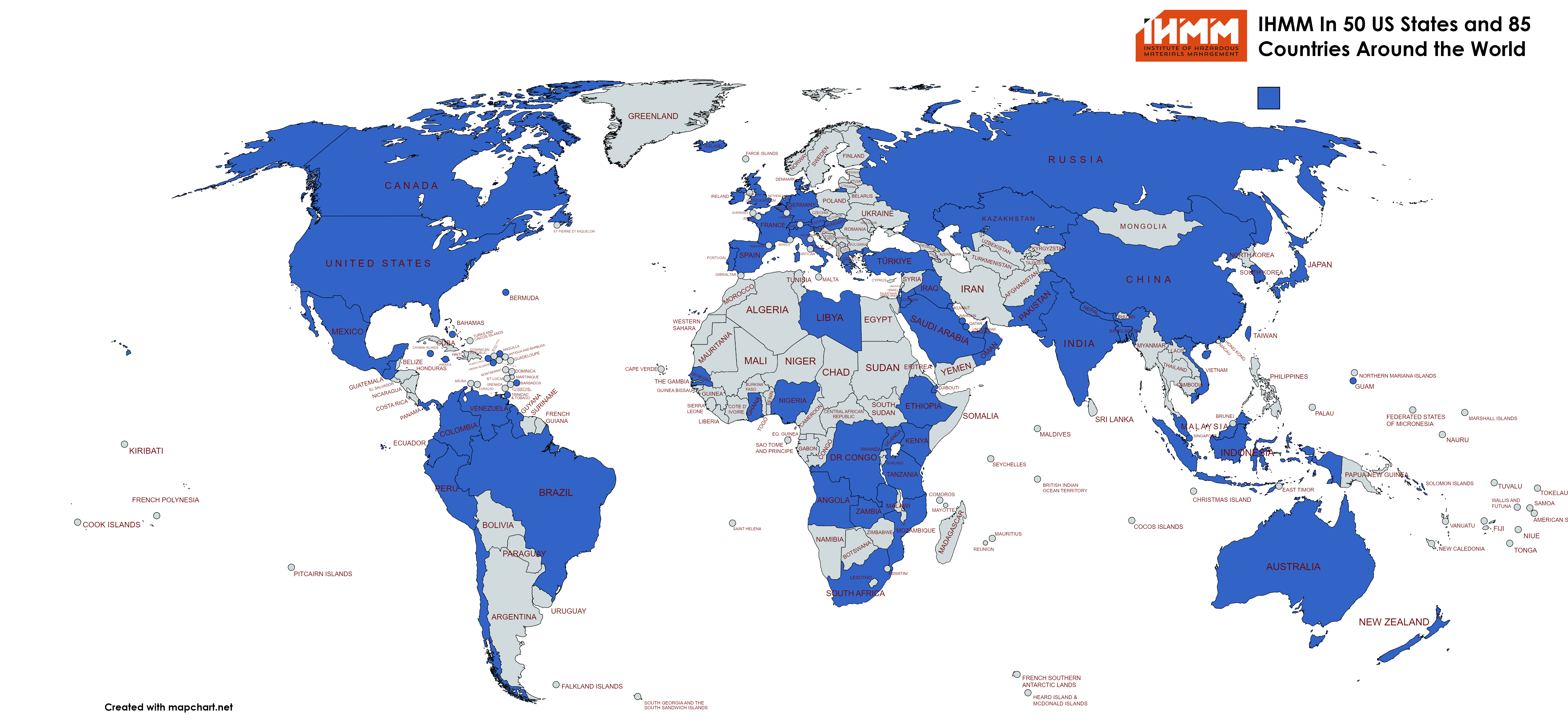
IHMM Global DG Transport Compliance Matrix (2025–2026)
IHMM Certificant Compliance Checklist
April 28–May 4, 2026
For the week of April 28–May 4, 2026, North American hazardous-materials regulation was driven by PHMSA interpretation activity, Canadian TDG modernization, and Mexico’s continued post-incident tightening of LP gas and limited-quantity transport rules.
United States
The most concrete U.S. development was PHMSA’s April 28, 2026 interpretation letter, Ref. No. 26-0019, addressing shipping-paper obligations under 49 C.F.R. Parts 171–180. PHMSA’s interpretation activity matters because shipping papers remain the legal foundation for classification, hazard communication, emergency response, and enforcement. During the same period, PHMSA’s pending interpretations page reflected the agency’s newer public-facing process for regulatory interpretation requests, following its April procedural changes.
PHMSA’s larger regulatory posture also remained important. The HM-215R harmonization NPRM—proposing alignment with international standards for shipping names, hazard classes, packing groups, special provisions, packaging, air limits, and vessel stowage—remained the central pending hazardous-materials rulemaking after the April comment deadline. PHMSA also had an open modernization ANPRM concerning hazardous materials associated with spacecraft payloads and components, with comments due April 29, 2026.
Two U.S. news events underscored the stakes. On April 27, a jet-fuel spill at Oakland Airport reportedly released roughly 200–250 gallons onto the tarmac, with some fuel entering a storm drain before containment actions. On April 29, a fatal liquid tar/asphalt release at a South Houston industrial facility required hazmat response and investigation.
Canada
Canada’s developments were less dramatic but legally significant. Transport Canada’s 2026–2027 Departmental Plan states that the government will continue implementing safe TDG initiatives and keep the TDG Regulations aligned with international requirements. Its Forward Regulatory Plan also describes upcoming amendments involving dangerous-goods marks, classification information, shipping names, packing requirements, special provisions, and air-transport requirements.
Canada’s enforcement model is also increasingly risk-based. Transport Canada’s oversight description notes that TDG road oversight moved into Multimodal and Road Safety Programs as of April 1, 2025, with regional inspectors and risk-based inspection scheduling for dangerous-goods sites and means-of-containment facilities.
A continuing incident story in Canada involved a New Brunswick fuel tanker rollover, with fuel reaching a tributary before containment. For counsel, that is a reminder that TDG compliance must be integrated with spill-response, environmental reporting, and post-incident remediation obligations.
Mexico
Mexico remained in a dual track of standards modernization and fuel/LPG enforcement. The proposed PROY-NOM-011-SICT2/2025 would set safety standards for dangerous goods in limited quantities, including packaging and marking controls aligned with UN-style concepts.
The week’s most notable Mexican development was reported movement by ASEA toward PROY-NOM-029, intended to strengthen LP gas transport safety after Mexico’s 2025 tanker catastrophe. Reported themes include tighter LP gas vehicle, driver, inspection, and safety controls.
Conclusion
The week confirms the North American trend: dangerous-goods law is moving toward international harmonization, defensible documentation, risk-based inspections, and tighter fuel and battery controls. For shippers and carriers, the standard of care now requires not only correct placards and UN numbers, but also reliable shipping papers, classification proof, containment integrity, emergency-response readiness, and cross-border awareness.
Europe
In Europe, ADR 2025 remains the controlling road-transport framework, but the most important development this week is procedural: the 119th session of UNECE’s Working Party on the Transport of Dangerous Goods (WP.15) opens in Geneva on May 5, 2026, immediately after this reporting period. UNECE’s event notice confirms the session, and the published documents show proposals for amendments to ADR, including work on the transport of dangerous goods using vehicles or equipment and continuing agenda items for the 2027 cycle.
The legal significance is that Europe is now in a pre-amendment formation phase: ADR 2025 governs today, but the documents going into WP.15 are the raw material for ADR 2027 and later. Counsel for shippers, carriers, tank operators, and training bodies should monitor the May session closely, particularly where amendments may affect vehicles, tanks, BLEVE-related safety measures, documentation, and driver/operator obligations.
Maritime dangerous-goods compliance also remained central. The IMDG Code remains mandatory under SOLAS for packaged dangerous goods, and 2026 operations are now under Amendment 42-24, including stricter treatment of batteries, battery-powered vehicles, charcoal/carbon cargoes, and certain new UN numbers.
Asia
Asia did not see a single dominant new domestic dangerous-goods statute during this period, but the practical compliance baseline continued to tighten through air and maritime implementation. China’s civil aviation authority has recently implemented a standard for the air transport of large lithium batteries, including testing conditions, thermal safety tests, package tests, and test reports. That is especially important because China is both a major producer and shipper of lithium batteries and battery-powered equipment.
The broader Asian compliance environment is also being shaped by the 2026 air and maritime dangerous-goods regimes. The 2026 IATA DGR changes took effect January 1, 2026, and compliance sources continue to emphasize lithium-battery state-of-charge controls, classification, packaging, and carrier approvals.
For counsel, the key point is that carrier acceptance standards now operate as practical law. Even if a jurisdiction has not published a new national rule this week, a shipment can be delayed, rejected, or penalized commercially if battery evidence, packaging, or documentation does not satisfy ICAO/IATA, IMDG, or carrier-specific requirements.
Africa
Africa saw no major continent-wide dangerous-goods enactment during the week, but the practical regulatory environment continued to converge around UN and IMDG-based standards. Many African jurisdictions rely on national transport, customs, aviation, and port rules that incorporate or apply UN-style dangerous-goods classification, marking, packaging, and documentation.
The most important African compliance development remains practice-driven: ports and customs authorities are increasingly using IMDG and UN-based acceptance criteria for hazardous cargo, especially where batteries, fuels, chemicals, or waste are involved. This mirrors the global shift away from mere paperwork review toward risk-based acceptance, segregation, emergency-response readiness, and carrier/port discretion.
The legal conclusion is that African hazardous-cargo compliance increasingly depends on operational enforceability, not just formal enactments. A shipper may satisfy a local statute yet still face rejection if documentation, classification, packaging, or emergency-response information does not meet the prevailing IMDG/UN standard.
South America
South America’s most concrete development during this period was administrative implementation, especially in Colombia. Colombia’s logistics portal posted an April 27, 2026 RNDC training notice for cargo generators, tied to freight-value registration under Decree 1017 of 2025 and Resolution No. 20243040058015. The portal also continues to identify dangerous-goods transport as a dedicated compliance category.
Colombia’s RNDC statistics pages further state that, beginning in June 2025, registration of transported quantities in gallons became mandatory for dangerous goods, while all records must also specify kilograms. That is a legally meaningful traceability measure: it gives regulators a stronger data basis for oversight of fuel, chemical, and other hazardous cargo movements.
Argentina remained in a compliance-maintenance posture. Resolution 82/2025 extended until December 31, 2026 the continued operation of certain 2013–2015 vehicles used to transport dangerous substances, provided they had approved dangerous-goods roadworthiness review by December 31, 2025. That measure preserves transport capacity while keeping the safety-condition hook in place.
Conclusion
For April 27–May 4, 2026, the global dangerous-goods picture is one of implementation and tightening, not wholesale rewriting. Europe is preparing for the next ADR amendment cycle through WP.15; Asia is enforcing tougher battery and multimodal standards through aviation and maritime systems; Africa is converging through port, customs, and carrier practice; and South America is strengthening traceability through data systems and national implementation.
For regulated entities, the standard of care now requires more than correct UN numbers and placards. It requires version-controlled regulatory tracking, defensible classification, battery test evidence, carrier-acceptance readiness, dangerous-goods vehicle integrity, and data-reporting compliance across every leg of the shipment.
