

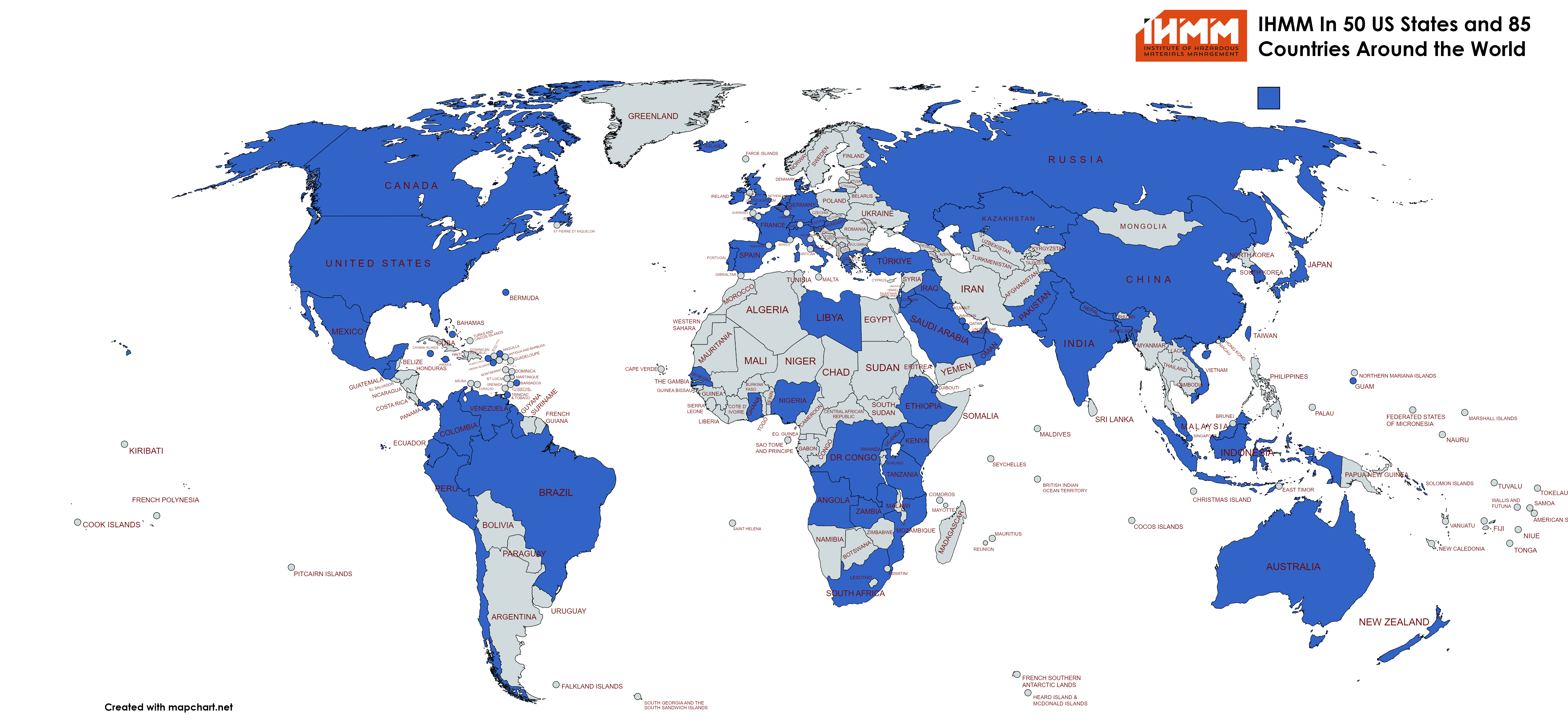
IHMM Global DG Transport Compliance Matrix (2025–2026)
IHMM Certificant Compliance Checklist
June 3–8, 2026
For the period June 3–8, 2026, North American dangerous-goods and hazardous-materials transportation law continued moving through implementation, technical clarification, registration, emergency-reporting, and post-incident enforcement rather than through a single sweeping new statute. The principal legal developments were: PHMSA’s ongoing special-permit and harmonization dockets; the opening of the U.S. 2026–2027 hazmat registration year; Canada’s strengthened emergency-reporting requirements; and Mexico’s continued modernization of limited-quantity and LPG/fuel transportation controls.
United States
In the United States, PHMSA’s 2026–2027 hazardous-materials registration year opened June 1, 2026, making this reporting period important for regulated offerors and carriers required to register under the HMR. PHMSA’s registration page advises that early registration for 2026–2027 opened on June 1 and urges registrants to plan accordingly.
PHMSA’s May special-permit notices also remained active, with comments due June 11, 2026 on new applications and actions. Special permits remain legally important because they often reveal where the agency is allowing controlled alternatives to the HMR—particularly for novel packaging, batteries, pressure vessels, and specialized carriage methods.
PHMSA’s HM-215R harmonization NPRM remains the central pending U.S. rulemaking, proposing alignment with international standards for proper shipping names, hazard classes, packing groups, packaging authorizations, air quantity limits, and vessel stowage. PHMSA’s international program also lists the 68th session of the UN Sub-Committee of Experts on the Transport of Dangerous Goods for June 30–July 8, 2026, making this period part of the lead-up to the next UN amendment cycle.
Important U.S. news also reinforced the stakes. A fatal Iowa rail-crossing collision on June 3 derailed locomotives and cars, though authorities reported no hazardous-materials spill. Separately, Route 23 in New York reopened after a fatal gasoline tanker crash that spilled thousands of gallons of gasoline and required extensive remediation. These events underscore that hazmat transport risk includes not only releases, but also routing, rail-crossing safety, emergency response, cleanup, and infrastructure restoration.
Canada
Canada’s most important development was the implementation of new emergency-reporting requirements for incidents involving dangerous goods. Legal commentary on the June 3 amendments states that shippers must immediately file an emergency report with local authorities if dangerous goods are lost, stolen, or involved in a collision; additional reporting is required to the consignor and CANUTEC if there is injury, death, evacuation, or road, rail, or building closure.
Canada’s TDG framework also continues to rely heavily on technical standards. Transport Canada explains that the TDG Program develops safety standards and regulations, provides risk-based oversight, and supports international collaboration. The department also identifies CANUTEC as Canada’s 24-hour emergency center for dangerous-goods incidents and notes the availability of electronic shipping documents through equivalency certificates.
The close of the CSA B625 consultation remains relevant to this period as Transport Canada considers updates to the standard governing portable tanks used to transport dangerous goods. Because sections 5.10 and 5.14 of the TDG Regulations permit use of means of containment meeting CSA B625 for Classes 2, 3, 4, 5, 6.1, 8, or 9 by road, rail, or ship, any updated edition may have direct legal consequences once incorporated.
Mexico
Mexico remains in a standards-modernization and enforcement phase. The principal standards item continues to be PROY-NOM-011-SICT2/2025, the proposed safety standard for transporting dangerous goods in limited quantities. The proposal would allow certain limited-quantity dangerous goods to move under relaxed requirements while maintaining safety, and it is expressly framed as aligned with the UN Model Regulations.
Mexico’s broader legal baseline remains UN-aligned. PHMSA’s Mexico guidance states that Mexico’s regulation for land transport of hazardous materials and wastes is based on the UN Recommendations and is supported by numerous NOMs, with additional standards still being developed by SICT.
The important news story during this period was a June 4 gas tanker explosion in Tepeaca, Puebla, reportedly involving suspected stolen fuel and triggering mass evacuations of homes, schools, and hospitals. While facts remain subject to investigation, the incident reinforces why Mexico’s hazardous-cargo enforcement has increasingly focused on fuel theft, misdeclared petroleum cargo, LPG vehicle controls, driver competency, GPS/speed monitoring, and joint inspections.
Conclusion
For June 3–8, 2026, the North American legal trend is clear. In the United States, registration, special permits, and harmonization rulemaking remain the principal federal drivers. In Canada, emergency reporting and incorporated technical standards are becoming central compliance tools. In Mexico, limited-quantity modernization and fuel/LPG enforcement continue to define the regulatory landscape.
For regulated entities, the operative standard of care now requires current registration, defensible classification, accurate shipping papers, immediate incident reporting, tank and containment integrity, emergency-response readiness, and strong controls over fuel, LPG, batteries, and other high-consequence hazardous materials.
Europe, Africa, Asia, and South America
For the period June 3–8, 2026, the international regulation of dangerous goods and hazardous materials transportation continued to evolve through a combination of ADR implementation activity, UNECE treaty administration, battery transportation controls, maritime fuel-security concerns, and expanding digital traceability systems. While no major treaty amendment entered into force during this reporting period, regulators, carriers, ports, and aviation authorities continued tightening operational expectations surrounding hazardous cargoes, particularly those involving batteries, fuels, chemicals, and energy products.
The overarching trend remains clear: dangerous-goods compliance is increasingly defined not only by regulatory text, but by documentation integrity, operational risk management, carrier acceptance standards, emergency preparedness, and digital oversight.
Europe
ADR 2025 Implementation and ADR 2027 Development Continue
Europe remains focused on implementing ADR 2025 while simultaneously advancing work toward ADR 2027 under the auspices of the United Nations Economic Commission for Europe (UNECE).
Following the May meeting of WP.15, technical work continues on issues including:
- Batteries installed in vehicles,
- Alternative-fuel vehicles,
- Electric vehicle transportation,
- Tank requirements,
- Documentation harmonization,
- Clarification of exemptions and operational provisions.
Legal Significance
For dangerous-goods practitioners, the significance lies in the continued migration of ADR from a framework focused primarily on traditional hazardous materials toward one increasingly addressing:
- Battery technologies,
- Energy-storage systems,
- Electrified transportation,
- Emerging mobility sectors.
Companies operating across Europe should expect continuing regulatory refinement in these areas through the ADR 2027 cycle.
Maritime Dangerous Goods and Energy Security
European maritime authorities continue closely monitoring:
- LNG cargoes,
- Petroleum shipments,
- Tanker integrity,
- Fuel-supply resilience,
- Port-state controls.
Several European shipping and energy authorities have continued emphasizing contingency planning and cargo-risk assessment as global fuel markets remain vulnerable to geopolitical disruptions.
Legal Significance
The practical compliance environment increasingly requires operators to consider:
- Route risk,
- Vessel condition,
- Cargo security,
- Environmental consequences of release.
Dangerous goods compliance is becoming more integrated with maritime safety and environmental protection frameworks than at any point in recent years.
Asia
Battery Transportation Continues to Dominate Regulatory Attention
Asia remains the focal point of global battery manufacturing and export activity.
During this reporting period, airlines, ports, and maritime operators continued applying:
- ICAO Technical Instructions,
- IATA Dangerous Goods Regulations,
- IMDG Code Amendment 42-24,
to lithium-ion batteries, sodium-ion batteries, and battery-powered equipment.
Key compliance concerns remain:
- State-of-charge restrictions,
- Thermal runaway prevention,
- Test-summary documentation,
- Packaging requirements,
- Segregation controls.
Legal Significance
The practical legal reality is that carrier acceptance standards increasingly function as enforceable compliance requirements.
A shipment may comply with local regulations yet still face rejection because:
- Battery testing documentation is incomplete;
- Packaging does not meet carrier standards;
- State-of-charge requirements cannot be demonstrated.
For exporters, operational compliance and regulatory compliance are becoming inseparable.
Maritime Trade and Fuel Routing
Asian shipping markets continue adapting to altered global fuel flows and tanker deployment patterns.
This has resulted in continued scrutiny of:
- Fuel-cargo documentation,
- Vessel suitability,
- Tanker inspections,
- Hazardous-cargo routing decisions.
Legal Significance
Companies moving dangerous goods through Asian supply chains increasingly require:
- Route-risk analysis,
- Vessel-risk assessment,
- Enhanced contingency planning,
- Multimodal compliance management.
Africa
Dangerous Goods Oversight Continues Through Operational Enforcement
Africa did not experience a major new dangerous-goods legislative initiative during this reporting period.
However, compliance continues to evolve through:
- Port authority practices,
- Customs inspections,
- Maritime enforcement,
- Aviation dangerous-goods controls.
Many African jurisdictions continue applying:
- UN Model Regulations,
- IMDG Code requirements,
- ICAO/IATA dangerous-goods standards,
through administrative and operational mechanisms.
Legal Significance
Across much of Africa, dangerous-goods compliance increasingly depends upon satisfying:
- Carrier requirements,
- Port acceptance standards,
- Aviation restrictions,
- Customs procedures,
rather than solely complying with domestic legislation.
This reflects a broader international trend toward operational enforcement.
Fuel and Chemical Cargo Oversight
African ports continue handling increasing volumes of:
- Petroleum products,
- LNG cargoes,
- Industrial chemicals,
- Dangerous-goods transshipments.
As a result, regulators continue strengthening oversight of:
- Cargo declarations,
- Vessel inspections,
- Emergency-response capabilities,
- Environmental protection measures.
Legal Significance
Hazardous-materials transportation compliance increasingly incorporates:
- Security planning,
- Spill-response readiness,
- Route-risk management.
South America
Colombia Expands Digital Dangerous Goods Oversight
South America’s most notable regulatory development continues to be Colombia’s expanding use of the RNDC (Registro Nacional de Despachos de Carga) system.
Authorities continue emphasizing:
- Dangerous-goods shipment registration,
- Freight traceability,
- Cargo-generator oversight,
- Quantity reporting,
- Operator training.
Mandatory dangerous-goods reporting remains required in:
- Gallons,
- Kilograms.
Legal Significance
This reflects one of the most sophisticated dangerous-goods oversight trends in the region.
Regulators increasingly rely on:
- Electronic reporting,
- Data analytics,
- Shipment traceability,
- Digital compliance monitoring.
The future of dangerous-goods enforcement in South America appears increasingly data-driven.
Argentina Maintains Transitional Compliance Measures
Argentina continues implementing previously adopted measures permitting certain older dangerous-goods transport vehicles to remain in service through 2026, subject to:
- Inspection requirements,
- Roadworthiness certification,
- Dangerous-goods transport approvals.
Legal Significance
This approach reflects an effort to balance:
- Safety,
- Economic realities,
- Fleet modernization constraints.
Argentina continues maintaining broad alignment with UN-style dangerous-goods principles while allowing measured implementation flexibility.
Important International News Stories
Battery Fire Risks Continue Receiving Global Attention
Across Europe and Asia, regulators and carriers continue responding to growing concerns involving:
- Lithium-battery fires,
- Energy-storage system incidents,
- Battery-powered cargoes.
Although no major new regulatory text was issued during this reporting period, carrier policies continue tightening and are increasingly influencing practical compliance obligations.
Maritime Hazardous Cargo Security
Global shipping markets remain attentive to:
- Tanker integrity,
- Fuel transportation routes,
- LNG shipment security,
- Port-state controls.
These issues continue to affect dangerous-goods transportation decisions throughout Europe, Asia, and Africa.
Cross-Regional Themes
Several common themes emerged during this reporting period.
1. ADR and UNECE Continue Driving International Harmonization
ADR, RID, IMDG, ICAO, and UN Model Regulations remain the dominant frameworks guiding dangerous-goods transportation globally.
2. Batteries Remain the Leading Regulatory Driver
Lithium-ion and sodium-ion batteries continue driving:
- Enforcement activity,
- Carrier restrictions,
- Regulatory development,
- Safety investigations.
3. Operational Risk Has Become a Compliance Obligation
Authorities increasingly expect operators to evaluate:
- Route risks,
- Vessel suitability,
- Supply-chain disruptions,
- Emergency-response capabilities.
4. Digital Traceability Continues Expanding
Particularly in South America, dangerous-goods oversight increasingly depends on:
- Electronic reporting,
- Cargo databases,
- Shipment tracking,
- Data analytics.
5. Carrier and Port Requirements Are Becoming Regulatory Equivalents
Across all regions:
- Airlines,
- Ports,
- Shipping lines,
- Customs authorities
continue imposing operational standards that frequently exceed minimum statutory requirements.
Conclusion
For the period June 3–8, 2026, international dangerous-goods and hazardous-materials transportation law continued evolving through implementation, operational refinement, and risk-based oversight rather than major legislative change.
Europe remains focused on ADR implementation and future amendment development; Asia continues tightening battery and maritime transportation controls; Africa increasingly relies on operational enforcement through ports and carriers; and South America continues expanding sophisticated digital traceability systems.
For regulated entities, the modern standard of care requires:
- Continuous monitoring of ADR, IMDG, ICAO, and UN developments;
- Defensible dangerous-goods classification systems;
- Battery testing and documentation controls;
- Route-risk and vessel-integrity assessments;
- Digital traceability compliance;
- Integration of carrier and port requirements into hazardous-materials compliance programs.
The legal landscape increasingly rewards organizations that treat dangerous-goods transportation not merely as a regulatory obligation, but as a comprehensive system of operational risk management, technical accountability, and supply-chain governance.

Leave A Comment