

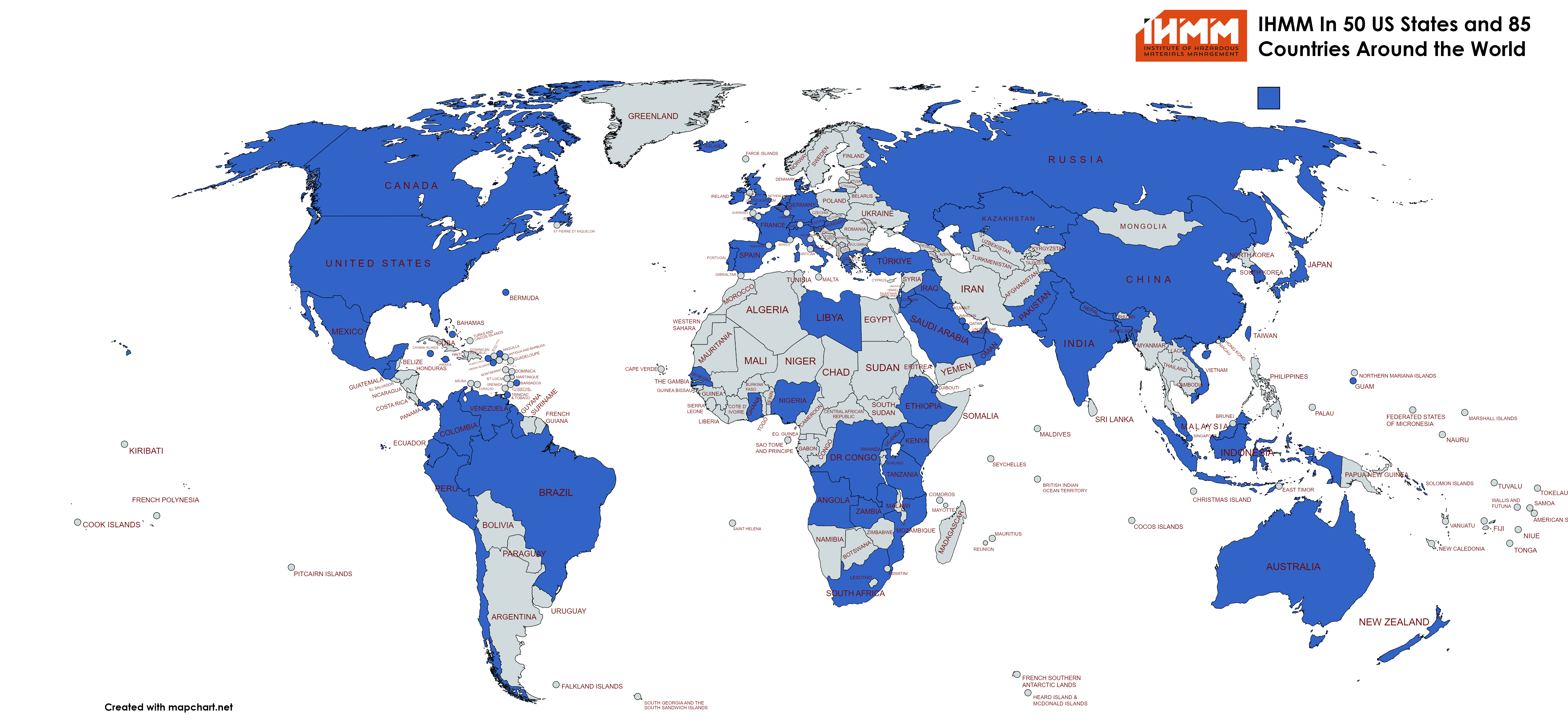
IHMM Global DG Transport Compliance Matrix (2025–2026)
IHMM Certificant Compliance Checklist
For the period May 26–June 2, 2026, North American dangerous-goods and hazardous-materials transportation law continued to develop through technical corrections, standards consultations, special-permit activity, limited-quantity modernization, and post-incident fuel/LPG safety enforcement. Because today is June 1, 2026, developments for June 2 are necessarily limited to announced or already-published items.
United States
In the United States, PHMSA’s most current federal action during this period came through the pipeline-safety side of hazardous-materials transportation. On May 29, 2026, PHMSA issued a technical correction to its January 2026 Class Location Change Requirements final rule, clarifying how the 24-month deadline applies when operators use the integrity-management alternative to restore maximum allowable operating pressure on eligible gas transmission pipeline segments. Although this is not a package-shipping rule under 49 C.F.R. Parts 171–180, it is materially relevant to hazardous-materials transportation because pipeline integrity and pressure restoration directly affect the safe movement of energy products.
PHMSA’s broader hazmat docket also remained active. Its May notices on new special permits, modifications to special permits, and actions on special permits continue to shape the practical law of hazardous-materials carriage by allowing regulated parties to seek authorization for methods that deviate from the HMR where an equivalent level of safety can be demonstrated. The May 12 special-permit notices remain open with a June 11, 2026 comment deadline, making the period covered here part of an active public-review window.
PHMSA’s major harmonization proposal, HM-215R, also remains the central pending U.S. HMR rulemaking. That NPRM proposes to align the HMR with international standards on proper shipping names, hazard classes, packing groups, special provisions, packaging authorizations, air quantity limits, and vessel stowage.
A significant U.S. news event during this broader period was the late-May Southern California hazardous-materials emergency involving a chemical tank at an aerospace facility, which prompted large-scale evacuations due to explosion or tank-failure concerns. Such events reinforce why hazardous-materials compliance now must integrate transportation, storage, emergency response, evacuation planning, and environmental protection.
Canada
Canada’s key development was the close of Transport Canada’s 60-day consultation on the new edition of CSA B625 on May 26, 2026. CSA B625 governs portable tanks for the transport of dangerous goods, including UN portable tank design, manufacture, modification, selection, use, inspection, testing, and repair. Because the TDG Regulations incorporate such standards by reference, this consultation is more than a technical exercise: once finalized and incorporated, the revised standard can become legally binding for Canadian dangerous-goods operations.
Canada’s regulatory model therefore continues to impose a special compliance burden. A regulated entity must monitor not only amendments to the Transportation of Dangerous Goods Regulations, but also the technical standards incorporated into them. CSA commentary notes that the draft B625 update affects UN portable tanks and that CSA will issue a formal notice identifying when the updated version takes effect after the review process concludes.
The continuing practical safety context in Canada includes transportation incidents involving fuel releases. Canadian reporting in May discussed a Transportation Safety Board finding after a B.C. train collision in which no dangerous goods were released from tank cars, but approximately 8,000 litres of diesel fuel were released from the damaged lead locomotive’s fuel tank. That distinction is important legally: even where the dangerous-goods cargo itself remains contained, fuel releases from motive equipment may still trigger environmental, emergency-response, and transportation-safety consequences.
Mexico
Mexico continued moving on two fronts: limited-quantity modernization and LPG/fuel transport safety.
The principal standards item remains PROY-NOM-011-SICT2/2025, Mexico’s proposed standard for the transportation of dangerous goods in limited quantities. The proposal is intended to establish clearer safety and labeling requirements and align Mexican limited-quantity practice with international dangerous-goods concepts.
Mexico’s broader hazardous-materials system remains substantially aligned with the UN architecture. PHMSA’s Mexico guidance explains that Mexican land-transport rules for hazardous materials and wastes and the U.S. HMR are both based on the UN Recommendations, while noting that Mexico has published numerous supporting NOMs and continues developing additional standards.
The most important Mexican safety-policy development remains the post-incident focus on LPG transportation. ASEA has been preparing PROY-NOM-029 to strengthen LP gas transport safety rules after the 2025 Mexico City tanker disaster, with attention to vehicle condition, driver qualifications, inspection, route controls, speed/GPS monitoring, and other operational safeguards.
Conclusion
For May 26–June 2, 2026, North American dangerous-goods regulation is moving through implementation and technical refinement, not sweeping new enactment. In the United States, PHMSA is refining pipeline-safety obligations while special-permit and harmonization dockets remain active. In Canada, the close of the CSA B625 consultation is legally important because incorporated standards can become binding TDG requirements. In Mexico, limited-quantity reform and LPG safety measures continue to tighten the hazardous-cargo framework.
For practitioners, the operative standard of care now requires defensible classification, current incorporated standards, accurate shipping papers, tank and containment integrity, driver and operator competence, and emergency-response readiness, especially for fuels, LPG, batteries, and other high-consequence hazardous materials.
Europe, Africa, Asia, and South America
For the period May 26–June 2, 2026, the international regulation of dangerous goods and hazardous materials transportation continued to evolve through UNECE treaty administration, ADR implementation, maritime dangerous-goods enforcement, battery transportation controls, and expanding digital traceability requirements. While no single transformative treaty amendment entered into force during this reporting period, regulators and industry stakeholders across Europe, Africa, Asia, and South America continued advancing a common objective: strengthening the safe movement of hazardous cargo through improved documentation, operational controls, battery management, and risk-based oversight.
Europe
ADR 2027 Development Continues Following WP.15 Session
The most significant European regulatory activity during this period remains the continuing implementation of decisions and technical discussions emerging from the 119th session of the UNECE Working Party on the Transport of Dangerous Goods (WP.15) held in Geneva earlier in May.
The United Nations Economic Commission for Europe (UNECE) continues advancing work toward the next amendment cycle for:
- ADR (road transport),
- RID (rail transport), and
- ADN (inland waterways).
Among the principal issues under consideration are:
- Batteries installed in vehicles,
- Electric and alternative-fuel vehicles,
- Tank requirements,
- Documentation harmonization,
- Clarification of exemptions,
- Emergency-response provisions.
Legal Significance
Europe is now firmly in the development phase for ADR 2027.
Although ADR 2025 remains the controlling legal framework, operators should anticipate future revisions involving:
- Electric vehicles,
- Battery-powered equipment,
- Energy storage systems,
- Multimodal consistency requirements.
Companies operating internationally would be well advised to begin evaluating potential impacts now rather than waiting for formal adoption.
Maritime Dangerous Goods and Energy Security
Europe also continues experiencing significant pressure from global energy-market disruptions and hazardous-cargo shipping risks.
Maritime regulators remain focused on:
- Tanker safety,
- LNG cargo transportation,
- Petroleum product routing,
- Port-state controls,
- Emergency-response readiness.
Legal Significance
European dangerous-goods enforcement increasingly reflects a broader policy framework that incorporates:
- Environmental protection,
- Maritime security,
- Energy resilience,
- Supply-chain risk management.
As a result, vessel condition and route-risk assessment are becoming increasingly relevant compliance considerations alongside traditional IMDG Code obligations.
Asia
Battery Transportation Remains the Dominant Regulatory Issue
Asia continues to serve as the world’s largest manufacturing and export center for lithium-ion batteries, sodium-ion batteries, and battery-powered equipment.
During this reporting period, the practical compliance environment remained heavily influenced by:
- ICAO Technical Instructions,
- IATA Dangerous Goods Regulations,
- IMDG Code Amendment 42-24.
Key operational concerns include:
- State-of-charge limitations,
- Thermal runaway prevention,
- Test-summary documentation,
- Packaging requirements,
- Overpack segregation controls.
Legal Significance
Carrier acceptance standards increasingly function as the practical equivalent of regulation.
For Asian exporters:
- Compliance with domestic law alone is no longer sufficient;
- Airlines, ports, and shipping lines increasingly impose stricter requirements than local regulations;
- Battery shipments lacking proper test documentation remain vulnerable to rejection.
Maritime Fuel Logistics
Asian fuel markets continued adjusting to disruptions in traditional petroleum and LNG supply chains.
This has produced increased focus on:
- Tanker availability,
- Alternate routing,
- Fuel cargo documentation,
- Port congestion management.
Legal Significance
Hazardous-materials transportation compliance increasingly requires:
- Route-risk assessment,
- Cargo integrity verification,
- Vessel suitability review,
- Enhanced contingency planning.
Africa
Port and Maritime Enforcement Continue to Drive Compliance
Africa did not experience a major continent-wide dangerous-goods legislative initiative during this period. Nevertheless, dangerous-goods compliance continues evolving through:
- Port authority enforcement,
- Customs inspections,
- Aviation dangerous-goods controls,
- Maritime cargo screening.
Many African jurisdictions continue applying:
- UN Model Regulations,
- IMDG Code principles,
- ICAO/IATA dangerous-goods standards,
through administrative and operational practice.
Legal Significance
The practical reality throughout much of Africa is that:
- Port operators,
- Airlines,
- Customs agencies,
- Maritime authorities
often impose compliance expectations that exceed the minimum requirements of domestic legislation.
As a result, operational compliance increasingly determines legal compliance.
Fuel and Hazardous Cargo Routing
African shipping routes remain strategically important as global tanker movements continue adjusting to geopolitical instability and changing energy flows.
This has increased scrutiny of:
- Fuel cargoes,
- LNG shipments,
- Chemical tankers,
- Dangerous-goods transshipment operations.
Legal Significance
Route-risk management and emergency preparedness are becoming increasingly important components of hazardous-materials transportation compliance across the region.
South America
Colombia Continues Expanding Dangerous Goods Traceability
South America’s most significant regulatory activity continues to come from Colombia’s expanding digital oversight systems.
The Ministry of Transport continues strengthening the RNDC (Registro Nacional de Despachos de Carga) framework through:
- Operator training,
- Cargo-generator registration,
- Dangerous-goods reporting,
- Freight traceability initiatives.
Mandatory reporting remains in effect for dangerous goods transported in:
- Gallons,
- Kilograms.
Legal Significance
These requirements reflect an increasingly sophisticated regulatory model focused on:
- Data analytics,
- Shipment traceability,
- Digital compliance monitoring,
- Supply-chain transparency.
Regulators are increasingly relying upon logistics data rather than traditional roadside inspections alone.
Argentina Maintains Transitional Vehicle Controls
Argentina continues operating under previously adopted measures allowing certain older dangerous-goods transport vehicles to remain in service through the end of 2026, provided they continue meeting inspection and certification requirements.
Legal Significance
This approach balances:
- Fleet capacity needs,
- Economic realities,
- Public safety concerns.
The measure also reflects a broader South American trend toward maintaining alignment with UN-style dangerous-goods requirements while allowing controlled implementation periods.
Cross-Regional Legal Themes
Several common themes emerged across Europe, Asia, Africa, and South America during this reporting period.
1. ADR, IMDG, ICAO, and UN Standards Continue Driving Global Regulation
International dangerous-goods transportation remains increasingly harmonized through:
- ADR,
- RID,
- IMDG Code,
- ICAO Technical Instructions,
- UN Model Regulations.
2. Battery Transportation Remains the Leading Compliance Challenge
Lithium-ion and sodium-ion batteries continue driving:
- Regulatory development,
- Carrier restrictions,
- Enforcement initiatives,
- Safety investigations.
3. Route Risk Has Become a Compliance Issue
Regulators increasingly expect operators to evaluate:
- Tanker routes,
- Fuel disruptions,
- Port conditions,
- Supply-chain vulnerabilities.
4. Digital Traceability Continues Expanding
Particularly in South America, regulators are increasingly relying on:
- Shipment databases,
- Electronic reporting,
- Operator registration systems,
- Cargo tracking tools.
5. Practical Enforcement Is Becoming More Important Than Legislative Change
Across all regions:
- Airlines,
- Ports,
- Customs authorities,
- Shipping lines
continue imposing operational requirements that often exceed the minimum requirements contained in formal regulations.
Conclusion
For the period May 26–June 2, 2026, international dangerous-goods and hazardous-materials transportation law continued its evolution toward a system characterized by operational accountability, technical evidence, digital traceability, and risk-based oversight.
Europe remains focused on shaping ADR 2027; Asia continues tightening battery and maritime compliance expectations; Africa increasingly relies on operational enforcement through ports and carriers; and South America continues building sophisticated digital oversight systems.
For regulated entities, the modern standard of care now requires:
- Continuous monitoring of ADR, IMDG, ICAO, and UN developments;
- Defensible dangerous-goods classifications;
- Comprehensive battery documentation;
- Route-risk and vessel-integrity assessments;
- Digital traceability compliance;
- Integration of carrier and port requirements into compliance management systems.
In today’s regulatory environment, dangerous-goods compliance extends well beyond regulatory text. It now requires a proactive, globally informed, and operationally disciplined approach to hazardous-materials transportation across every mode and jurisdiction.
