

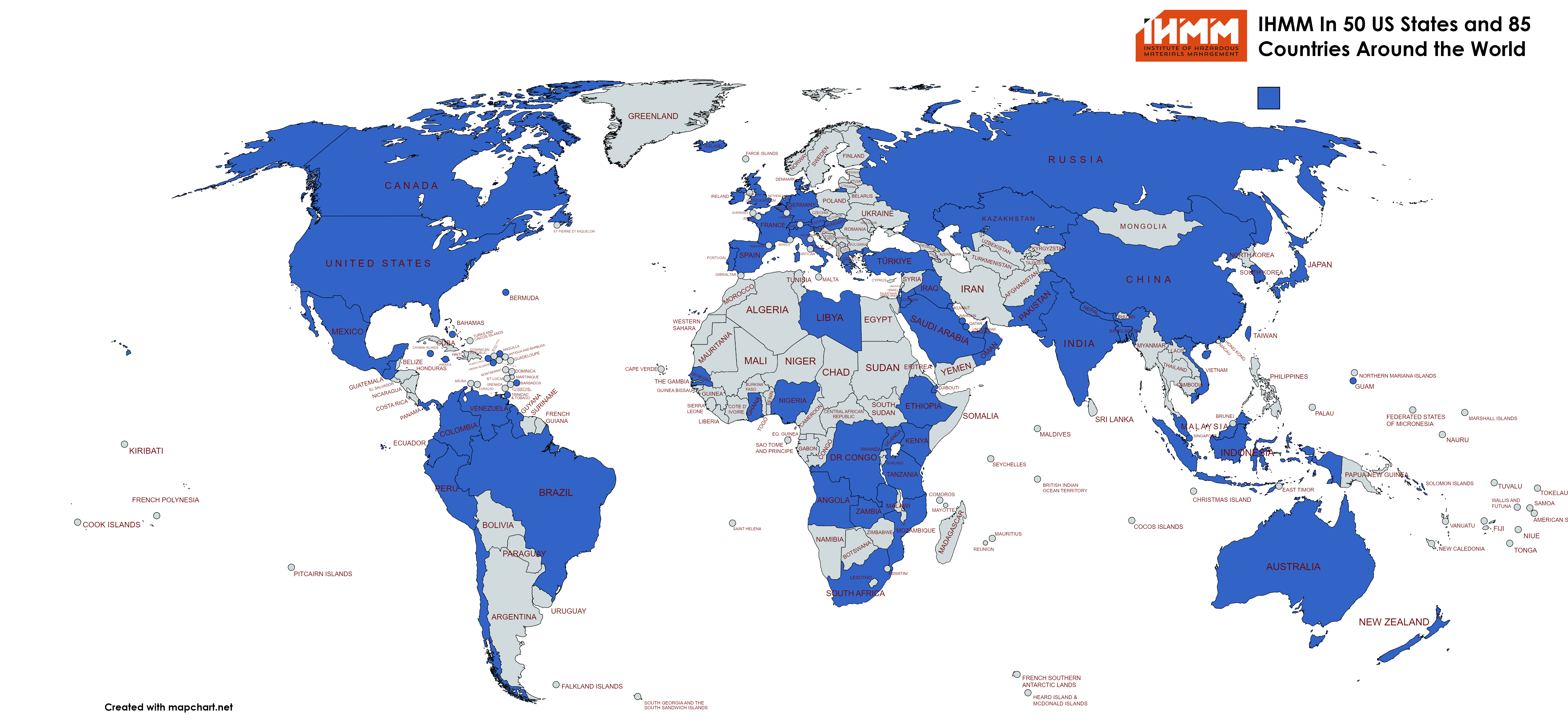
IHMM Global DG Transport Compliance Matrix (2025–2026)
IHMM Certificant Compliance Checklist
June 17-23, 2026
United States, Canada, and Mexico
For the period of June 17–23, 2026, dangerous goods and hazardous materials transportation regulation across North America continued to be characterized by regulatory modernization, international harmonization efforts, battery transportation oversight, fuel and LPG safety initiatives, and increasing emphasis on digital compliance systems. While no major hazardous materials statute was enacted during this reporting period, regulators throughout the United States, Canada, and Mexico continued advancing policies designed to improve transportation safety, documentation integrity, emergency preparedness, and cross-border consistency.
The principal themes emerging this week include continued implementation of PHMSA registration modernization initiatives, ongoing Canadian Transportation of Dangerous Goods (TDG) program enhancements, and Mexico’s continued focus on fuel transportation safety and UN-aligned dangerous-goods modernization.
United States
PHMSA Registration Modernization and Harmonization Activities
The U.S. Department of Transportation’s Pipeline and Hazardous Materials Safety Administration (PHMSA) continues implementing modernization initiatives affecting hazardous materials registration, permitting, and compliance management.
The 2026–2027 Hazardous Materials Registration Program remains active, with PHMSA continuing its transition toward expanded electronic registration and payment systems through DOT’s modernization efforts. These changes are intended to improve regulatory efficiency, enhance compliance monitoring, and streamline interactions between regulated entities and the agency.
Meanwhile, PHMSA’s HM-215R international harmonization rulemaking remains the most significant pending hazardous materials regulatory initiative. The proposal would continue aligning U.S. Hazardous Materials Regulations with:
- UN Model Regulations;
- ICAO Technical Instructions;
- IMDG Code requirements;
- International multimodal transportation standards.
Areas expected to be affected include:
- Proper shipping names;
- Hazard classifications;
- Packaging authorizations;
- Special provisions;
- Air transportation limitations;
- Vessel stowage requirements.
Special Permit Activity
PHMSA continues processing applications for:
- New special permits;
- Modifications of existing permits;
- Renewals of special permits.
Special permits remain particularly important because they frequently establish regulatory precedents for emerging technologies, battery systems, alternative packaging methods, and specialized transportation operations.
Important News Developments
Transportation incidents involving fuel cargoes, rail operations, and battery-powered equipment continue receiving significant regulatory attention.
Recent investigations reinforce recurring enforcement themes involving:
- Shipping-paper accuracy;
- Emergency-response planning;
- Hazard communication;
- Classification integrity;
- Packaging compliance.
Legal Significance
For U.S. shippers and carriers, regulatory risk increasingly centers on:
- Documentation accuracy;
- Classification defensibility;
- Battery transportation controls;
- Digital compliance recordkeeping;
- Special permit adherence.
The modern compliance environment increasingly requires demonstrable due diligence and auditable compliance systems.
Canada
Transportation of Dangerous Goods Program Developments
Canada continues implementing recent enhancements to its Transportation of Dangerous Goods (TDG) framework.
The most significant ongoing compliance issue remains the expanded emergency reporting requirements that recently took effect under the TDG Regulations.
Transport Canada continues emphasizing reporting obligations involving:
- Dangerous goods releases;
- Anticipated releases;
- Losses and thefts;
- Transportation collisions;
- Evacuations and closures.
CANUTEC remains a central component of Canada’s dangerous-goods emergency-response infrastructure and continues serving as the primary national resource for dangerous-goods incident assistance.
Standards Modernization
Transport Canada also continues reviewing proposed updates to incorporated technical standards, including those affecting portable tanks and means of containment used in dangerous-goods transportation.
Because Canada’s TDG framework incorporates technical standards by reference, changes to standards frequently become legally significant without requiring substantial amendments to the regulations themselves.
Important News Developments
Canadian regulators and industry stakeholders continue focusing on:
- Fuel transportation safety;
- Tank integrity;
- Emergency-response preparedness;
- Dangerous-goods incident reporting.
Recent transportation incidents involving fuel releases and rail operations continue reinforcing the importance of maintaining robust emergency-management systems.
Legal Significance
Canadian compliance programs should ensure:
- Updated incident-reporting procedures;
- CANUTEC notification protocols;
- Current technical standards;
- Documented emergency-response capabilities.
The expanded reporting requirements create significant potential liability for organizations that fail to promptly identify and report qualifying events.
Mexico
Dangerous Goods Standards Modernization
Mexico continues advancing modernization efforts for transportation of dangerous goods through development of new standards and continued harmonization with UN transportation recommendations.
The proposed PROY-NOM-011-SICT2 initiative governing limited quantities remains one of the most significant pending transportation standards projects.
The proposal seeks to modernize requirements involving:
- Packaging;
- Marking;
- Documentation;
- Quantity limitations;
- Safety controls.
Fuel and LPG Transportation Safety
Mexico continues strengthening oversight of fuel and liquefied petroleum gas (LPG) transportation following several high-profile transportation incidents during the past year.
Areas receiving heightened regulatory attention include:
- Vehicle condition;
- Tank inspections;
- Driver qualifications;
- Route management;
- GPS monitoring;
- Emergency-response planning.
Enforcement Initiatives
Federal and state authorities continue increasing scrutiny of:
- Fuel theft;
- Misdeclared cargoes;
- Petroleum transportation documentation;
- Hazardous-materials compliance records.
Legal Significance
Transportation operators moving fuels, LPG, and petroleum products face increasing exposure to:
- Transportation enforcement actions;
- Customs investigations;
- Environmental enforcement;
- Potential criminal liability in severe cases.
Documentation integrity and operational controls remain critical risk-management priorities.
Cross-Border Legal Themes
Several common themes emerged across North America during this reporting period.
1. International Harmonization Continues
The United States, Canada, and Mexico continue aligning transportation requirements with:
- UN Model Regulations;
- ICAO Technical Instructions;
- IMDG Code requirements.
2. Battery Transportation Remains a Priority
Lithium-ion and sodium-ion batteries continue driving:
- Regulatory attention;
- Carrier restrictions;
- Safety investigations;
- Compliance initiatives.
3. Digital Compliance Systems Are Expanding
Regulators increasingly rely on:
- Electronic registrations;
- Digital reporting systems;
- Electronic documentation;
- Data-driven oversight.
4. Incident Reporting Requirements Are Expanding
Authorities increasingly expect immediate reporting of:
- Releases;
- Anticipated releases;
- Thefts;
- Transportation accidents;
- Operational disruptions involving dangerous goods.
5. Fuel and Energy Transportation Remain High-Risk Areas
Fuel, LNG, LPG, and petroleum transportation continue receiving heightened regulatory scrutiny throughout North America.
Conclusion
For the period of June 17–23, 2026, dangerous goods transportation regulation across North America continued evolving through implementation, modernization, and operational enforcement rather than through major legislative change.
The United States remains focused on international harmonization and registration modernization; Canada continues strengthening reporting and technical standards oversight; and Mexico remains concentrated on fuel transportation safety and dangerous-goods modernization.
For regulated entities, the modern standard of care requires:
- Defensible classification decisions;
- Accurate documentation;
- Current registration and permits;
- Effective emergency-response procedures;
- Digital compliance management;
- Continuous monitoring of regulatory developments.
The trajectory of North American dangerous-goods regulation continues toward greater international consistency, stronger operational accountability, and increasingly sophisticated compliance expectations.
Europe, Africa, Asia, and South America
For the period of June 17–23, 2026, dangerous goods and hazardous materials transportation regulation across Europe, Africa, Asia, and South America continued to be shaped by international harmonization efforts, battery transportation oversight, maritime security concerns, digital cargo traceability initiatives, and the ongoing implementation of ADR 2025 and related international standards.
While no major ADR amendment entered into force during this reporting period, regulators, carriers, ports, aviation authorities, and customs agencies continued expanding operational controls affecting the transportation of hazardous cargoes. The principal trend remains clear: compliance expectations increasingly extend beyond the regulatory text itself and now encompass risk management, documentation integrity, emergency preparedness, digital reporting, and carrier acceptance requirements.
Europe
ADR 2025 Implementation and ADR 2027 Development
Europe continues implementing ADR 2025 while simultaneously advancing discussions that will ultimately form the basis of ADR 2027.
Following the recent session of the UNECE Working Party on the Transport of Dangerous Goods (WP.15), technical discussions remain focused on several emerging transportation issues, including:
- Lithium-ion batteries;
- Sodium-ion batteries;
- Batteries installed in vehicles;
- Alternative-fuel vehicles;
- Energy storage systems;
- Tank and containment requirements;
- Harmonization of documentation requirements.
The continued electrification of transportation throughout Europe remains one of the primary drivers of regulatory development.
Legal Significance
European regulators increasingly recognize that traditional dangerous-goods frameworks must adapt to:
- Electric vehicle transportation;
- Damaged battery management;
- End-of-life battery movements;
- Alternative energy technologies.
Organizations involved in battery manufacturing, recycling, transportation, and storage should anticipate continued regulatory refinement during development of ADR 2027.
Maritime Dangerous Goods and Energy Security
European maritime authorities continue monitoring dangerous-goods transportation associated with:
- LNG cargoes;
- Petroleum products;
- Chemical tankers;
- Alternative fuels.
Continuing geopolitical tensions affecting global energy markets have reinforced regulatory focus on:
- Tanker integrity;
- Cargo routing;
- Vessel inspections;
- Emergency-response capabilities.
Legal Significance
Dangerous-goods transportation in Europe is increasingly viewed through a broader policy framework encompassing:
- Environmental protection;
- Maritime security;
- Energy resilience;
- Supply-chain continuity.
This trend continues expanding the practical compliance obligations of dangerous-goods operators beyond traditional ADR and IMDG requirements.
Asia
Battery Transportation Continues to Dominate Regulatory Attention
Asia remains the center of global production and export activity for lithium-ion batteries, sodium-ion batteries, and battery-powered equipment.
During this reporting period, carriers throughout the region continued enforcing requirements derived from:
- ICAO Technical Instructions;
- IATA Dangerous Goods Regulations;
- IMDG Code Amendment 42-24.
Particular attention continues focusing on:
- State-of-charge restrictions;
- Battery testing documentation;
- Thermal runaway prevention;
- Packaging standards;
- Overpack requirements;
- Cargo segregation controls.
Legal Significance
The practical reality for many exporters is that carrier acceptance standards increasingly function as regulatory requirements.
A shipment that satisfies domestic regulations may nevertheless be rejected if:
- Battery test summaries are unavailable;
- Packaging certifications cannot be verified;
- State-of-charge limits cannot be demonstrated.
As a result, operational compliance and legal compliance have become inseparable.
Maritime Fuel Transportation
Asian shipping markets continue adapting to changing global fuel flows and tanker deployment patterns.
Authorities throughout the region remain focused on:
- Tanker inspections;
- Cargo declarations;
- Fuel specifications;
- Hazardous-cargo routing;
- Maritime safety oversight.
Legal Significance
Transportation of dangerous goods increasingly requires:
- Route-risk assessment;
- Vessel suitability reviews;
- Supply-chain contingency planning;
- Enhanced operational controls.
Africa
Port and Aviation Enforcement Continue to Expand
Africa did not experience significant continent-wide dangerous-goods legislative activity during this reporting period.
However, practical compliance obligations continue evolving through:
- Port authority requirements;
- Customs inspections;
- Maritime cargo controls;
- Aviation dangerous-goods enforcement.
Many African jurisdictions continue relying heavily upon standards derived from:
- UN Model Regulations;
- IMDG Code;
- ICAO Technical Instructions;
- IATA Dangerous Goods Regulations.
Legal Significance
Across much of Africa, dangerous-goods transportation increasingly depends upon satisfying:
- Carrier requirements;
- Port acceptance standards;
- Customs procedures;
- Aviation restrictions.
In many cases these operational requirements exceed minimum statutory obligations.
Petroleum and Chemical Cargo Oversight
African ports continue handling increasing volumes of:
- Petroleum products;
- LNG shipments;
- Industrial chemicals;
- Dangerous-goods transshipments.
Consequently, regulators continue emphasizing:
- Cargo declaration accuracy;
- Emergency preparedness;
- Spill-response capabilities;
- Environmental protection measures.
Legal Significance
Operational readiness increasingly determines whether hazardous cargoes are accepted for transportation and whether operators satisfy regulatory expectations.
South America
Colombia’s Digital Oversight System Continues Expanding
Colombia remains among the most active jurisdictions in South America with respect to digital dangerous-goods oversight.
The Ministry of Transport continues strengthening the Registro Nacional de Despachos de Carga (RNDC) system through:
- Dangerous-goods shipment registration;
- Freight traceability;
- Cargo-generator oversight;
- Operator training;
- Electronic reporting requirements.
Reporting requirements involving dangerous goods transported in gallons and kilograms remain central components of Colombia’s oversight framework.
Legal Significance
Colombia’s approach reflects one of the clearest examples of data-driven dangerous-goods enforcement globally.
Increasingly, compliance is evaluated through:
- Shipment databases;
- Electronic reporting systems;
- Cargo tracking mechanisms;
- Digital traceability tools.
Argentina
Argentina continues operating under transitional measures permitting certain older dangerous-goods transportation vehicles to remain in service through the end of 2026, provided they continue satisfying:
- Inspection requirements;
- Certification obligations;
- Dangerous-goods operational approvals.
Legal Significance
Argentina’s approach seeks to balance:
- Public safety;
- Economic considerations;
- Fleet modernization challenges.
The country continues maintaining broad alignment with UN-based dangerous-goods transportation principles while allowing measured implementation flexibility.
Important News Stories
Battery Safety Remains a Global Concern
Battery-related transportation incidents continue receiving substantial attention from regulators, carriers, airlines, and ports.
Throughout Europe and Asia, industry participants continue strengthening controls involving:
- Lithium-ion batteries;
- Energy storage systems;
- Battery-powered vehicles;
- Damaged battery transportation.
Although no major battery-specific legislation was adopted during this reporting period, operational controls continue becoming more restrictive.
Maritime Security and Hazardous Cargo Routing
Global shipping markets remain focused on:
- Tanker security;
- LNG transportation;
- Fuel cargo routing;
- Port-state enforcement.
These concerns continue influencing dangerous-goods transportation decisions throughout Europe, Asia, and Africa.
Emerging Compliance Themes
Several common themes emerged across all regions during this reporting period:
1. International Harmonization Continues
ADR, RID, ADN, IMDG, ICAO, and UN Model Regulations remain the dominant frameworks driving dangerous-goods transportation requirements worldwide.
2. Batteries Remain the Primary Regulatory Driver
Lithium-ion and sodium-ion batteries continue generating the greatest regulatory attention and enforcement activity.
3. Operational Risk Management Is Increasingly Mandatory
Regulators increasingly expect transportation providers to evaluate:
- Route risks;
- Supply-chain disruptions;
- Vessel suitability;
- Emergency-response readiness.
4. Digital Traceability Continues Expanding
Particularly in South America, dangerous-goods oversight increasingly depends upon:
- Electronic reporting;
- Shipment databases;
- Cargo tracking systems;
- Digital compliance monitoring.
5. Carrier Requirements Continue Expanding
Airlines, ports, shipping lines, and logistics providers increasingly impose operational standards that frequently exceed minimum legal requirements.
Conclusion
For the period of June 17–23, 2026, dangerous-goods transportation regulation across Europe, Africa, Asia, and South America continued evolving through implementation, operational oversight, and risk-based enforcement rather than major legislative reform.
Europe remains focused on ADR implementation and development of ADR 2027; Asia continues strengthening battery transportation controls; Africa increasingly relies upon operational enforcement through ports and carriers; and South America continues expanding sophisticated digital traceability systems.
For dangerous-goods professionals, the modern standard of care requires:
- Defensible classification decisions;
- Comprehensive battery documentation;
- Route-risk assessments;
- Emergency-response preparedness;
- Digital traceability capabilities;
- Continuous monitoring of international standards developments.
The global compliance landscape continues moving toward greater operational accountability, stronger documentation requirements, enhanced digital oversight, and closer alignment among international dangerous-goods transportation systems.

Leave A Comment