

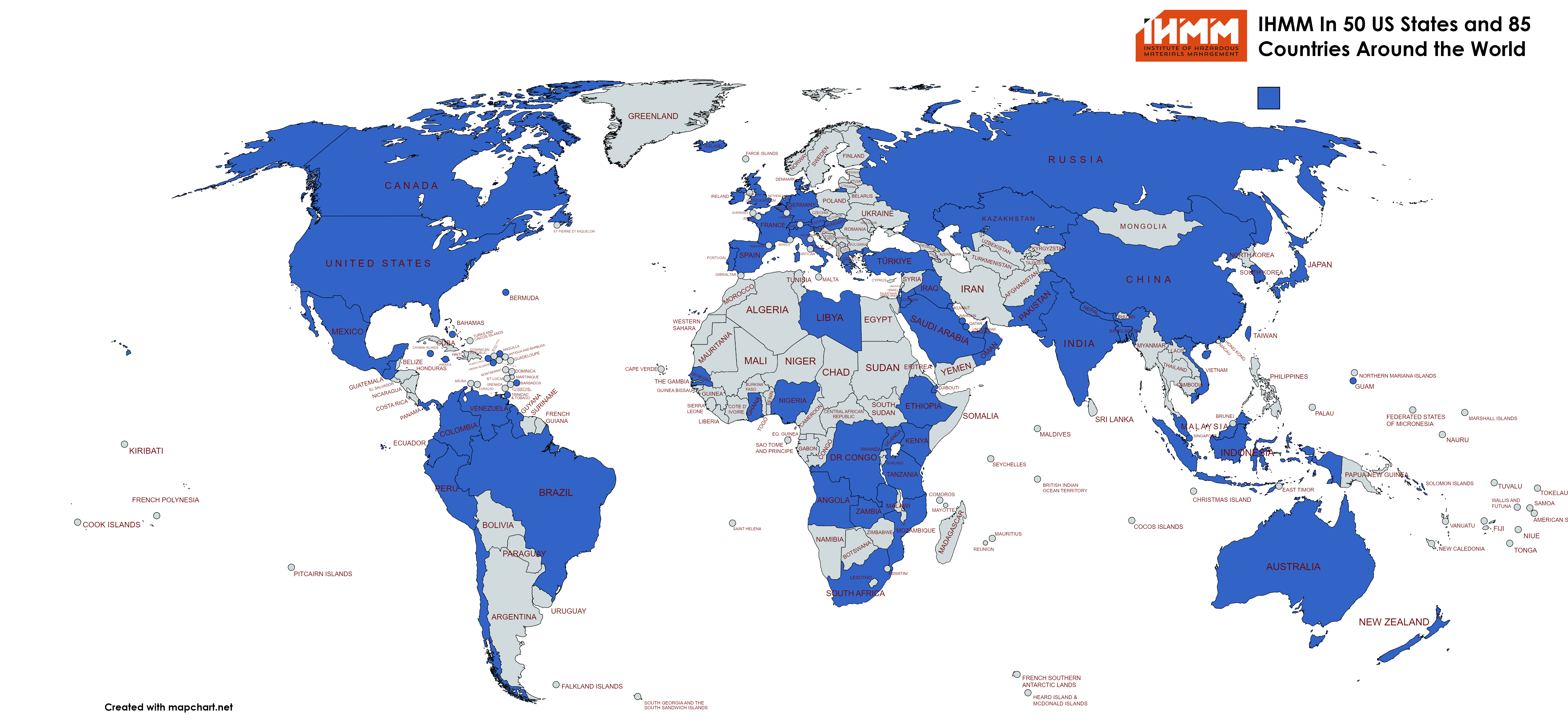
IHMM Global DG Transport Compliance Matrix (2025–2026)
IHMM Certificant Compliance Checklist
June 9-16, 2026
For the period June 9–16, 2026, North American dangerous-goods and hazardous-materials transportation law continued to evolve through registration modernization, special-permit activity, emergency-reporting obligations, standards development, and fuel/LPG enforcement. Because this report is prepared on June 13, 2026, items for June 14–16 are limited to announced, pending, or already-published actions.
United States
In the United States, PHMSA’s most important current administrative development remains the opening of the 2026–2027 hazardous-materials registration year on June 1, 2026. PHMSA states that early registration for 2026–2027 opened June 1 and that registrants should plan accordingly. PHMSA also announced in its April–June 2026 Hazardous Matters update that it is modernizing the Hazmat Registration Program and moving toward an online-only registration and payment system through DOT’s MOTUS platform.
PHMSA also published two June 12, 2026 Federal Register notices involving hazardous-materials special permits: one for applications to modify special permits and another for actions on special permits. Special permits matter because they are often where PHMSA first authorizes novel or alternative methods for moving hazardous materials, provided an equivalent level of safety is demonstrated under the hazardous-materials transportation law.
The broader U.S. harmonization agenda remains active. PHMSA’s HM-215R rulemaking continues as the central pending HMR initiative to align U.S. rules with international standards governing proper shipping names, hazard classes, packing groups, special provisions, packaging, air quantity limits, and vessel stowage.
Legal significance: U.S. shippers and carriers should treat this period as one of implementation discipline. Current registration, accurate shipping papers, defensible classification, and careful use of any special permit are now essential compliance controls. PHMSA’s direction also confirms that hazmat compliance is moving toward more digital, integrated, and internationally aligned systems.
Canada
Canada’s principal development remains its strengthened dangerous-goods incident reporting regime. Recent legal analysis of the amendments explains that shippers must now immediately file an emergency report with local authorities if dangerous goods are lost, stolen, or involved in a collision, with additional reporting to the consignor and CANUTEC if there is injury, death, evacuation, or closure of a road, rail line, or building. Transport Canada’s own reporting guide confirms that Part 8 of the TDG Regulations governs reporting duties for releases or anticipated releases during transport.
Canada also continues to administer dangerous-goods transportation through technical standards and emergency-support systems. Transport Canada identifies CANUTEC as Canada’s 24-hour emergency center for dangerous-goods incidents, and its TDG program continues to rely on risk-based oversight and international collaboration.
Legal significance: Canadian consignors, carriers, and importers should ensure incident-response procedures are updated to reflect the broadened reporting triggers. A collision involving dangerous goods, theft, loss, evacuation, or road closure is now not merely an operational event; it may be a legally reportable TDG incident. Documentation, internal escalation protocols, and CANUTEC contact procedures should be built into field-level SOPs.
Mexico
Mexico remains in an active modernization and enforcement phase. The country’s land-transport hazardous-materials framework remains aligned with the UN Recommendations: PHMSA’s Mexico guidance explains that Mexico’s regulation for land transport of hazardous materials and wastes is based on the UN Recommendations and supported by numerous NOMs, with additional standards under development by the transportation authority.
The most significant current Mexican issue remains LP gas and fuel transportation safety. ASEA is preparing new NOM requirements for LP gas transportation safety, with expected focus on carrier certification, vehicle specifications, driver qualifications, inspection, and emergency-response protocols. This follows the 2025 Mexico City LP gas tanker tragedy, after which new federal and local hazardous-materials transport rules and inspections were announced.
Mexico’s limited-quantity modernization also remains relevant. Industry guidance continues to note that Mexican transborder shipments must use Mexico-authorized proper shipping names and identification numbers, and that not all U.S. domestic HMR exceptions or North American identification numbers are valid in Mexico.
Legal significance: Mexico’s dangerous-goods compliance risk is increasingly concentrated in fuels, LPG, and documentation integrity. Operators should review vehicle condition, tank testing, driver training, GPS/speed controls, emergency-response readiness, and whether shipping descriptions are valid under Mexican NOMs—not merely under U.S. HMR practice.
Cross-Border Themes
Across the United States, Canada, and Mexico, five themes define the week:
- Registration and administrative compliance are becoming more digital. PHMSA’s move toward online hazmat registration through MOTUS is part of a broader shift toward digital compliance records.
- Incident reporting is expanding. Canada’s TDG amendments make emergency reporting a front-line legal obligation, not an afterthought.
- Special permits remain a proving ground for innovation. PHMSA’s June 12 notices show that alternative transport methods remain active but must be supported by equivalent safety.
- Fuel and LPG transportation are under heightened scrutiny. Mexico’s post-incident safety reforms continue to drive inspection and regulatory modernization.
- International alignment matters. U.S., Canadian, and Mexican systems all remain linked to UN-based dangerous-goods architecture, but national differences still matter.
Conclusion
For June 9–16, 2026, North American hazardous-materials transportation law is best understood as an implementation and enforcement story. The United States is emphasizing registration modernization, special permits, and international harmonization; Canada is strengthening incident reporting and CANUTEC-centered response duties; and Mexico is tightening fuel and LPG safety while maintaining UN-based but nationally distinct requirements.
For regulated entities, the operative standard of care now requires current registration, defensible classification, jurisdiction-specific shipping descriptions, immediate reporting protocols, tank and vehicle integrity, driver competence, and emergency-response readiness.
Europe, Africa, Asia, and South America
For the period of June 9–16, 2026, developments in the regulation of dangerous goods and hazardous materials transportation across Europe, Africa, Asia, and South America continued to reflect the broader global trend toward enhanced operational oversight, battery transportation controls, digital traceability, and harmonization with United Nations transport standards.
While no major treaty amendments entered into force during this reporting period, regulatory authorities, carriers, ports, and aviation regulators continued advancing compliance expectations under ADR, RID, ADN, the IMDG Code, ICAO Technical Instructions, and the UN Model Regulations. The result is an increasingly integrated global compliance framework in which operational controls, documentation integrity, emergency preparedness, and carrier acceptance standards are becoming as important as the underlying legal requirements themselves.
Europe
ADR and UNECE Activity
Europe remains focused on implementation of ADR 2025 while technical work continues toward development of ADR 2027 under the auspices of the United Nations Economic Commission for Europe (UNECE).
Following the May 2026 session of the Working Party on the Transport of Dangerous Goods (WP.15), member states and industry stakeholders continued reviewing proposals concerning:
- Electric and alternative-fuel vehicles;
- Batteries installed in vehicles;
- Lithium battery transportation;
- Tank and containment requirements;
- Documentation harmonization;
- Emergency-response provisions; and
- Clarification of ADR exemptions.
The continuing expansion of electric mobility throughout Europe remains a principal driver of regulatory activity. Regulators continue examining how existing ADR provisions should apply to battery-powered vehicles, damaged batteries, and energy-storage systems.
Maritime Dangerous Goods
European maritime regulators also continued monitoring tanker safety and fuel transportation issues associated with ongoing geopolitical instability affecting global energy markets.
Particular attention remains focused on:
- LNG transportation;
- Petroleum product movements;
- Tanker integrity and maintenance;
- Port-state inspections; and
- Emergency-response readiness.
European authorities increasingly view dangerous-goods transportation through a broader risk-management lens that incorporates environmental protection, maritime security, and supply-chain resilience.
Asia
Battery Transportation Remains the Leading Issue
Asia continues to serve as the world’s largest source of lithium-ion batteries, sodium-ion batteries, and battery-powered equipment.
During this reporting period, aviation and maritime carriers throughout the region continued enforcing enhanced requirements under:
- ICAO Technical Instructions;
- IATA Dangerous Goods Regulations;
- IMDG Code Amendment 42-24.
Key compliance concerns include:
- State-of-charge restrictions;
- Battery testing documentation;
- Thermal runaway mitigation;
- Packaging performance requirements;
- Overpack segregation controls.
For many exporters, carrier acceptance standards now function as a practical regulatory requirement. A shipment that technically complies with domestic law may nevertheless be rejected if battery test documentation, packaging certifications, or state-of-charge evidence cannot be produced.
Maritime Trade and Fuel Movements
Asian shipping markets continue adapting to changing fuel flows and tanker deployment patterns resulting from ongoing geopolitical tensions.
Consequently, operators continue increasing scrutiny of:
- Tanker suitability;
- Cargo routing;
- Fuel specifications;
- Vessel inspections; and
- Supply-chain contingency planning.
Africa
Operational Enforcement Continues to Expand
Africa did not experience major continent-wide dangerous-goods legislation during this reporting period. However, practical compliance obligations continue expanding through:
- Port authority requirements;
- Customs enforcement;
- Maritime inspections;
- Aviation dangerous-goods controls.
Across much of Africa, authorities continue relying heavily on international standards derived from:
- UN Model Regulations;
- IMDG Code requirements;
- ICAO Technical Instructions;
- IATA Dangerous Goods Regulations.
Many ports and carriers increasingly require compliance with international standards regardless of whether equivalent domestic regulations have been formally adopted.
Petroleum and Chemical Cargo Oversight
African ports continue handling growing volumes of:
- Petroleum products;
- LNG cargoes;
- Industrial chemicals;
- Dangerous-goods transshipments.
As a result, regulators continue emphasizing:
- Cargo declaration accuracy;
- Emergency-response preparedness;
- Spill-response planning;
- Vessel inspections;
- Environmental protection measures.
The practical reality is that operational readiness increasingly determines whether hazardous cargoes are accepted for transportation.
South America
Colombia’s Digital Oversight Model Continues to Expand
Colombia remains the region’s most active jurisdiction in developing digital dangerous-goods oversight systems.
The Ministry of Transport continues strengthening administration of the Registro Nacional de Despachos de Carga (RNDC), emphasizing:
- Shipment traceability;
- Dangerous-goods registration;
- Operator training;
- Cargo-generator oversight;
- Quantity reporting requirements.
Mandatory dangerous-goods reporting in both gallons and kilograms remains a central component of Colombia’s regulatory framework.
The Colombian approach reflects a broader movement toward data-driven enforcement and digital compliance monitoring throughout the region.
Argentina
Argentina continues implementing transitional measures permitting certain older dangerous-goods transportation vehicles to remain in service through the end of 2026, provided they maintain:
- Roadworthiness certifications;
- Dangerous-goods approvals;
- Inspection compliance.
This approach seeks to balance safety requirements with fleet modernization challenges while maintaining alignment with UN-based dangerous-goods principles.
Important News Stories
Battery Fire Risks Remain a Global Concern
Battery-related incidents involving lithium-ion batteries continue receiving significant attention from regulators, airlines, ports, and carriers worldwide.
Although no major new battery regulations were issued during this reporting period, industry participants continue tightening acceptance standards and operational controls in response to ongoing concerns regarding:
- Thermal runaway;
- Cargo fires;
- Energy-storage systems;
- Battery-powered vehicles.
Maritime Security and Hazardous Cargo Routing
Global shipping markets remain focused on:
- Tanker security;
- Fuel transportation routes;
- LNG cargo protection;
- Port-state enforcement.
These developments continue influencing hazardous-cargo transportation decisions throughout Europe, Asia, and Africa.
Legal and Compliance Outlook
Several themes continue to define international dangerous-goods transportation law:
- International harmonization remains driven by ADR, RID, IMDG, ICAO, and UN Model Regulations.
- Lithium-ion and sodium-ion batteries remain the most significant regulatory and enforcement concern worldwide.
- Operational risk management is increasingly treated as a compliance obligation.
- Digital traceability and shipment reporting continue expanding, particularly in South America.
- Carrier, airline, and port requirements increasingly function as de facto regulatory requirements.
Conclusion
For the period June 9–16, 2026, dangerous-goods transportation regulation across Europe, Africa, Asia, and South America continued evolving through implementation, operational refinement, and risk-based oversight rather than through major legislative change.
The global regulatory environment increasingly rewards organizations that maintain strong classification systems, robust battery documentation, digital traceability capabilities, emergency-response readiness, and proactive supply-chain risk management.
For dangerous-goods professionals, compliance today requires more than adherence to written regulations. It demands a comprehensive understanding of carrier requirements, operational risks, international standards, and the evolving expectations of regulators worldwide.

Leave A Comment