

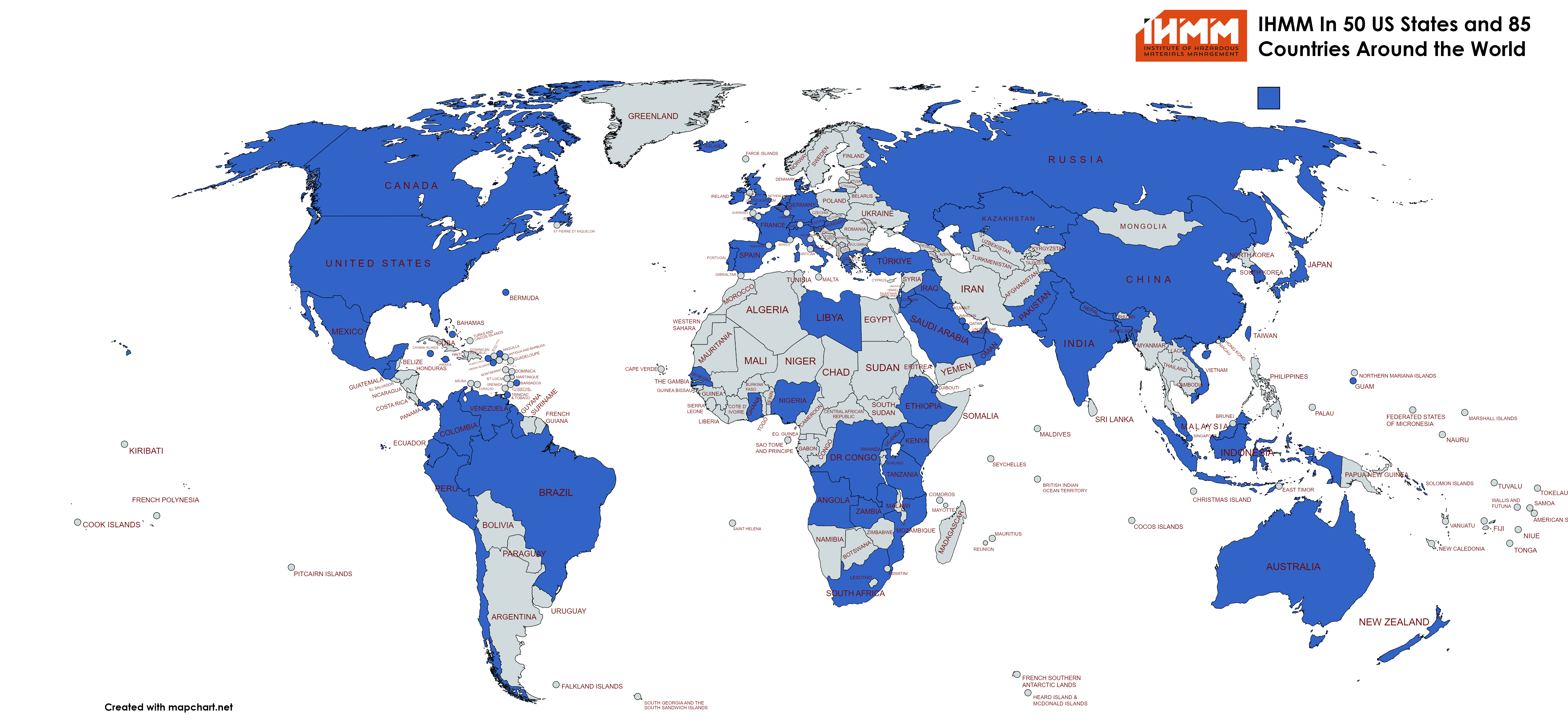
IHMM Global DG Transport Compliance Matrix (2025–2026)
IHMM Certificant Compliance Checklist
April 22–27, 2026
For the week of April 22–27, 2026, North American dangerous-goods regulation was marked by international harmonization planning, interpretive clarification, standards-based Canadian oversight, and Mexico’s continued tightening of hazardous-cargo controls. The week did not produce a sweeping new hazmat code, but it did produce several legally important signals for shippers, carriers, and compliance professionals.
United States
PHMSA’s most important hazmat action this week was its April 22 notice of 2026 public meetings on international standards for the transport of dangerous goods. PHMSA announced meetings tied to the UN Sub-Committee of Experts on the Transport of Dangerous Goods and the ICAO Dangerous Goods Panel, including work on the 25th Revised Edition of the UN Model Regulations, which may be implemented into domestic and international rules beginning January 1, 2029. This is significant because it places U.S. stakeholders directly into the next UN/ICAO amendment cycle.
PHMSA also issued an April 23 interpretation concerning intermediate bulk containers (IBCs) connected by hoses to an induction tank while still on a motor vehicle. The interpretation addresses how the HMR apply when hazardous material is discharged from IBCs while they remain on the transport vehicle, an important clarification for agricultural, utility, fuel, and industrial service operations using mobile transfer systems.
Separately, DOT/PHMSA announced the opening of a new LNG Safety Center on April 22. While principally connected to energy infrastructure and LNG safety, it is relevant to hazardous materials transportation because LNG supply chains involve high-consequence hazardous cargo, emergency-response planning, and multimodal risk.
Canada
Canada’s principal development remains its standards-driven TDG modernization track. Transport Canada’s 2026–2027 Departmental Plan states that the agency will implement new and updated requirements for the safe transportation of dangerous goods and keep Canadian regulations aligned with international standards.
The week also had an important incident-driven compliance reminder: a fuel tanker rollover in New Brunswick resulted in fuel reaching a tributary near a river before it was contained. That incident underscores the practical enforcement stakes for tanker maintenance, route control, spill response, emergency notification, and environmental remediation under Canadian TDG and environmental law.
For Canadian consignors, the key legal takeaway is documentation defensibility. Canadian TDG practice requires proof supporting classification decisions, and industry compliance alerts this week emphasized that inspectors may ask businesses to substantiate how a dangerous good was classified, not merely produce shipping papers.
Mexico
Mexico remains in a modernization and enforcement phase. Its proposed PROY-NOM-011-SICT2/2025 on dangerous goods transported in limited quantities continues to be the principal standards-development item. The proposal is designed to align Mexico’s limited-quantity framework with UN Model Regulations while preserving safety through marking, packaging, and documentation controls.
Mexico’s broader regulatory baseline also remains closely tied to the UN dangerous-goods architecture. PHMSA’s Mexico guidance notes that the Mexican land-transport regulation for hazardous materials and wastes and the U.S. HMR are both based on the UN Recommendations, making the two systems closely aligned while still subject to important national differences.
The lingering news context remains Mexico’s post-incident tightening of LP gas transportation controls after the Mexico City tanker explosion. Federal and Mexico City measures announced after that event emphasized certified driver training, vehicle maintenance, hydrostatic testing, GPS/speed controls, and joint inspections by transport, energy, and safety agencies.
The Bottom Line
The legal direction in North America is clear. The United States is preparing for the next UN/ICAO harmonization cycle while clarifying HMR application to real-world transfer operations. Canada is advancing TDG modernization through standards and enforcement-ready proof of classification. Mexico is tightening limited-quantity rules and fuel/LPG transportation oversight. Across all three jurisdictions, the operative standard of care increasingly requires international alignment, defensible classification, accurate documentation, emergency-response readiness, and strong control over fuel and battery-related shipments.
Europe — ADR Governance Continues; Maritime Risk Drives Enforcement Thinking
In Europe, ADR 2025 remains the controlling legal instrument for road transport under the auspices of the United Nations Economic Commission for Europe (UNECE). During this period, regulatory activity centered on ongoing preparation for the next amendment cycle, rather than issuance of new rules.
The UNECE Working Party on the Transport of Dangerous Goods (WP.15) continues to advance agenda-setting for the 2027 ADR revision cycle, building on proposals and technical discussions emerging from earlier 2026 Joint Meetings with RID and ADN bodies. This ongoing work reinforces that Europe is in a “drafting and consolidation phase”, where operational experience—particularly involving batteries, alternative-fuel vehicles, and multimodal transport—is being translated into future regulatory text.
Important News — Tanker Enforcement and Environmental Risk
A key Europe-region development this week involves continued scrutiny of high-risk tanker operations in European waters, particularly in the Baltic Sea. Authorities are increasingly balancing enforcement action against the environmental risk posed by aging or poorly maintained vessels carrying hazardous cargo.
Legal Significance
This reflects a notable shift in regulatory posture:
- Dangerous goods enforcement is now tied to vessel condition and cargo hazard together, not separately;
- Authorities are incorporating environmental risk assessment into enforcement decisions; and
- Maritime hazardous cargo oversight is expanding beyond traditional IMDG compliance into broader safety and geopolitical considerations.
Asia — Operational Enforcement and Maritime Route Risk Dominate
In Asia, regulatory developments this week continue to be driven primarily by operational enforcement and external risk conditions, rather than new domestic legislation.
Maritime Disruption — Strait of Hormuz
Shipping through the Strait of Hormuz remains a central concern. Ongoing geopolitical tensions and enforcement actions affecting vessels trading with certain ports have created routing uncertainty for hazardous cargoes, including crude oil, LNG, and chemical products.
Legal Significance
For dangerous goods transportation:
- Route selection has become a regulatory compliance variable, not merely a logistical decision;
- Carriers and insurers are increasingly factoring hazard class and cargo type into risk pricing and acceptance decisions; and
- Operators must incorporate contingency planning and alternative routing into compliance systems.
Battery Transport Controls
Asia also continues to feel the impact of stricter global battery transport requirements. Enforcement of 2026 ICAO/IATA battery rules and alignment with UN Model Regulations remain strong, particularly for:
- Lithium-ion batteries,
- Battery-powered equipment, and
- Energy storage systems.
Africa — Enforcement Through Practice and Supply Chain Exposure
Africa did not produce a major new dangerous goods statute during this week; however, regulatory practice continues to evolve through trade exposure and incident-driven enforcement.
Energy Supply and Hazardous Cargo Risk
Regional exposure to disruptions in global fuel supply chains—particularly those linked to Middle East instability—continues to affect hazardous materials transportation. These disruptions increase reliance on:
- Alternative routing,
- Emergency stockpiling, and
- Enhanced scrutiny of fuel shipments.
Legal Significance
African regulatory environments increasingly reflect:
- Adoption of UN Model Regulations principles through practice, even where legislation lags;
- Growing importance of customs and port authority enforcement; and
- Integration of security and logistics risk into hazardous materials oversight.
In effect, practical enforcement is outpacing formal legislation across much of the continent.
South America — Administrative Enforcement and Traceability Take Center Stage
In South America, developments this week continue to emphasize national-level enforcement and administrative control, rather than regional treaty reform.
Colombia — Continued Expansion of RNDC System
Colombia remains at the forefront of regulatory implementation through its Registro Nacional de Despachos de Carga (RNDC) system:
- April 2026 training and compliance activities continue;
- Reporting requirements for dangerous goods shipments remain active;
- Mandatory dual-unit reporting (mass and volume) for hazardous cargo continues to be enforced.
Legal Significance
This reflects a broader regional trend:
- Dangerous goods compliance is increasingly enforced through data reporting, traceability, and operator registration systems;
- Administrative oversight is becoming as important as traditional requirements such as labeling and packaging; and
- Regulators are focusing on visibility across the entire supply chain, not just shipment-level compliance.
Argentina — Continued Transitional Compliance
Argentina remains in a compliance-stability phase, maintaining previously adopted measures allowing certain older vehicles to continue operating in dangerous goods transport through 2026, subject to inspection and certification requirements.
Cross-Regional Legal Themes
Across Europe, Asia, Africa, and South America, several consistent themes define the regulatory landscape for this period:
1. Harmonization Continues Through UNECE and UN Frameworks
- ADR, RID, and UN Model Regulations remain the foundation of global compliance;
- Ongoing work is focused on future amendments rather than immediate rule changes.
2. Operational Risk is Becoming a Regulatory Factor
- Maritime route instability, tanker condition, and geopolitical risk now influence compliance;
- Authorities are integrating risk-based enforcement approaches.
3. Battery Technologies Remain Central
- Lithium-ion and emerging battery chemistries continue to drive:
- Regulatory updates,
- Enforcement priorities, and
- Carrier acceptance rules.
4. Traceability and Data Oversight are Expanding
- Particularly in South America, compliance is increasingly enforced through:
- Reporting systems,
- Digital tracking, and
- Administrative controls.
5. Enforcement is Expanding Beyond Traditional Transport Law
- Dangerous goods regulation now intersects with:
- Environmental protection,
- Maritime safety, and
- Trade and security policy.
Conclusion
For the week of April 22–27, 2026, the international legal framework for dangerous goods transportation is defined by evolution through practice rather than immediate legislative change.
Europe continues to refine future ADR amendments, Asia faces heightened route and battery-related compliance challenges, Africa’s regulatory environment is shaped by supply-chain exposure and enforcement practice, and South America is advancing through administrative control and traceability systems.
For practitioners, the operative standard of care now requires:
- Alignment with UNECE and UN-based regulatory frameworks;
- Integration of operational risk into compliance planning;
- Strong documentation and traceability systems; and
- Continuous monitoring of emerging enforcement trends and geopolitical factors.
In practical terms, dangerous goods compliance has evolved beyond regulatory text—it now demands holistic, risk-informed, and globally aligned compliance strategies.
