

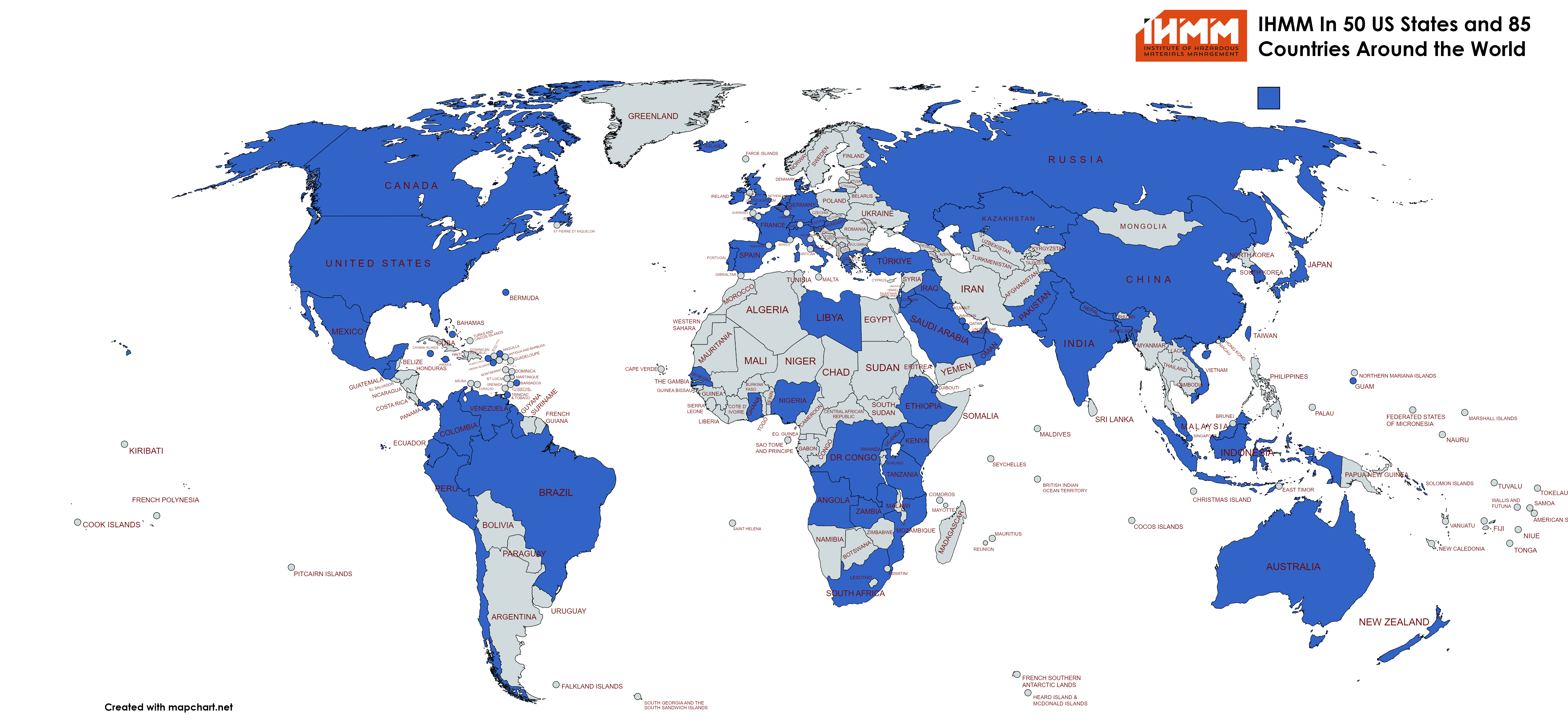
IHMM Global DG Transport Compliance Matrix (2025–2026)
IHMM Certificant Compliance Checklist
May 5–11, 2026
For the week of May 5–11, 2026, North American hazardous-materials transportation law was shaped by PHMSA’s continuing federal rulemaking agenda, Canada’s standards-based TDG modernization, and Mexico’s continuing effort to tighten hazardous-cargo and LPG transportation safety after major incidents. The common legal theme is that regulators are moving toward international harmonization, defensible classification, safer containment systems, and stronger documentation controls.
United States
In the United States, PHMSA did not issue a major new hazardous-materials final rule during this week, but several agency actions remain legally significant. PHMSA’s HM-215R harmonization NPRM remains the central pending HMR rulemaking following the April comment deadline. That proposal would align U.S. hazardous-materials rules with international standards governing shipping names, hazard classes, packing groups, special provisions, packaging, air quantity limits, and vessel stowage. For exporters and multimodal shippers, the message is clear: PHMSA is continuing to move the HMR toward closer alignment with the UN Model Regulations, ICAO Technical Instructions, and IMDG Code.
On May 11, PHMSA also published pipeline-safety notices involving advisory committee proceedings and an LNG special-permit request. Although pipeline-safety notices are not the same as package hazmat rules under 49 C.F.R. Parts 171–180, they remain relevant to hazardous-materials transportation because LNG storage, pipeline interfaces, and energy-supply infrastructure are part of the broader hazardous-materials risk chain.
The legal takeaway is that U.S. compliance programs should remain focused on shipping-paper accuracy, defensible classification, battery and energy-storage shipments, and multimodal consistency. PHMSA’s current posture suggests that formal rule text and agency interpretation will continue converging with international dangerous-goods standards.
Canada
Canada’s Transportation of Dangerous Goods regime continues to evolve through planning documents and incorporated technical standards. Transport Canada’s 2026–2027 Departmental Plan states that the agency will focus on modernizing safety and security programs to address emerging risks, including dangerous goods, and highlights the TDG regulatory framework and TDG technical support as continuing program priorities.
A particularly important current item is Transport Canada’s open 60-day consultation on a new edition of CSA B625, running from March 27 to May 26, 2026. Because Canadian TDG law incorporates technical standards by reference, revisions to standards such as CSA B625 can become legally consequential even without a dramatic rewrite of the TDG Regulations themselves.
Transport Canada has also recently updated public-facing TDG guidance on dangerous-goods marks and lithium batteries. The lithium-battery advisory explains that lithium batteries are dangerous goods and that shippers and importers must meet classification, documentation, labelling, packaging, and training requirements under the TDG Regulations; it also emphasizes that battery designs must meet the UN Manual requirements to be shipped safely.
For Canadian consignors and carriers, the legal significance is straightforward: compliance increasingly depends on maintaining current incorporated standards, proof of classification, correct marks, and battery documentation. A company that monitors only the TDG Regulations, and not the standards incorporated into them, risks falling behind the actual legal standard.
Mexico
Mexico remains in a period of hazardous-cargo modernization and enforcement pressure. The proposed PROY-NOM-011-SICT2/2025 remains the principal pending standards item for dangerous goods transported in limited quantities. The draft standard is intended to align Mexican requirements with UN Model Regulation concepts while preserving safety through packaging, marking, and documentation controls.
Mexico’s SICT 2026 work program also references work on transportation of dangerous substances and materials in limited quantities, indicating that this remains an active standards priority.
The most important safety-policy context remains Mexico’s response to the deadly 2025 Mexico City LPG tanker explosion, which intensified public and regulatory pressure for tighter oversight of hazardous-materials transportation. Subsequent federal and local measures have focused on LPG vehicle condition, driver competency, hydrostatic testing, GPS/speed controls, route limits, and joint inspections.
Additionally, ASEA’s reported preparation of PROY-NOM-029 for LP gas transport safety indicates continued movement toward more specific federal LPG controls.
For Mexico, the lawyer’s conclusion is that hazardous-materials transportation compliance is increasingly becoming a multi-agency issue, involving transport regulators, energy safety authorities, local governments, customs, and law enforcement. For LPG and fuel shipments in particular, documentation defects, route violations, vehicle deficiencies, and driver-training gaps may carry consequences well beyond ordinary transportation penalties.
Conclusion
For May 5–11, 2026, North American dangerous-goods transportation law is defined by implementation and tightening, not a single dramatic new enactment. In the United States, PHMSA continues toward international harmonization and energy-risk oversight. In Canada, TDG compliance is advancing through incorporated standards, lithium-battery guidance, and dangerous-goods marking obligations. In Mexico, limited-quantity reform and LPG safety remain central, driven by UN alignment and post-incident enforcement pressure.
The practical standard of care now requires more than correct placards and UN numbers. It requires defensible classification, current incorporated standards, accurate shipping papers, battery test evidence, vehicle and containment integrity, driver competence, and route-risk controls across all three North American jurisdictions.
For the period May 5–11, 2026, the regulation of dangerous goods and hazardous materials transportation outside North America was driven by UNECE/ADR treaty work, maritime fuel and hazardous-cargo concerns, airline battery restrictions, African port and road-transport practice, and South American traceability systems. The common legal theme is that regulators and carriers are treating dangerous-goods compliance as a broader system of classification, documentation, route risk, battery evidence, vessel integrity, and data reporting.
Europe
The most important European regulatory development was the 119th session of UNECE’s Working Party on the Transport of Dangerous Goods (WP.15), held in Geneva from May 5–8, 2026. The session addressed ADR and related dangerous-goods-by-road matters, including the status of ADR, interpretation questions, and proposed amendments for the next amendment cycle. UNECE documents for the session included proposed amendments to ADR for entry into force on January 1, 2027, as adopted by the RID/ADR/ADN Joint Meeting.
A particularly important ADR issue concerns the interpretation of ADR 1.1.3.7(a) for batteries installed in vehicles for propulsion or auxiliary operation. UNECE materials indicate that WP.15 had agreed on an interpretation confirming how such batteries are treated when installed in vehicles, a matter directly relevant to electric and hybrid vehicle transport and fleet operations.
Europe also saw a significant hazardous-cargo news development on May 8, when Reuters reported that the EU told airports and airlines they could switch certain Jet A fuel grades to avoid a supply crunch caused by the Iran war, provided precautions were taken. That is not an ADR road amendment, but it is legally relevant because aviation fuel substitution implicates fuel specifications, operational safety, and hazardous-materials handling controls at airports.
Asia
Asia’s most important dangerous-goods development during this period was operational rather than legislative. Reuters reported on May 8 that Asia received its first Mexican fuel oil cargo in nine months, with more cargoes expected because higher Asian prices drew supply after Middle East cargo losses linked to the Iran war. This illustrates how dangerous-goods logistics are being reshaped by route disruption, energy-market stress, and tanker availability.
Battery transportation remained another central compliance concern. IATA’s 2026 lithium and sodium-ion battery guidance states that lithium and sodium-ion battery packages may be overpacked with other dangerous goods only if applicable segregation requirements are met; it specifically references UN 3090, UN 3480, and UN 3551.
The practical legal consequence for Asian shippers is that airline, port, and carrier acceptance rules are functioning as enforceable compliance gates. A shipment may satisfy a local statute but still be rejected if battery test evidence, state-of-charge controls, overpack segregation, or documentation does not meet IATA/IMDG expectations.
Africa
Africa saw no continent-wide dangerous-goods statute during this week, but the region remained affected by maritime and energy-route disruptions. Reuters previously reported that a Russian LNG tanker diverted around Africa after a similar vessel was attacked off Libya, and the May energy-market developments show that African coastal routes remain strategically important when hazardous cargoes are rerouted away from higher-risk areas.
Formal dangerous-goods regulation across Africa continues to rely heavily on national transport, port, customs, aviation, and maritime authorities applying UN- and IMDG-style classifications, documentation, and acceptance criteria. South African civil aviation materials have also emphasized that lithium batteries and lithium-battery-operated devices are dangerous goods subject to airline and dangerous-goods requirements.
The legal takeaway is that African DG compliance is increasingly practice-driven. Port authorities, airlines, and carriers may impose UN/IMDG/IATA-based conditions even where local dangerous-goods legislation is less frequently amended.
South America
South America’s most concrete government development was in Colombia, where the Ministry of Transport’s logistics portal posted a May 4, 2026 RNDC training schedule and a May 7, 2026, SICETAC notice. The same portal identifies “transporte de mercancías peligrosas” as a dedicated regulatory/compliance category.
Colombia’s RNDC materials also state that, beginning in June 2025, reporting transported quantities in gallons is mandatory only for dangerous goods, while all reports must also specify kilograms. That is legally significant because it strengthens quantity traceability for fuels and other hazardous cargoes and provides regulators a more useful enforcement dataset.
For South America, the broader compliance trend is clear: national systems are moving toward digital traceability, operator training, and data-driven oversight, while the technical baseline remains broadly tied to UN-style classification, packaging, documentation, and marking requirements.
Conclusion
For May 5–11, 2026, the international dangerous-goods landscape is defined by implementation, interpretation, and enforcement infrastructure. Europe is building the next ADR amendment cycle through WP.15; Asia is applying stricter battery and maritime fuel controls through carrier practice; Africa is managing hazardous-cargo compliance through port, aviation, and maritime enforcement; and South America is strengthening traceability through national reporting systems.
For shippers, carriers, and compliance professionals, the operative standard of care now requires more than correct UN numbers and placards. It requires version-controlled ADR/IMDG/IATA compliance, defensible classification, battery evidence, fuel-specification controls, route-risk awareness, and accurate digital reporting.
