

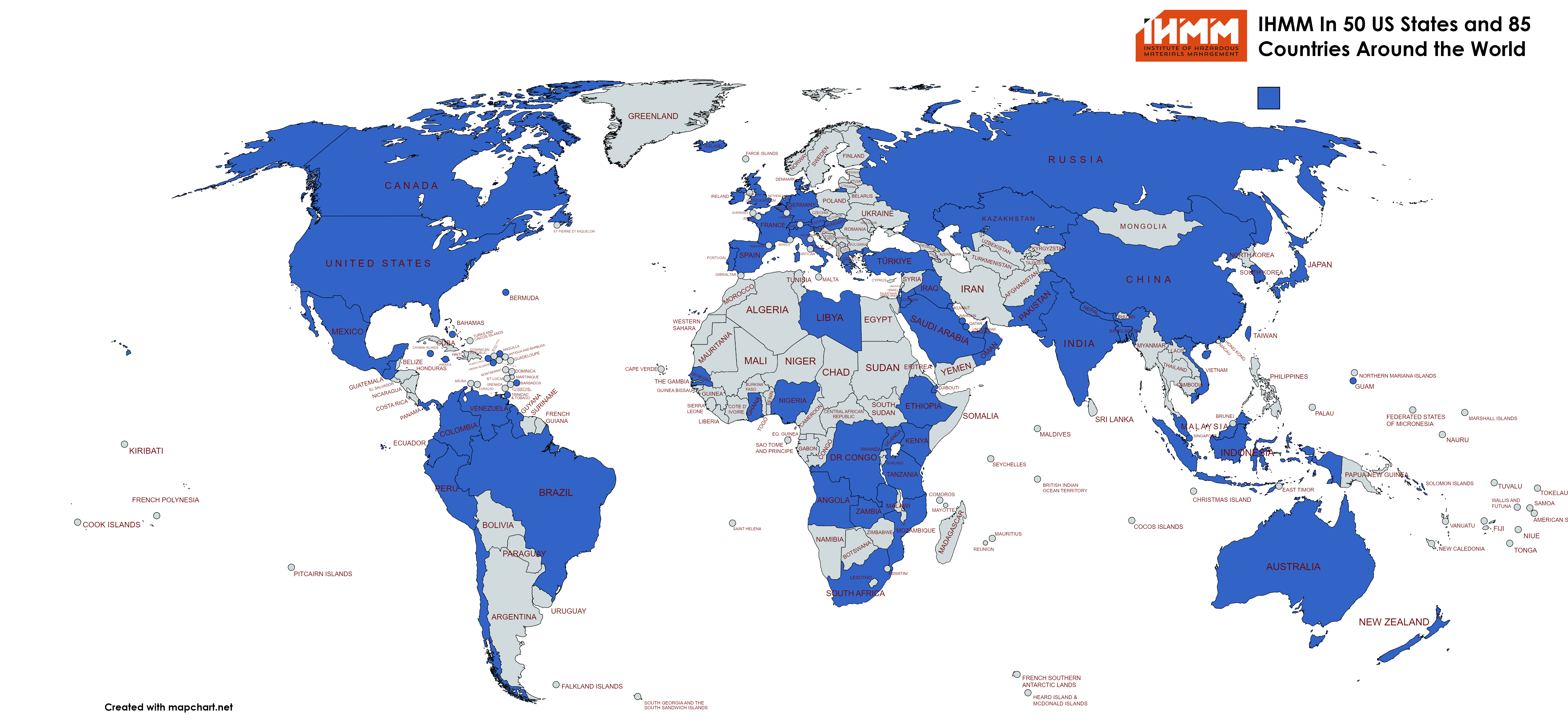
IHMM Global DG Transport Compliance Matrix (2025–2026)
IHMM Certificant Compliance Checklist
Week of April 6-13, 2026
The week of April 6–13, 2026, represents a consequential period in North American dangerous goods and hazardous materials transportation law, defined by regulatory convergence, active rulemaking milestones, and intensifying enforcement activity across the United States, Canada, and Mexico. While no single sweeping statutory change occurred, developments during this period collectively underscore a continued shift toward harmonization with international standards, heightened scrutiny of documentation, and expanded cross-agency enforcement exposure.
United States — PHMSA Harmonization Reaches a Critical Juncture
The most significant U.S. development this week is the April 13, 2026 close of the public comment period for the Pipeline and Hazardous Materials Safety Administration (PHMSA) Notice of Proposed Rulemaking known as HM-215R. This rulemaking proposes comprehensive updates to the Hazardous Materials Regulations (49 C.F.R. Parts 171–180) to align more closely with the UN Model Regulations, ICAO Technical Instructions, and the IMDG Code (Amendment 42-24).
Key elements of the proposal include:
- Updated hazard classifications, proper shipping names, and packing groups;
- Recognition of emerging battery technologies, including sodium-ion batteries;
- Revisions to packaging authorizations and vessel stowage requirements; and
- Harmonization of air transport limitations and multimodal consistency provisions.
IHMM has submitted comments on this important PHMSA rulemaking >
IHMM Submits Formal Comments to PHMSA: Advancing Safety, Elevating the Profession, and Strengthening the Role of Certified Experts
Legal Significance
The closing of the comment period marks a procedural inflection point, transitioning PHMSA from stakeholder engagement to internal review and eventual final rule issuance. More importantly, HM-215R signals PHMSA’s continued expectation that regulated entities—particularly those engaged in international shipments—operate in practical alignment with global dangerous goods standards, even prior to formal regulatory adoption.
From a compliance standpoint, U.S. shippers must increasingly ensure:
- Consistency between domestic HMR requirements and international transport regimes;
- Alignment with carrier acceptance policies, particularly in air and ocean transport; and
- Anticipation of future regulatory changes, especially in the area of battery transport and energy storage systems.
Canada — TDG Modernization Through Regulatory Planning and Standards Integration
Canada continues to advance its dangerous goods regulatory framework under the Transportation of Dangerous Goods (TDG) Regulations, with spring 2026 amendments anticipated as part of Transport Canada’s forward regulatory agenda. These updates are expected to further align Canadian requirements with international standards while addressing evolving safety concerns.
A key development during this period is the ongoing consultation on revisions to CAN/CGSB-43.150, a technical standard incorporated by reference into the TDG Regulations governing the design, manufacture, and use of containers for dangerous goods.
Legal Significance
Canada’s reliance on incorporation by reference creates a distinctive regulatory structure in which substantive compliance obligations may change without direct amendment to the TDG text. Once the updated standard is adopted, it will become legally binding following a transition period.
For regulated entities, this creates several compliance implications:
- The need to monitor standards organizations and consultation processes, not just formal regulatory publications;
- Potential changes to packaging, cylinder, and containment requirements; and
- Increased risk of inadvertent noncompliance where incorporated standards are not tracked in real time.
Canada’s regulatory direction continues to emphasize international harmonization, safety in emerging energy technologies, and modernization of oversight mechanisms.
Mexico — Regulatory Modernization and Heightened Enforcement Activity
Mexico remains in a phase of regulatory modernization, with continued attention to the proposed standard PROY-NOM-011-SICT2/2025, which governs the transport of dangerous goods in limited quantities. The proposal aligns Mexican regulatory practice with the UN Model Regulations, while establishing clearer requirements for marking, packaging, and documentation.
Important News Development — Fuel Transport Enforcement
The most notable Mexican development this week arises from intensified federal enforcement actions targeting fuel smuggling and misdeclared petroleum cargoes moving through ports and inland transportation systems.
Legal Significance
These enforcement actions carry substantial implications for hazardous materials transportation law:
- They elevate shipping documentation accuracy from a regulatory requirement to a multi-jurisdictional enforcement issue;
- They reflect increasing coordination between transport authorities, customs officials, and law enforcement agencies; and
- They expand potential liability exposure to include civil penalties, customs violations, and criminal prosecution.
For carriers and shippers, particularly those handling petroleum products, the legal risk associated with inaccurate or inconsistent documentation has materially increased.
Cross-Border Legal Themes
Across the United States, Canada, and Mexico, several consistent regulatory themes define the landscape for this period:
1. Continued Harmonization with International Standards
All three jurisdictions are actively aligning with:
- UN Model Regulations,
- ICAO Technical Instructions, and
- IMDG Code requirements.
2. Documentation Integrity as a Core Enforcement Priority
Regulators are placing increased emphasis on:
- Accurate hazard classification,
- Proper shipping names, and
- Consistency across multimodal transport documentation.
3. Battery Technologies Driving Regulatory Focus
Lithium-ion and emerging battery chemistries remain central to:
- Rulemaking initiatives,
- Enforcement activity, and
- Safety-related regulatory development.
4. Expansion of Enforcement Beyond Traditional Transport Law
Hazardous materials compliance is increasingly intersecting with:
- Customs enforcement,
- Environmental regulation, and
- Criminal law frameworks.
Conclusion
For the week of April 6–13, 2026, the regulatory environment for dangerous goods and hazardous materials transportation in North America is characterized by alignment, evolution, and enforcement expansion, rather than discrete legislative change.
The closure of PHMSA’s HM-215R comment period marks a critical step toward deeper integration with international standards. Canada’s continued reliance on incorporated standards underscores the importance of monitoring technical developments, while Mexico’s enforcement activity highlights the growing legal consequences of documentation deficiencies.
For practitioners and regulated entities, the operative standard of care now requires:
- Alignment with international regulatory frameworks,
- Rigorous documentation and classification accuracy,
- Continuous monitoring of incorporated standards and pending rulemakings, and
- Awareness of cross-agency enforcement risks, particularly in high-risk sectors such as fuels and energy storage.
In practical terms, hazardous materials compliance in North America now extends beyond regulatory text—it demands proactive, integrated, and internationally informed compliance systems.
Europe
In Europe, ADR 2025 remains the settled legal baseline under UNECE auspices, and UNECE’s dangerous-goods calendar shows that the next major formal step is the 119th session of WP.15 on May 5–8, 2026, while OTIF continues to publish the working infrastructure for the RID side of the next amendment cycle. OTIF’s late-March invitation for the 59th session of the RID Committee of Experts makes clear that the secretariat is already preparing amendments for entry into force on January 1, 2027, taking into account the results of the March 2026 RID/ADR/ADN Joint Meeting. In legal terms, Europe is in an enforcement-and-drafting phase: ADR 2025 governs current operations, while 2027 changes are actively being assembled in the UNECE/OTIF machinery.
The most important Europe-region news story this week was maritime rather than road-based. Reuters reported on April 10 that Estonia considers detaining Russia-linked tankers in the Baltic too risky because of the danger posed by ships carrying hazardous cargo and the potential environmental consequences of intervention. That is not a new ADR rule, but it is highly relevant to hazardous-materials transportation law because it shows a European state explicitly weighing navigation safety, pollution risk, and cargo hazard in its enforcement posture toward the “shadow fleet.” For operators handling petroleum and chemical cargoes in or near European waters, the message is that cargo risk and vessel integrity are becoming inseparable regulatory concerns.
Asia
Asia did not produce a single dominant treaty-style dangerous-goods enactment this week, but the compliance environment continued to tighten through air and maritime practice. UNECE’s global dangerous-goods work remains the technical reference point, while industry and carrier guidance continue to reinforce the 2026 battery regime in air transport. Current 2026 IATA battery guidance materials and related compliance reporting continue to emphasize new documentation and handling expectations for lithium and sodium-ion batteries, consistent with the broader global move toward tighter evidence and safety controls. In parallel, UN/UNECE dangerous-goods work for 2026 remains active through the ECOSOC Sub-Committee process, with document deadlines and meeting schedules already fixed for the next technical cycle.
A second Asia-relevant development this week was geopolitical but directly material to hazardous-cargo transport: Reuters reported on April 6 that China issued fresh guidance on e-commerce and cross-border trade after European complaints about unsafe products. While not a classic dangerous-goods rule, it is part of the same regulatory direction of travel: products moving in fragmented cross-border supply chains are drawing sharper safety scrutiny, including where batteries and embedded hazardous components are concerned. For counsel advising exporters, that means dangerous-goods risk now increasingly overlaps with product-safety and customs-screening risk, especially for consumer goods containing batteries.
Africa
In Africa, no continent-wide hazardous-materials transport statute emerged this week, but the practical compliance environment continued to be driven by route-security and fuel-supply disruptions. Reuters had already reported that African economies face sharper disruption if Middle East conflict drags on, specifically because trade, fuel, and fertilizer supply chains are exposed. In the dangerous-goods context, that matters because disruptions in petroleum and chemical logistics directly change the operational risk profile of tanker and bulk hazardous-cargo carriage across African routes. South Africa’s transport framework also continues to anchor dangerous-goods road carriage in UN-style classification, packaging, marking, and labeling principles, reinforcing that formal statutory quiet does not mean compliance stability.
Africa also remained tied to the Mediterranean hazardous-cargo story. Earlier April reporting showed a damaged Russian LNG tanker breaking loose from tow off Libya, which kept hazardous marine cargo response squarely in the Africa-Europe interface. Even absent a new African regulation this week, this type of incident places African coastal authorities and regional operators in a posture where emergency intervention, coastal-state response, and hazardous-cargo contingency planning are part of the practical law of transport.
South America
In South America, the most concrete legal developments remained administrative implementation and national measures, rather than a new regional treaty instrument. Argentina’s dangerous-goods road transport framework continues to be shaped by its late-2025 decision to extend through December 31, 2026 the use of certain 2013–2015 model vehicles dedicated to transporting dangerous substances, provided they held the required dangerous-goods roadworthiness approval by the end of 2025. That is a meaningful regulatory accommodation because it preserves fleet continuity while leaving the dangerous-goods inspection condition in place. Argentina also remains aligned with international maritime dangerous-goods tightening, as shown by its January 2026 prefectural action recognizing that IMDG changes had removed prior exemptions for certain charcoal cargoes.
The week’s most important South America-related news story was from Brazil, where Reuters reported on April 6 that rising energy prices were threatening the economics of the country’s free cooking-gas program. That is not a transport rule by itself, but it is relevant to hazardous-materials transport because LPG distribution is a core dangerous-goods logistics function, and price shocks often translate into regulatory pressure on storage, delivery, subsidy controls, and fuel-movement oversight. In parallel, South American compliance practice continues to sit within the broader UN/ADR-style architecture used in the region, even when the immediate developments are administrative or economic rather than treaty-based.
