

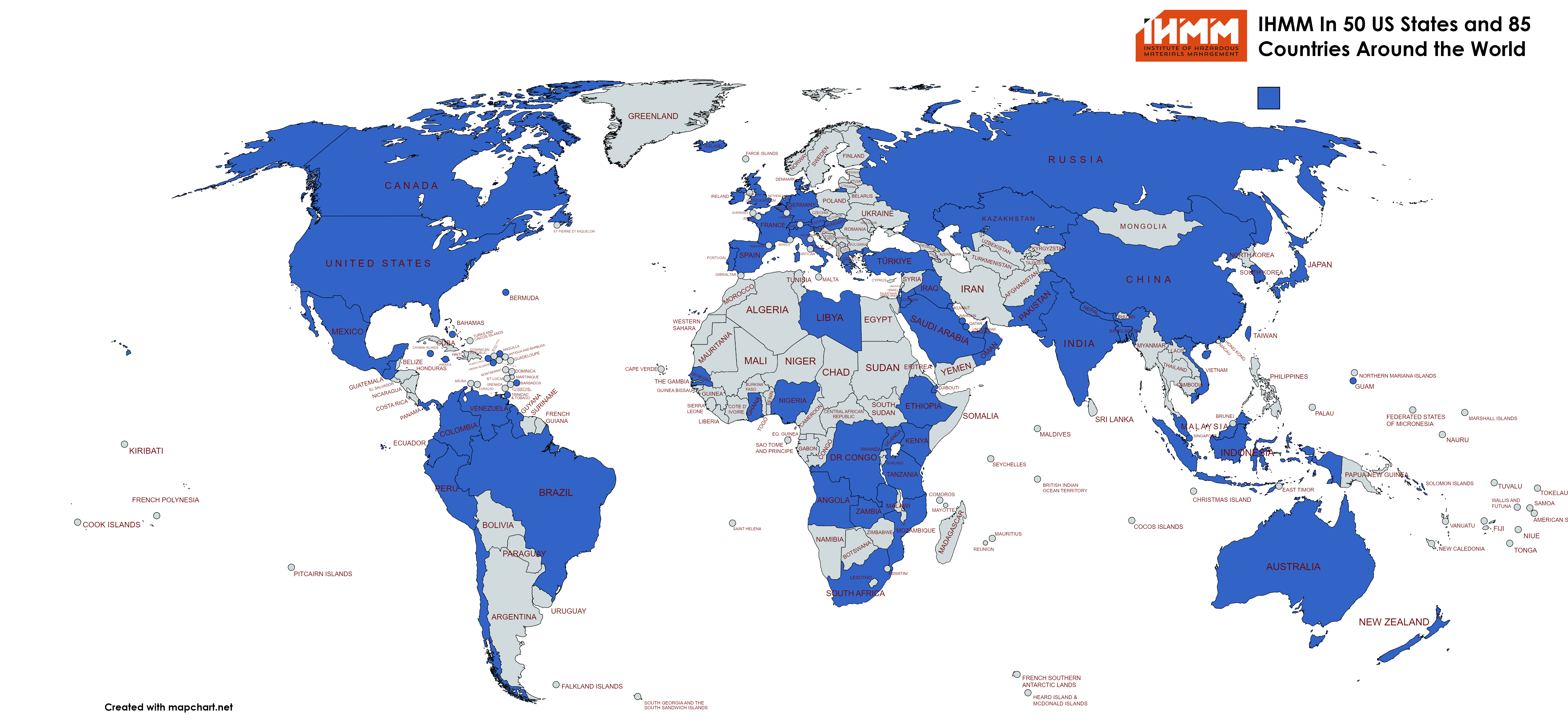
IHMM Global DG Transport Compliance Matrix (2025–2026)
IHMM Certificant Compliance Checklist
May 12–18, 2026
For the period May 12–18, 2026, North American dangerous-goods and hazardous-materials transportation law continued to evolve through a combination of PHMSA harmonization activity, Canadian standards modernization, and Mexican fuel and LPG enforcement initiatives. The common theme across the United States, Canada, and Mexico is the continued movement toward international alignment, risk-based enforcement, and enhanced technical oversight of high-consequence cargoes, particularly batteries, fuels, and energy products.
United States
In the United States, the most significant ongoing legal development remains the Pipeline and Hazardous Materials Safety Administration (PHMSA) harmonization initiative under HM-215R, which continues moving through internal agency review following the April 13 close of comments. The proposal would align the Hazardous Materials Regulations (49 C.F.R. Parts 171–180) more closely with the UN Model Regulations, ICAO Technical Instructions, and IMDG Code standards governing classification, shipping names, packaging, air limitations, and vessel stowage.
PHMSA also continued work related to LNG and energy-transport oversight. During this period, PHMSA’s pipeline safety and LNG activities remained relevant to the broader hazardous-materials transport framework because LNG supply chains, storage, and transfer operations are increasingly integrated into multimodal hazardous-cargo risk management.
One of the most important practical U.S. compliance themes this week involved hazard communication and documentation defensibility. Industry compliance discussions and recent PHMSA interpretation activity continue emphasizing that shipping-paper accuracy, proof of classification, and consistency between domestic and international documentation are becoming central enforcement priorities.
Important News Development — Battery and Energy Shipment Scrutiny
Battery and energy-storage shipments continue to dominate transport risk discussions. The broader 2026 ICAO/IATA and IMDG battery frameworks are now fully operational, and U.S. exporters remain exposed to carrier acceptance requirements involving:
- Lithium-ion batteries,
- Sodium-ion batteries,
- Battery-powered equipment, and
- State-of-charge limitations.
Legal Significance
For U.S. shippers and carriers, the standard of care increasingly requires:
- Defensible classification records,
- Verified battery testing documentation,
- Accurate shipping papers, and
- Alignment with international carrier acceptance standards.
The legal risk associated with undeclared or improperly documented battery shipments remains high.
Canada
Canada continues advancing its dangerous-goods framework through a combination of Transportation of Dangerous Goods (TDG) modernization and incorporated standards updates.
A key active development remains Transport Canada’s consultation on a new edition of CSA B625, a technical standard incorporated into the TDG Regulations. Because Canadian TDG law relies heavily on incorporation by reference, changes to CSA standards can become legally binding without major amendments to the core TDG Regulations themselves.
Transport Canada also continues emphasizing dangerous-goods marking, packaging, and battery safety guidance, particularly for lithium batteries and battery-powered equipment.
Legal Significance
Canada’s regulatory structure creates several practical compliance obligations:
- Continuous monitoring of incorporated standards,
- Maintenance of current packaging and containment specifications,
- Proof of classification and documentation support, and
- Alignment with evolving international battery requirements.
For Canadian operators, failing to track incorporated standards may create inadvertent noncompliance even where the TDG Regulations themselves appear unchanged.
Important News Development — Fuel Spill and Environmental Exposure
Canadian regulators and industry also continued responding to recent fuel-transport incidents, including tanker rollover and spill events that triggered environmental containment and remediation efforts.
Legal Significance
These incidents reinforce that dangerous-goods transportation compliance in Canada now routinely intersects with:
- Environmental reporting obligations,
- Spill-response requirements,
- Emergency-management protocols, and
- Provincial environmental enforcement frameworks.
Mexico
Mexico remains in an active period of hazardous-materials regulatory modernization and post-incident enforcement expansion.
The proposed PROY-NOM-011-SICT2/2025 governing dangerous goods in limited quantities continues moving through the standards process, with the objective of aligning Mexican requirements more closely with UN Model Regulation concepts governing:
- Packaging,
- Marking,
- Documentation, and
- Quantity limitations.
LPG Transportation Safety
Mexico also continues advancing stronger controls over LPG transportation following the 2025 Mexico City LPG tanker disaster. Regulatory discussions and ASEA initiatives involving PROY-NOM-029 continue focusing on:
- Vehicle integrity,
- Hydrostatic testing,
- Driver qualifications,
- GPS and speed-monitoring requirements,
- Route restrictions, and
- Multi-agency inspection protocols.
Legal Significance
Mexico’s dangerous-goods framework is increasingly characterized by:
- Coordination among transport, energy, customs, and enforcement authorities;
- Expanded inspection authority;
- Heightened scrutiny of fuel and LPG shipments; and
- Increased exposure to civil and criminal liability for documentation failures or unsafe operations.
For fuel and LPG transporters, compliance now requires not only technical adherence to hazardous-materials regulations, but also strong operational controls and defensible maintenance and training records.
Cross-Border Legal Themes
Several themes continue to define dangerous-goods regulation across North America during this period:
1. International Harmonization
All three jurisdictions continue aligning with:
- UN Model Regulations,
- ICAO Technical Instructions,
- IMDG Code standards.
2. Batteries and Energy Storage as Primary Regulatory Drivers
Lithium-ion and sodium-ion batteries remain:
- Central to enforcement activity,
- A major source of carrier scrutiny, and
- A leading focus of regulatory modernization.
3. Documentation Integrity as an Enforcement Priority
Regulators increasingly emphasize:
- Accurate shipping descriptions,
- Proper hazard classifications,
- Consistency across multimodal documentation, and
- Proof supporting classification decisions.
4. Operational Safety and Traceability
Particularly for fuel and LPG transportation, authorities are focusing on:
- Vehicle condition,
- Driver training,
- Route controls,
- GPS monitoring, and
- Spill-response preparedness.
Conclusion
For the period May 12–18, 2026, dangerous-goods and hazardous-materials transportation law in North America continues to evolve through implementation, harmonization, and operational enforcement rather than dramatic statutory change.
The United States remains focused on international harmonization and battery-related compliance risks; Canada continues modernizing its TDG system through incorporated standards and technical guidance; and Mexico is tightening hazardous-fuel and LPG transportation oversight through increasingly aggressive regulatory and enforcement measures.
For practitioners and regulated entities, the operative standard of care now extends beyond simple regulatory text compliance. It requires:
- Continuous monitoring of international and incorporated standards,
- Defensible classification and documentation systems,
- Battery and fuel transport expertise,
- Strong operational safety controls, and
- Integrated cross-border compliance management.
Europe, Africa, Asia, and South America
For the period May 12–18, 2026, international dangerous-goods and hazardous-materials transportation law continued evolving through a combination of UNECE/ADR treaty administration, maritime hazardous-cargo controls, battery-transport implementation, and national traceability and enforcement initiatives. Across Europe, Africa, Asia, and South America, the regulatory trend remains unmistakable: dangerous-goods compliance is increasingly measured not only by classification and placarding, but also by documentation integrity, route risk, battery evidence, digital reporting, and operational safety controls.
Europe
The most important European development during this period remains the aftermath of the 119th session of the UNECE Working Party on the Transport of Dangerous Goods (WP.15) held in Geneva from May 5–8, 2026, under the auspices of the United Nations Economic Commission for Europe (UNECE). WP.15 addressed proposed amendments to ADR, interpretation issues, and technical matters that will shape the next ADR amendment cycle, leading toward ADR 2027.
ADR Technical Developments
Among the significant technical subjects under discussion were:
- Batteries installed in vehicles,
- Vehicle equipment and dangerous-goods interfaces,
- Tank and containment requirements,
- Documentation and operational consistency, and
- Clarifications involving ADR exemptions and interpretation.
Legal Significance
The practical significance of the WP.15 work is substantial:
- Europe is actively transitioning from ADR 2025 implementation toward ADR 2027 development;
- Operational experience with electric vehicles, batteries, and alternative fuels is being translated into future regulatory text; and
- Companies operating internationally should now begin monitoring likely future ADR amendments rather than relying solely on current requirements.
Important News Development — European Fuel and Tanker Concerns
Europe also continued facing energy and hazardous-cargo transportation pressures tied to global fuel supply disruptions and maritime tanker risk. European aviation and maritime authorities remain focused on fuel availability, vessel integrity, and hazardous-cargo safety as energy supply chains continue adjusting to geopolitical instability.
Legal Significance
This reinforces a growing European enforcement philosophy:
- Dangerous cargo risk is now evaluated together with vessel condition, operational safety, and environmental exposure;
- Maritime hazardous-materials regulation increasingly overlaps with:
- Environmental protection,
- Energy security, and
- Geopolitical risk management.
Asia
Asia’s dangerous-goods environment during this period continued to be shaped by battery transportation controls, maritime fuel disruptions, and carrier enforcement practices.
Battery Transportation Controls
The 2026 ICAO/IATA dangerous-goods framework remains fully operational throughout Asia, with continuing emphasis on:
- Lithium-ion batteries,
- Sodium-ion batteries,
- State-of-charge limitations,
- Overpack segregation requirements, and
- Battery testing documentation.
Legal Significance
For Asian shippers and manufacturers:
- Carrier acceptance rules increasingly function as practical law;
- A shipment may technically satisfy domestic law yet still be rejected for failure to satisfy:
- Airline requirements,
- IMDG standards, or
- Carrier-specific battery evidence rules.
Maritime Fuel and Route Risk
Asia also continues to experience the downstream effects of Middle East fuel-route disruptions and tanker market volatility. Increased rerouting of fuel cargoes and shifting tanker availability continue affecting hazardous-materials logistics throughout the region.
Legal Significance
Hazardous-goods compliance in Asia now increasingly requires:
- Route-risk assessment,
- Fuel-specification controls,
- Vessel suitability review, and
- Enhanced contingency planning.
Africa
Africa saw no major continent-wide dangerous-goods enactment during this period, but practical compliance standards continue evolving through port authority enforcement, aviation oversight, and maritime cargo acceptance practices.
Maritime and Fuel-Supply Risk
African trade routes remain significantly affected by global fuel-market instability and rerouted tanker traffic. As hazardous cargoes move through African coastal routes with increasing frequency, port and maritime authorities continue relying heavily on:
- IMDG Code principles,
- UN dangerous-goods classifications, and
- Carrier-imposed operational controls.
Aviation and Battery Safety
African aviation authorities also continue emphasizing lithium-battery restrictions and dangerous-goods controls for air transport.
Legal Significance
The African regulatory landscape demonstrates that:
- Dangerous-goods compliance is increasingly driven by operational enforcement rather than formal legislative amendment;
- Airlines, ports, and customs authorities are applying UN/ICAO/IMDG-based expectations even where domestic legislation changes slowly.
For operators, this means practical compliance obligations may effectively exceed the literal wording of local regulations.
South America
South America’s most significant developments during this period continued to involve administrative oversight, digital traceability systems, and operator reporting requirements.
Colombia — RNDC and Traceability Expansion
Colombia remains the region’s leading example of dangerous-goods oversight through digital logistics systems. The Ministry of Transport’s RNDC portal continues publishing:
- Training schedules,
- Cargo-generator notices,
- Reporting requirements, and
- Dangerous-goods compliance guidance.
Colombia also continues enforcing mandatory quantity reporting for dangerous goods in:
- Gallons, and
- Kilograms.
Legal Significance
This reflects a broader regional movement toward:
- Data-driven dangerous-goods oversight,
- Shipment traceability,
- Digital enforcement systems, and
- Increased visibility into hazardous cargo flows.
Argentina — Continued Transitional Controls
Argentina remains in a compliance-maintenance phase, continuing previously adopted measures extending operational eligibility for certain older dangerous-goods transport vehicles through 2026, subject to inspection and certification requirements.
Legal Significance
South American dangerous-goods regulation increasingly combines:
- UN-style technical standards,
- National operational controls,
- Digital reporting obligations, and
- Administrative enforcement systems.
Cross-Regional Legal Themes
Several themes define dangerous-goods transportation law across Europe, Asia, Africa, and South America during this period:
1. UNECE and ADR Continue Driving Global Standards
ADR, RID, IMDG, ICAO, and UN Model Regulations remain the foundation of dangerous-goods regulation worldwide.
2. Battery Technologies Remain the Central Regulatory Driver
Lithium-ion and sodium-ion batteries continue to dominate:
- Rulemaking,
- Carrier acceptance standards,
- Enforcement priorities, and
- Safety concerns.
3. Operational Risk Has Become a Compliance Issue
Route instability, tanker integrity, and fuel disruptions now directly affect:
- Hazardous-cargo acceptance,
- Regulatory scrutiny,
- Insurance exposure, and
- Carrier decision-making.
4. Digital Traceability and Data Reporting Are Expanding
Especially in South America, regulators are increasingly relying on:
- Shipment databases,
- Digital reporting systems,
- Quantity reporting, and
- Operator registration systems.
5. Enforcement Is Becoming Increasingly Practical Rather Than Purely Textual
Ports, airlines, carriers, and customs authorities are increasingly applying:
- Risk-based operational standards,
- IMDG/ICAO expectations, and
- Carrier-specific requirements,
even in the absence of new legislation.
Conclusion
For the period May 12–18, 2026, international dangerous-goods transportation law is characterized by implementation, operational tightening, and forward-looking regulatory development.
Europe is actively shaping the ADR 2027 cycle through UNECE processes; Asia continues tightening battery and maritime compliance expectations; Africa’s dangerous-goods environment is increasingly driven by practical operational controls; and South America is expanding digital traceability and administrative oversight.
For regulated entities, the operative standard of care now requires:
- Continuous monitoring of ADR, IMDG, ICAO, and UN developments;
- Defensible classification and battery documentation;
- Operational and route-risk assessment;
- Digital traceability compliance; and
- Integration of carrier and port acceptance standards into compliance systems.
In practical terms, dangerous-goods compliance has evolved beyond static regulatory text into a dynamic system of international alignment, operational control, technical evidence, and risk-informed oversight.
