

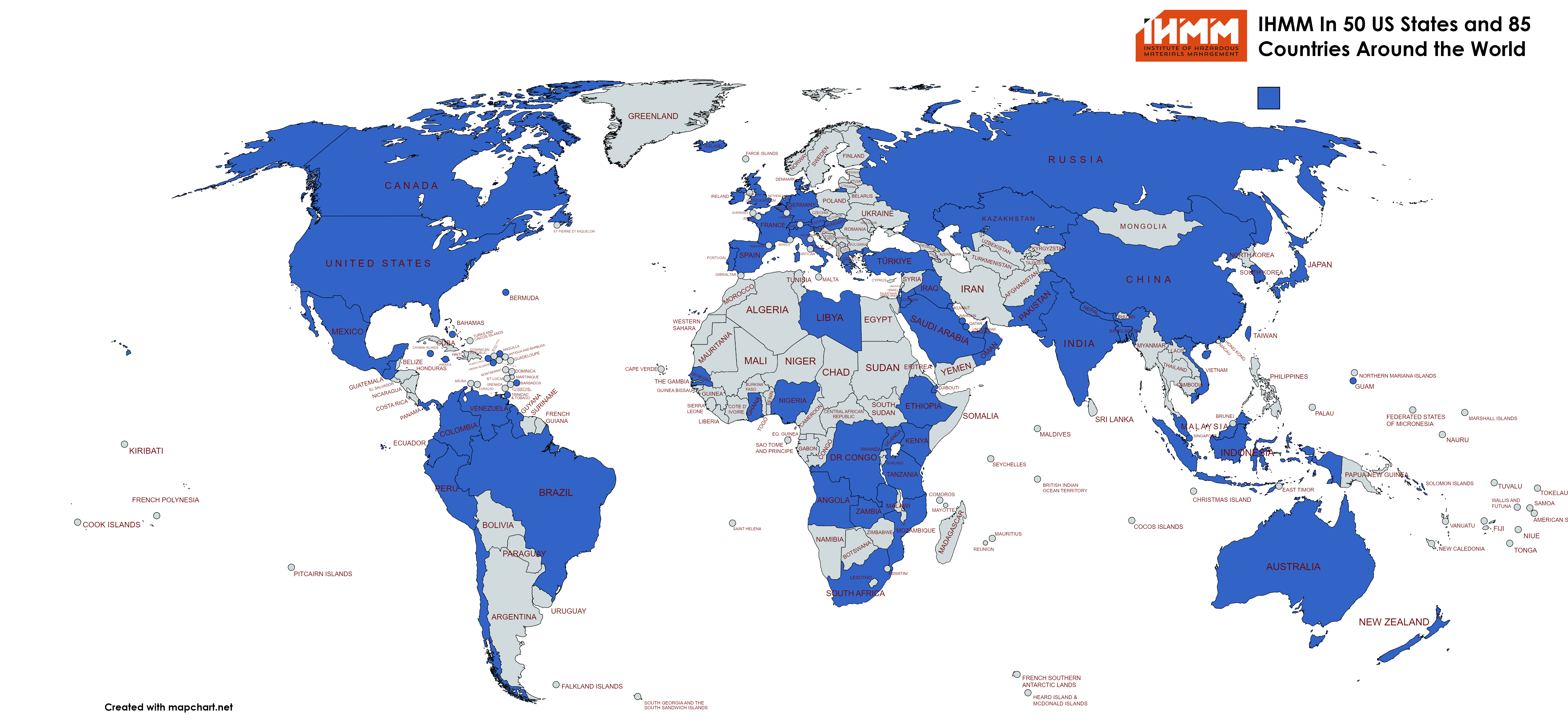
IHMM Global DG Transport Compliance Matrix (2025–2026)
IHMM Certificant Compliance Checklist
July 1-7, 2026
United States, Canada, and Mexico
For the period of July 1–7, 2026, dangerous goods and hazardous materials transportation regulation throughout North America continued to be driven by international harmonization, digital regulatory modernization, battery transportation safety, fuel transportation oversight, and preparations for the next generation of United Nations dangerous goods standards.
This reporting period is particularly noteworthy because it coincides with the opening of the 68th Session of the United Nations Sub-Committee of Experts on the Transport of Dangerous Goods (UNSCOE TDG) in Geneva. Although the Sub-Committee is an international body, its work ultimately drives amendments adopted by PHMSA in the United States, Transport Canada, Mexico’s Secretaría de Infraestructura, Comunicaciones y Transportes (SICT), the ICAO Technical Instructions, the IMDG Code, ADR, RID, and other international dangerous-goods regulatory systems.
United States
PHMSA Continues International Harmonization
During this reporting period, the Pipeline and Hazardous Materials Safety Administration (PHMSA) continued implementing its broader regulatory modernization initiatives while monitoring developments emerging from the UN Sub-Committee meeting in Geneva.
The agency’s pending HM-215R rulemaking remains the principal U.S. harmonization initiative. Once finalized, it will incorporate numerous changes originating from recent editions of the UN Model Regulations affecting:
- Proper shipping names;
- Hazard classifications;
- Special provisions;
- Packaging authorizations;
- Limited quantities;
- Air transport restrictions;
- Vessel stowage requirements.
For U.S. shippers engaged in international commerce, the practical significance remains substantial because future amendments adopted by UNSCOE frequently become incorporated into PHMSA regulations within subsequent harmonization rulemakings.
Registration and Digital Compliance
PHMSA’s 2026–2027 hazardous materials registration cycle also continued during this reporting period.
The agency continues emphasizing electronic registration, improved data quality, secure online transactions, and modernization of compliance administration. These initiatives reflect PHMSA’s broader movement toward digital oversight and data-driven regulatory enforcement.
Battery Transportation
Lithium battery transportation remains one of PHMSA’s highest regulatory priorities.
Enforcement activity continues emphasizing:
- UN 38.3 testing;
- Shipping paper accuracy;
- Proper packaging;
- State-of-charge limitations for air transport;
- Employee training;
- Emergency response information.
Legal Significance
The modern U.S. hazardous materials compliance program increasingly requires organizations to demonstrate not merely technical compliance with the Hazardous Materials Regulations, but also comprehensive documentation, digital recordkeeping, and defensible internal compliance systems.
Canada
Transportation of Dangerous Goods Program
Transport Canada continued emphasizing implementation of its Transportation of Dangerous Goods (TDG) Regulations, particularly recent enhancements involving emergency reporting and incident notification.
Canadian dangerous-goods transportation continues relying upon:
- Risk-based oversight;
- Incorporated technical standards;
- CANUTEC emergency support;
- International harmonization.
Recent reporting requirements reinforce that releases, anticipated releases, collisions, thefts, losses, evacuations, and transportation disruptions involving dangerous goods may trigger immediate reporting obligations.
Technical Standards
Canada also continues reviewing technical standards affecting:
- Portable tanks;
- Means of containment;
- Inspection requirements;
- Testing protocols.
Because Canadian regulations incorporate many technical standards by reference, organizations must monitor both regulatory amendments and revisions to incorporated standards.
Legal Significance
Canadian transportation companies should continue strengthening:
- Incident reporting procedures;
- CANUTEC notification protocols;
- Employee training;
- Means-of-containment inspection programs;
- Documentation retention systems.
Mexico
Continued Harmonization with UN Standards
Mexico continues modernizing its dangerous-goods transportation framework through standards closely aligned with the UN Model Regulations.
The proposed PROY-NOM-011-SICT2/2025 remains one of the country’s most significant dangerous-goods initiatives, modernizing requirements applicable to dangerous goods transported in limited quantities.
The proposal addresses:
- Packaging;
- Marking;
- Documentation;
- Quantity limitations;
- Safety controls.
Fuel and LPG Transportation
Fuel transportation remains one of Mexico’s highest regulatory priorities.
Following several major tanker incidents during the past year, authorities continue strengthening oversight involving:
- Vehicle inspections;
- Driver qualifications;
- Tank integrity;
- GPS monitoring;
- Route controls;
- Emergency-response planning.
Enforcement
Authorities continue targeting:
- Illegal fuel transportation;
- Misdeclared hazardous cargoes;
- Documentation deficiencies;
- Unauthorized petroleum movements.
Legal Significance
Operators transporting fuels or LPG increasingly face overlapping transportation, customs, environmental, and criminal enforcement authorities.
Compliance now requires comprehensive operational controls extending well beyond traditional shipping-paper requirements.
Important North American News
United Nations Dangerous Goods Meeting Begins
Perhaps the most significant development affecting North America this week is not domestic, but international.
On June 30, the 68th Session of the United Nations Sub-Committee of Experts on the Transport of Dangerous Goods commenced in Geneva.
Topics expected to influence future North American regulations include:
- New UN Numbers;
- Lithium battery provisions;
- Sodium-ion batteries;
- Battery-powered vehicles;
- Pressure receptacles;
- Waste classifications;
- Tank requirements;
- Digital documentation;
- Emerging technologies.
Historically, recommendations adopted by the Sub-Committee become incorporated into subsequent editions of the UN Model Regulations and later implemented by PHMSA, Transport Canada, Mexico, ICAO, IMDG, ADR, and RID.
The agenda and daily reports of the 68th session are found here.
Cross-Border Trends
Several common themes continue defining North American dangerous-goods transportation.
1. International Harmonization
The United States, Canada, and Mexico remain closely aligned with the UN Model Regulations despite differences in national implementation.
2. Batteries Continue Driving Regulatory Change
Lithium-ion and sodium-ion batteries remain the single largest driver of dangerous-goods regulatory development.
3. Digital Compliance Continues Expanding
Electronic registration, digital reporting, shipment tracking, and electronic documentation continue replacing traditional paper-based compliance systems.
4. Fuel Transportation Remains High Risk
Petroleum products, LNG, LPG, hydrogen, and alternative fuels continue receiving heightened regulatory attention.
5. Documentation Has Become Central to Compliance
Shipping papers, emergency-response information, testing records, packaging certifications, and training documentation increasingly determine enforcement outcomes.
Conclusion
For the period of July 1–7, 2026, North American dangerous-goods transportation regulation continued evolving toward greater international harmonization, operational accountability, and digital oversight.
PHMSA remains focused on harmonization and modernization; Canada continues strengthening its risk-based Transportation of Dangerous Goods program; and Mexico continues modernizing its dangerous-goods framework while intensifying fuel transportation enforcement.
Perhaps most importantly, the opening of the 68th Session of the UN Sub-Committee of Experts on the Transport of Dangerous Goods marks the beginning of the next international amendment cycle. The recommendations emerging from that meeting will ultimately influence future amendments to the U.S. Hazardous Materials Regulations, Canada’s TDG Regulations, Mexico’s dangerous-goods standards, ADR, the IMDG Code, and the ICAO Technical Instructions.
For hazardous materials professionals, the modern standard of care now requires more than technical compliance. It requires continuous monitoring of international developments, robust documentation, defensible classification decisions, strong emergency-response capabilities, and proactive integration of evolving global standards into organizational compliance programs.
Europe, Africa, Asia, and South America
For the period of July 1–7, 2026, the regulation of dangerous goods and hazardous materials transportation across Europe, Africa, Asia, and South America was shaped principally by the ongoing 68th Session of the United Nations Sub-Committee of Experts on the Transport of Dangerous Goods, continuing ADR implementation activity, tightening battery-transport controls, and expanding digital traceability systems.
Although no major new ADR amendment entered into force during this week, the UN Sub-Committee’s work is legally important because it forms the foundation for future amendments to the UN Model Regulations and, in turn, ADR, RID, ADN, IMDG, ICAO Technical Instructions, and national dangerous-goods regimes.
Europe
Europe remained focused on implementation of ADR 2025 while preparing for the next amendment cycle. The most significant development was the ongoing 68th Session of the UN Sub-Committee of Experts on the Transport of Dangerous Goods, meeting in Geneva from late June through July 8, 2026.
Issues before the Sub-Committee include technical proposals affecting dangerous-goods classification, packaging, battery transportation, digital hazard communication, pressure receptacles, and other subjects that will likely influence future ADR amendments.
For European operators, this means that ADR compliance should be viewed as a moving target. ADR 2025 remains controlling, but the regulatory architecture for ADR 2027 and later is actively being developed.
The practical legal concern remains batteries and alternative-energy transportation. Electric vehicles, sodium-ion batteries, lithium batteries, damaged batteries, and energy-storage systems continue to drive regulatory attention.
Asia
Asia remained at the center of global battery-transport compliance. Asian manufacturers and exporters continue facing stringent expectations under ICAO, IATA, IMDG, and UN-based standards.
The principal compliance issues include:
- UN 38.3 battery test evidence;
- State-of-charge controls;
- Packaging integrity;
- Overpack segregation;
- Dangerous-goods declarations;
- Carrier acceptance rules.
For Asian exporters, compliance with domestic law alone is no longer sufficient. Airlines, vessel operators, freight forwarders, and ports increasingly impose operational standards that function as practical conditions of market access.
Battery transportation remains the single most important dangerous-goods issue in Asia because of the volume of lithium-ion and sodium-ion batteries moving through air and ocean supply chains.
Africa
Africa did not see a major continent-wide dangerous-goods enactment during this reporting period. However, ports, customs authorities, aviation regulators, and maritime authorities continued applying UN, IMDG, ICAO, and IATA-based dangerous-goods requirements in practice.
The African regulatory environment continues to be shaped by operational enforcement rather than sweeping legislative amendments. Petroleum products, LNG, industrial chemicals, and battery cargoes remain priority areas for inspection, declaration accuracy, emergency response, and environmental protection.
For carriers and shippers, the legal lesson is that compliance in Africa increasingly depends on satisfying port, airline, customs, and carrier requirements, even where domestic statutory text may lag behind international standards.
South America
South America continued moving toward digital dangerous-goods oversight. Colombia remains the leading example, with the Ministry of Transport continuing to update and administer the RNDC system for freight movements, including dangerous goods.
Colombia’s July 2026 RNDC activity reflects ongoing implementation of cargo reporting, freight traceability, and dangerous-goods oversight. The country’s 2026 RNDC resolution unifies and updates the legal framework applicable to the Registro Nacional de Despachos de Carga.
This trend is legally significant because dangerous-goods enforcement is increasingly becoming data-driven. Regulators are moving beyond roadside inspection alone and toward real-time digital reporting, shipment databases, cargo-generator responsibility, and cross-checking of transport records.
Argentina and Brazil remain broadly aligned with UN-style dangerous-goods principles through national and regional frameworks, including MERCOSUR-aligned structures.
Important News and Compliance Themes
The principal global news development affecting all regions is the ongoing work of the UN Sub-Committee. Its decisions will likely influence the next wave of international dangerous-goods amendments.
Several themes define the week:
- International harmonization continues to dominate dangerous-goods regulation.
- Batteries remain the leading driver of technical change.
- Misdeclared dangerous goods remain a major safety and enforcement concern.
- Digital hazard communication and electronic reporting are becoming increasingly important.
- Carrier and port requirements increasingly function as de facto regulatory requirements.
Conclusion
For July 1–7, 2026, dangerous-goods and hazardous-materials transportation law across Europe, Africa, Asia, and South America continued moving toward greater harmonization, digital oversight, battery-focused regulation, and operational accountability.
The most important development was the ongoing UN Sub-Committee session in Geneva, which will help shape future amendments to the UN Model Regulations and downstream instruments including ADR, RID, ADN, IMDG, ICAO Technical Instructions, and national dangerous-goods regimes.
For regulated entities, the modern standard of care requires more than correct UN numbers, labels, and placards. It requires defensible classification, accurate documentation, battery test evidence, digital reporting capability, route-risk awareness, emergency-response readiness, and continuous monitoring of international standards development.
Source support: UNECE lists the 68th Session of the ECOSOC Sub-Committee of Experts on the Transport of Dangerous Goods for June 30–July 8, 2026, and the provisional agenda confirms the session dates and document process. PHMSA explains that the UN TDG Sub-Committee maintains and approves amendments to the UN Model Regulations, which are amended biennially and serve as the basis for harmonized domestic and international DG transport rules. Colombia’s logistics portal shows July 2026 RNDC updates, and Colombia’s 2026 RNDC resolution compiles and updates the legal framework for the Registro Nacional de Despachos de Carga

Leave A Comment