

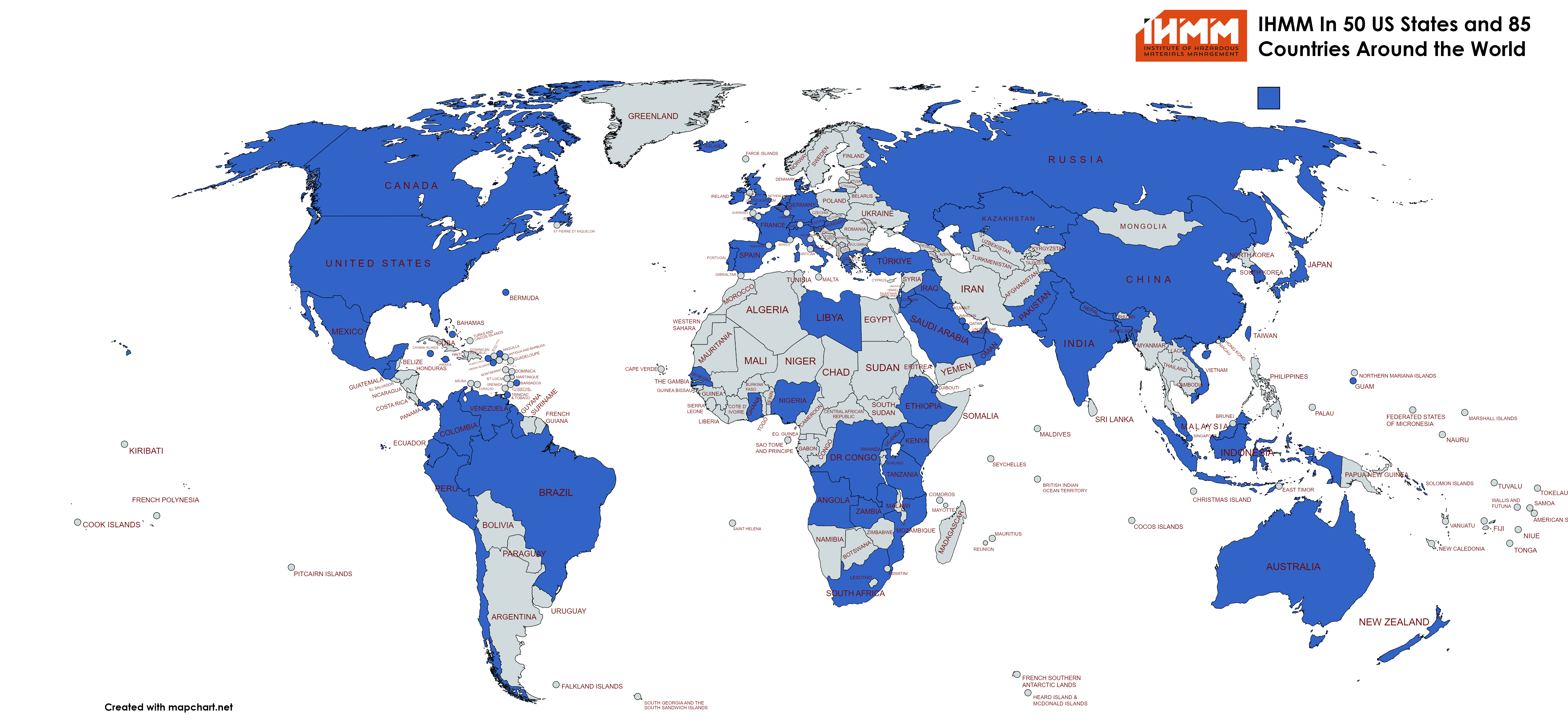
IHMM Global DG Transport Compliance Matrix (2025–2026)
IHMM Certificant Compliance Checklist
Week of March 2 -March 10, 2026
The week was defined less by sweeping new treaty text than by implementation, enforcement, and transport-security shocks. In the United States, PHMSA’s international-harmonization docket remained the central federal rulemaking item, while its fuel-transport burden-reduction rule was already in effect. In Europe, ADR 2025 remained the settled road baseline, but UNECE and OTIF were actively feeding the next RID/ADR/ADN cycle with March meeting papers on battery vehicles, packaged vehicles, and tank inspections. In Asia and Africa, formal legislation was quieter, but carrier acceptance rules, aviation battery controls, tanker security incidents, and convoy-risk management materially raised the practical compliance bar. In Central and South America, the most important developments were government enforcement and traceability measures rather than new regional texts, especially in Colombia and Mexico.
United States: PHMSA’s harmonization agenda remains the main legal signal
For U.S. operators, the most consequential live item remained PHMSA’s HM-215R NPRM, “Hazardous Materials: Harmonization With International Standards.” That proposal would update the HMR to reflect newer international rules on proper shipping names, hazard classes, packing groups, special provisions, packaging authorizations, air quantity limits, and vessel stowage. Comments remain due April 13, 2026, so the docket is still very much active during this reporting week. At the same time, PHMSA’s HM-265 final rule on reducing unnecessary burdens in fuel transportation is already effective, meaning domestic fuel carriers should now be auditing shipping-paper language, training references, and internal compliance matrices against the revised text. PHMSA’s separate ANPRM on modernizing hazardous-materials rules for space operations also reached an important procedural point, with the comment period closing on March 4, 2026. Collectively, these items show PHMSA moving on two tracks at once: near-term harmonization with ICAO/IMDG/UN norms, and longer-term modernization for new transport sectors.
Legally, that means U.S. shippers—especially exporters—should not treat the HMR as a closed domestic system. PHMSA is signaling that functional alignment with international dangerous-goods practice is increasingly the expected standard, particularly for batteries, multimodal consignments, and specialized operations. Even before final adoption, the harmonization proposal is the clearest indicator of where enforcement and compliance expectations are headed.
Europe: ADR 2025 is settled law, but the next cycle is already being built
In Europe, ADR 2025 continues as the operative legal baseline under UNECE auspices, and the next major institutional milestone is the RID/ADR/ADN Joint Meeting in Bern on March 24–27, 2026. What matters this week is that the agenda and working papers already on file show where regulators are heading. Among the documents in circulation are proposals on marking packaged vehicles, interpretive and drafting questions around battery vehicles, and clarification of when an exceptional inspection is required after replacing tank service equipment. OTIF materials also indicate continuing work to keep rail-vehicle rules aligned with evolving dangerous-goods safety requirements before the 2027 entry-into-force cycle.
The most important Europe-region news story this week came from Belgium, where authorities imposed a €10 million bail on the seized tanker Ethera and reported 45 violations, including false certificates. That is not an ADR road case, but it is highly relevant to dangerous-goods transport law because it underscores a broader European enforcement trend: regulators are increasingly treating documentation integrity, vessel certification, and shadow-fleet compliance as safety issues, not just sanctions issues. For operators moving petroleum or chemical cargoes into European waters, paperwork defects are now squarely part of the environmental and hazardous-cargo risk analysis.
Asia: fewer new statutes, but aviation and maritime carriage standards tightened in practice
Asia saw less fresh legislation than practical tightening. The most important shift was in air carriage of lithium batteries. IATA’s revised 2026 passenger guidance is already in place, and Reuters reports that several Asian carriers have either begun or announced new restrictions on using or charging power banks in flight: EVA Air and China Airlines from early March, Air Astana from early March, Thai Airways from March 15, and Singapore Airlines/Scoot from April 1. Those changes are not statutes, but they are operationally decisive because airline acceptance rules often become the real compliance threshold for dangerous-goods carriage.
At the maritime end, Asia-facing trade lanes were shaken by security incidents involving tanker traffic near Kuwait and Iraq, alongside broader disruption in Gulf shipping. Reuters reported an explosion near a tanker off Kuwait with oil seen in the water from a cargo tank, and a separate incident involving the Sonangol Namibe near Iraq where the operator said the hull was likely breached. For Asian importers and carriers, especially those dependent on Gulf hydrocarbons and chemicals, these events matter because they affect routing, war-risk pricing, cargo acceptance, and emergency-response assumptions for hazardous cargo. In other words, the legal compliance question is no longer only “how is the cargo classified,” but increasingly “is the route itself becoming a regulated hazard variable.”
Africa: formal rulemaking was limited, but fuel-transport security became a regulatory issue
Africa did not produce a major new continent-wide dangerous-goods statute this week, but the region’s practical compliance environment continued to evolve. South Africa’s transport portal still points operators to the current dangerous-goods regulatory framework and showed a recent update dated February 25, 2026, reflecting the continuing administrative maintenance of the national system.
The most important Africa-region story, however, was from Mali, where the government moved to impose fuel rationing after repeated militant attacks on fuel convoys. AP reported that more than 100 tanker trucks had been burned since September, that fuel deliveries had dropped sharply, and that authorities were moving to register vehicle plates and ration refueling intervals while military escorts protected tanker convoys. This is not ADR-style rulemaking in the formal sense, but it is absolutely a dangerous-goods transportation development under government auspices: the state is changing the legal and operational conditions of fuel transport because convoy insecurity has become a transport-governance issue. For practitioners, that is a reminder that in some regions, dangerous-goods compliance risk arises as much from route security and state control measures as from packaging, marking, or placarding rules.
Central and South America: traceability, training, and fuel-fraud enforcement were the real developments
In Central and South America, the week’s most concrete governmental activity came from Colombia and Mexico. Colombia’s Ministry of Transport logistics portal showed continued official activity around new obligations in the RNDC and related cargo-reporting requirements, including March notices for training and socialization sessions tied to Decree 1017 of 2025 and Resolution 20243040058015. Those notices matter because they reflect the shift from simple publication of dangerous-goods transport requirements to active administrative rollout, operator education, and enforceable traceability expectations. Colombia’s dangerous-goods driver information system also remained live and updated, underscoring the country’s emphasis on qualification and registration infrastructure.
Mexico’s major news development was not a new DG statute but a major government crackdown on fuel smuggling through seaports. Reuters reported that Mexico had intensified investigations into the mislabeling of diesel and gasoline as other petroleum products, with probes reaching the ports of Guaymas, Tampico, and Ensenada, as well as customs and naval officials. From a hazardous-materials transport perspective, this is highly significant because it centers on falsified shipping and customs documentation for petroleum cargoes—exactly the kind of conduct that collapses the legal distinction between tax enforcement, cargo fraud, and dangerous-goods compliance. For regional operators, that means petroleum documentation controls are now under sharper scrutiny not only for safety, but also for anti-corruption and anti-smuggling reasons.
Overall assessment
The main legal theme for March 2–10, 2026 is that dangerous-goods and hazardous-materials transportation law is being shaped by three simultaneous forces. First, there is formal harmonization, most visibly in the PHMSA NPRM and the UNECE/OTIF pipeline of RID/ADR/ADN papers. Second, there is operational tightening by carriers and transport authorities, particularly on lithium batteries and maritime dangerous cargo. Third, there is security- and fraud-driven intervention, seen in tanker incidents, convoy protection, and petroleum-smuggling investigations. Those forces are converging around the same pressure points: batteries, fuels, documentation integrity, and traceability.
For shippers, carriers, and compliance counsel, the practical consequence is straightforward. It is no longer enough to be technically correct on classification, labels, and shipping papers. The real standard of care now includes route risk, carrier acceptance rules, certificate validity, training traceability, and the integrity of the underlying commercial description of the cargo. That is the direction of travel in the United States, Europe, Asia, Africa, and Latin America alike.
