

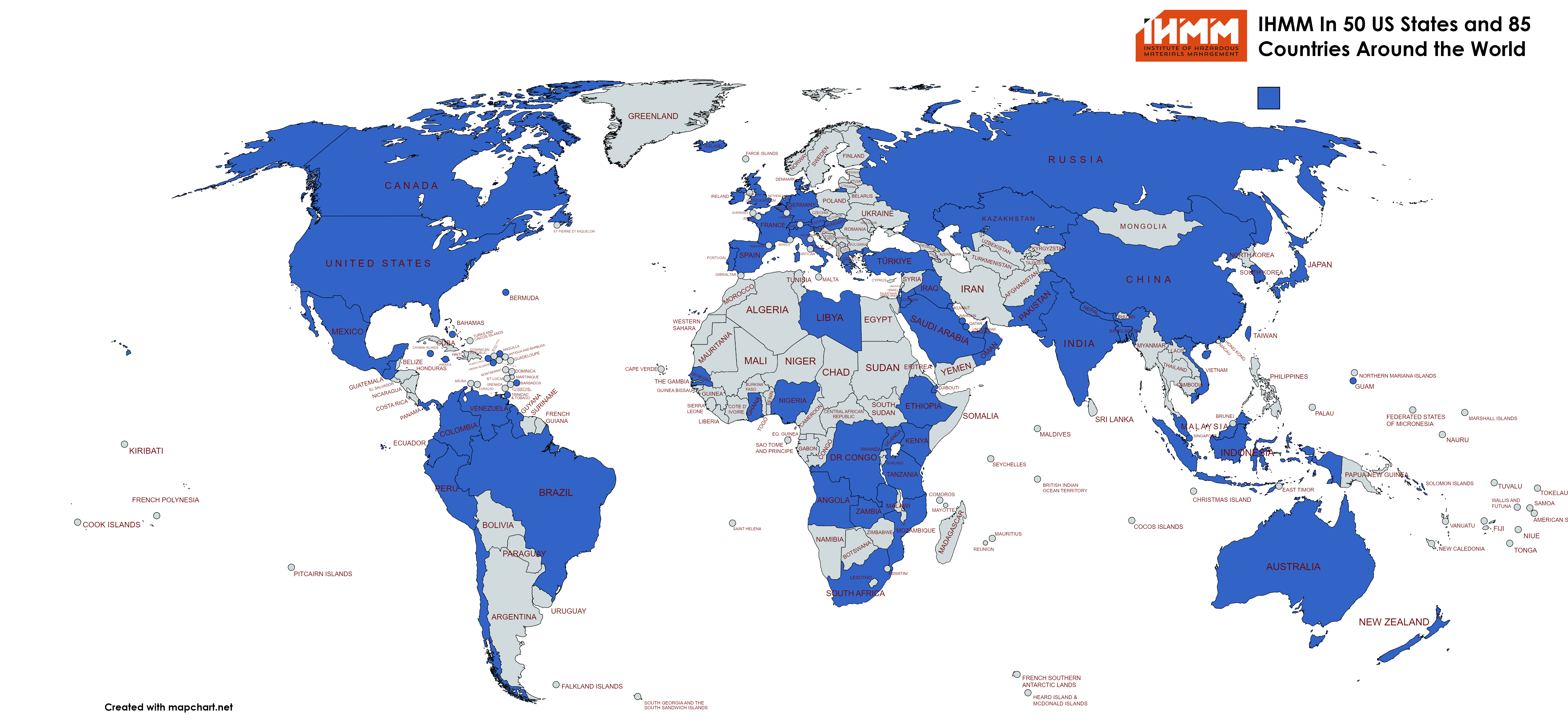
IHMM Global DG Transport Compliance Matrix (2025–2026)
IHMM Certificant Compliance Checklist
July 8-14, 2026
United States, Canada, and Mexico
This reporting period is particularly noteworthy because it coincides with the opening of the 68th Session of the United Nations Sub-Committee of Experts on the Transport of Dangerous Goods (UNSCOE TDG) in Geneva that concluded on July 8th. Although the Sub-Committee is an international body, its work ultimately drives amendments adopted by PHMSA in the United States, Transport Canada, Mexico’s Secretaría de Infraestructura, Comunicaciones y Transportes (SICT), the ICAO Technical Instructions, the IMDG Code, ADR, RID, and other international dangerous-goods regulatory systems. For all reports see > https://unece.org/transport/events/ecosoc-sub-committee-experts-transport-dangerous-goods-ac10c3-68th-session
For the period of July 8–14, 2026, dangerous-goods and hazardous-materials transportation policy in North America was shaped principally by the conclusion of the latest United Nations technical session, a significant U.S. special-permit deadline, implementation of PHMSA’s revised rules for certain energetic materials, and continuing Canadian and Mexican efforts to modernize their national systems in alignment with international standards.
The week did not produce a sweeping new North American hazardous-materials code. Its importance lies instead in the movement of international proposals toward the next edition of the UN Model Regulations and in national regulators’ increasing reliance on digital approvals, special permits, technical standards, and targeted controls for batteries, explosives, fuels, and liquefied petroleum gas.
United States
UN Sub-Committee Session Concludes
The 68th Session of the United Nations Sub-Committee of Experts on the Transport of Dangerous Goods concluded in Geneva on July 8. The session considered proposals involving batteries containing metallic sodium, portable tanks, energetic materials, sustainable packaging, electronic hazard communication, and the transport of meals containing small quantities of dangerous goods.
The United States participated directly in the session, including through a proposal addressing meals ready to eat containing small quantities of regulated materials. Although the Sub-Committee’s work does not immediately amend 49 C.F.R. Parts 171–180, its recommendations form the technical foundation for later revisions to the UN Model Regulations and subsequent PHMSA harmonization rulemakings.
Accordingly, the session’s conclusion marks the beginning of an important downstream process. U.S. shippers should expect emerging UN decisions to influence future requirements governing classification, packaging, marks, labels, documentation, batteries, portable tanks, and multimodal transportation.
PHMSA Special-Permit Deadline
A second important U.S. development is the July 13 deadline for comments on PHMSA’s June notices concerning new special-permit applications and agency actions on special permits.
Among the applications are requests involving the transportation of damaged, defective, or recalled lithium batteries and temporary relief relating to updated real-time train-consist requirements. Special permits are legally important because they allow PHMSA to authorize transportation methods that differ from the literal HMR where an equivalent level of safety is demonstrated.
For regulated entities, however, a special permit is not a general exemption. Its protections apply only to the holder and authorized parties operating strictly within its terms. Failure to comply with packaging, training, marking, documentation, or operational conditions may eliminate the permit’s protection and expose the operator to enforcement.
Energetic-Materials Rule Now Effective
PHMSA’s final rule streamlining approval requirements for certain energetic materials became effective July 2 and therefore governed operations throughout this reporting week. The rule simplifies classification and approval procedures for certain low-hazard fireworks, permits qualifying tracer ammunition to be self-classified as Division 1.4S, requires explosives-approval applications to be submitted through the PHMSA portal, and permits holders voluntarily to terminate approvals.
A delayed compliance date of August 31, 2026, applies to specified provisions. Companies handling fireworks, ammunition, or other explosives should use the intervening period to update approval procedures, portal access, training materials, and document-retention systems.
Registration Modernization
The 2026–2027 PHMSA hazardous-materials registration cycle is also underway. PHMSA continues moving toward an online-only registration and payment system through the Department of Transportation’s MOTUS platform.
The legal significance extends beyond administrative convenience. Registration records are increasingly part of PHMSA’s data-driven compliance and enforcement infrastructure. Regulated entities should ensure that registration information accurately reflects their activities, corporate identity, and applicable fee category.
Canada
International Harmonization Remains the Central Regulatory Direction
No major new Canadian TDG regulation was identified as having been published between July 8 and July 13. Nevertheless, Transport Canada’s active regulatory plan continues to place international harmonization at the center of the Canadian program.
Pending initiatives include amendments to Part 12 and international harmonization provisions, a broader “Canadian Update,” future modernization of shipping-document requirements, competency-based training amendments, and rules for transporting certain dangerous goods by remotely piloted aircraft.
The planned Canadian Update is expected to address dangerous-goods marks, classification information, shipping names, packing requirements, special provisions, rail buffer-car requirements, and alignment with other federal rules governing radioactive materials.
Electronic Documentation and Training
Transport Canada’s longer-term regulatory program also contemplates electronic shipping documents for rail and drone operations and possible future extension to road transportation. Canada continues coordinating with PHMSA and the UN Sub-Committee on harmonized electronic documentation.
Separate planned amendments would require clearer general-awareness and function-specific training and assessment. This development is legally significant because it would move Canadian training requirements toward a more demonstrable competency model rather than reliance on course attendance alone.
Means of Containment and Emergency Response
Canada’s TDG framework continues to depend heavily on standards incorporated by reference for highway tanks, portable tanks, cylinders, and other means of containment. Canadian consignors and carriers must therefore monitor changes in both the TDG Regulations and the technical standards incorporated into them.
CANUTEC also remains central to incident response. Companies should maintain current procedures for reporting releases, anticipated releases, losses, thefts, collisions, evacuations, and transportation closures where Part 8 reporting obligations are triggered.
Canadian Legal Assessment
The absence of a major new publication during the week should not be mistaken for regulatory inactivity. Canada remains in a substantial modernization cycle involving international alignment, technical standards, electronic documents, training competency, and risk-based oversight.
Mexico
National Standards Program Continues
No major new Mexican dangerous-goods NOM was identified as having been published during July 8–13. Mexico’s 2026 National Quality Infrastructure Program, however, continues to include dangerous-goods transportation projects, including contemplated amendments to the national hazardous-materials list and related packaging and containment requirements.
Mexico’s road-transport framework remains based substantially on the UN Recommendations but is implemented through nationally specific NOMs. Cross-border operators must therefore avoid assuming that every U.S. exception, shipping description, or identification number is automatically valid in Mexico.
LPG Transportation Controls
Transportation of liquefied petroleum gas remains a major Mexican regulatory priority. The emergency standard NOM-EM-006-ASEA-2025 established requirements for LP-gas transportation after the fatal Mexico City tanker explosion, including controls directed at vehicle integrity, leakage prevention, regulated speed, and continuous monitoring.
Those requirements continue to influence the development of permanent standards and enforcement practice. LPG carriers should expect continuing attention to tank inspection, driver qualifications, route controls, GPS monitoring, maintenance records, emergency equipment, and proof that the product was lawfully obtained and transported.
Limited Quantities and Cross-Border Compliance
Mexico also continues working on modernization of its limited-quantity regime. Although limited-quantity provisions can reduce some hazard-communication and packaging burdens, they are conditional exceptions. Misapplication can result in the shipment losing the benefit of the exception and becoming fully subject to marking, labeling, documentation, and packaging rules.
For U.S. and Canadian exporters, the practical lesson is that a shipment prepared under a domestic exception must be independently reviewed against the applicable Mexican NOM before crossing the border.
Important News and Compliance Developments
The principal dangerous-goods news event affecting all three North American jurisdictions was the July 8 conclusion of the UN Sub-Committee’s 68th Session. The session’s technical work will influence the next international amendment cycle and eventually flow into PHMSA regulations, Canada’s TDG Regulations, Mexican NOMs, the ICAO Technical Instructions, the IMDG Code, ADR, RID, and ADN.
In the United States, the July 13 special-permit deadline also placed damaged lithium batteries and digital train-consist requirements squarely within the week’s regulatory agenda.
No comparably significant, independently verified Canadian or Mexican transportation accident or new national rule was located for the July 8–13 portion of the reporting period. The material Canadian and Mexican developments were therefore principally regulatory-program and implementation matters rather than new incident-driven enactments.
Cross-Border Legal Themes
Several common themes define this reporting period.
First, international harmonization remains the dominant force. The UN Model Regulations continue to serve as the technical foundation for all three national systems.
Second, battery transportation remains a priority. Damaged lithium batteries, metallic-sodium batteries, sodium-ion technology, and battery-powered equipment continue generating proposals, special permits, and carrier restrictions.
Third, digital administration is expanding. PHMSA is modernizing registration and explosives approvals, while Canada is planning electronic shipping-document rules and Mexico continues developing digitally enforceable monitoring requirements for high-risk fuel movements.
Fourth, national differences remain legally controlling. Harmonization reduces inconsistency but does not eliminate jurisdiction-specific shipping names, exceptions, packaging rules, permits, reporting duties, and enforcement practices.
Fifth, conditional regulatory relief must be managed carefully. Special permits and limited-quantity exceptions protect only those shipments that satisfy every applicable condition.
Conclusion
For July 8–14, 2026, North American dangerous-goods transportation law was defined by the transition from international technical deliberation to national implementation.
The conclusion of the UN Sub-Committee’s 68th Session begins the next stage of global harmonization. PHMSA’s energetic-materials rule is now effective, special-permit comments close July 13, and hazardous-materials registration is becoming increasingly digital. Canada continues developing international-harmonization, electronic-documentation, training, and containment reforms. Mexico remains focused on modernizing UN-aligned NOMs while strengthening LP-gas and fuel-transport controls.
For regulated entities, the modern standard of care requires continuous monitoring of UN developments, defensible classification, precise adherence to special permits and exceptions, current registration, reliable technical documentation, verified containment integrity, competent personnel, and jurisdiction-specific cross-border review.
The UN session ran through July 8 and included proposals on metallic-sodium batteries, portable tanks, sustainable packaging, e-labelling, and a U.S. proposal concerning meals containing small quantities of dangerous goods.
PHMSA’s energetic-materials final rule took effect July 2, with delayed compliance for specified provisions until August 31, 2026. PHMSA’s special-permit comment period closes July 13; the applications include damaged lithium batteries and temporary train-consist relief.
PHMSA’s 2026–2027 registration cycle began July 1 and is moving toward electronic registration and payment through MOTUS. Transport Canada’s forward plan identifies international harmonization, Canadian-update, training, electronic-documentation, and drone-transport initiatives. Mexico’s 2026 standards program and LP-gas emergency standard support continued modernization and enhanced LPG controls.
Europe, Africa, Asia, and South America
For the period of July 8–14, 2026, dangerous-goods and hazardous-materials transportation policy across Europe, Africa, Asia, and South America was shaped by the conclusion of the 68th Session of the United Nations Sub-Committee of Experts on the Transport of Dangerous Goods, continuing implementation of ADR 2025 and IMDG Code Amendment 42-24, heightened maritime security risks involving petroleum and LNG cargoes, and growing use of digital transport records and traceability systems.
Because this article is prepared on July 13, references to July 14 are limited to scheduled or previously announced matters.
The International Regulatory Framework
The 68th Session of UNSCOE concluded in Geneva on July 8. The Sub-Committee considered technical proposals involving battery technologies, portable tanks, energetic materials, packaging sustainability, electronic hazard communication, and other matters that may ultimately be incorporated into the next edition of the UN Model Regulations.
UNSCOE recommendations do not amend ADR or national laws immediately. They instead begin a downstream process through which accepted technical changes may later appear in ADR, RID, ADN, the IMDG Code, the ICAO Technical Instructions, and national dangerous-goods regulations.
For regulated entities, this means that the July session should be treated as an early-warning mechanism. Proposals emerging from Geneva may become binding requirements in later amendment cycles, particularly for batteries, tanks, packaging, classification, and electronic documentation.
Europe
ADR 2025 Remains Controlling
ADR 2025 remains the governing framework for the international carriage of dangerous goods by road among Contracting Parties. No new ADR edition entered into force during this week, and the principal European regulatory development was the transition from the completed UNSCOE session toward the next phase of international and regional amendment work.
European shippers should continue applying ADR 2025 while monitoring future meetings of the RID/ADR/ADN Joint Meeting and UNECE Working Party WP.15. Those bodies will determine how accepted UN recommendations should be translated into road, rail, and inland-waterway requirements.
Current areas of particular importance include:
- Lithium-ion and sodium-ion batteries;
- Batteries installed in vehicles and equipment;
- Damaged and end-of-life batteries;
- Alternative-fuel vehicles;
- Portable tanks and pressure receptacles;
- Electronic transport documentation;
- Reverse logistics and waste movements.
Chemical Classification and Hazard Communication
The UN Sub-Committee on the Globally Harmonized System of Classification and Labelling of Chemicals met from July 8–10. Although the GHS is not itself a transport code, changes to chemical classification and hazard communication can influence safety data sheets, workplace controls, emergency planning, and the information used to classify materials for transportation.
Businesses should therefore ensure that transportation classifications, safety data sheets, product labels, and emergency-response information remain internally consistent. Conflicting hazard descriptions across these systems can create both enforcement and liability exposure.
Important News: Wildfire Threatens a Munitions Facility
On July 8, a wildfire in central France threatened a KNDS facility associated with munitions production, creating concern over the possibility of explosions. The incident illustrates the close relationship among transportation, storage, manufacturing, and emergency-management controls for explosive materials.
Although the immediate event involved a fixed facility, any evacuation, relocation, or emergency movement of explosives would require strict compliance with dangerous-goods classification, packaging, vehicle, routing, security, and competent-authority requirements.
Assessment
Europe remains in an implementation and forward-planning phase. ADR 2025 controls present operations, but the completed UNSCOE session provides an early indication of issues likely to shape later ADR amendments.
Asia
LNG Tanker Attack Raises Maritime Dangerous-Goods Risks
The most significant dangerous-goods transportation news of the week arose near the Strait of Hormuz. On July 8, a Qatari LNG tanker remained stranded off Oman after a projectile strike caused an engine-room fire.
The vessel’s LNG containment tanks were reportedly intact, and its crew was evacuated. Nevertheless, the incident demonstrated the catastrophic potential of an attack on an LNG carrier and led maritime authorities to characterize the regional transit risk as severe.
The International Maritime Organization urged vessels to avoid the Strait of Hormuz while crew safety could not be assured. Tanker traffic through the strait had already fallen substantially.
Legal Significance
The incident demonstrates that route security has become an essential component of dangerous-goods compliance. Owners, charterers, cargo interests, and operators should review:
- Voyage risk assessments;
- War-risk insurance;
- Charter-party allocation of delay and deviation costs;
- Emergency towing and salvage arrangements;
- Crew evacuation plans;
- Port-of-refuge procedures;
- Security information supplied to masters;
- Contracts governing cargo delay, transshipment, and disposal.
Technical compliance with the IMDG Code does not eliminate the duty to consider whether a route can be used safely.
Batteries and Air Transportation
Asia remains the principal global manufacturing and export center for batteries and battery-powered products. Airlines, airports, and freight forwarders continue applying the 2026 ICAO and IATA requirements concerning lithium-ion and sodium-ion batteries, including test evidence, state-of-charge restrictions, packaging, segregation, and documentation.
China’s civil-aviation authorities also continue applying strengthened controls over large lithium batteries and power banks. Exporters should ensure that UN 38.3 evidence, battery test summaries, safety documentation, package approvals, and carrier-specific acceptance requirements are available before tendering cargo.
Assessment
The Asian compliance environment is being shaped simultaneously by battery risk and maritime-security risk. Both require operational controls that extend beyond the literal text of domestic transport regulations.
Africa
International Standards Continue to Supply the Practical Baseline
No major continent-wide dangerous-goods enactment was identified during this reporting period. African dangerous-goods regulation remains primarily national and modal, with road, aviation, maritime, customs, environmental, and port authorities applying requirements derived from the UN Model Regulations, ICAO Technical Instructions, IMDG Code, and national standards.
South Africa’s road-transport framework, for example, continues to rely on the National Road Traffic Act and related South African National Standards governing the safe carriage of hazardous materials.
Enforcement Through Ports, Carriers, and Customs Authorities
Across much of Africa, practical compliance is determined by whether cargo satisfies:
- Port and terminal acceptance procedures;
- IMDG documentation and segregation rules;
- Customs declarations;
- Airline dangerous-goods restrictions;
- Vehicle and driver requirements;
- Emergency-response expectations;
- Environmental permits applicable to dangerous products or waste.
A shipment that technically satisfies a limited domestic requirement may still be refused if it does not meet the applicable international carrier or port standard.
Important News Assessment
No comparably significant and independently verified Africa-specific dangerous-goods transportation accident or new regional rule was identified for July 8–13. The principal African issue therefore remained implementation and enforcement of existing national and internationally derived requirements.
Assessment
Operators should not interpret the absence of a new statute as an absence of risk. In many African trade lanes, port, airline, customs, and carrier conditions provide the most immediate and commercially consequential form of dangerous-goods enforcement.
South America
Colombia Implements New RNDC Obligations
Colombia’s Ministry of Transport held training on July 9 concerning new obligations under Decree 1017 of 2025 and Resolution 20263040016075, which updated and consolidated the legal framework governing the Registro Nacional de Despachos de Carga.
The RNDC framework requires detailed electronic information concerning road-freight movements. Where dangerous goods or hazardous waste are transported, records must include the applicable United Nations coding.
This is legally significant because electronic records provide regulators with a direct means to compare:
- Cargo descriptions;
- UN numbers;
- Reported quantities;
- Carriers and vehicles;
- Freight documents;
- Routes and travel records;
- Generator and consignee information.
Inaccurate digital entries may therefore expose an operator not only to transportation penalties but also to environmental, commercial, customs, and evidentiary consequences.
Brazil Maintains Documentation and Certification Controls
Brazil continues applying ANTT Resolution No. 5.998/2022 to road transportation of dangerous products. ANTT’s current guidance emphasizes transport documentation and, for bulk movements, valid certificates concerning dangerous-products transport equipment, vehicle inspection, and related approvals.
Brazil is also reviewing the regulation under its 2025–2026 regulatory agenda to maintain convergence with international standards. Operators should monitor that review rather than assuming that the existing resolution will remain static.
Environmental Authorization
Brazilian dangerous-products movements may also require environmental authorization. Certain substances, including charcoal classified as UN 1361, may trigger both dangerous-goods transportation requirements and separate environmental or forestry documentation.
This overlap illustrates why transport compliance cannot be managed in isolation from environmental law.
Argentina and the MERCOSUR Framework
Argentina continues operating within the UN-aligned MERCOSUR framework for inland dangerous-goods transportation. National implementing requirements remain controlling, including vehicle, driver, documentation, inspection, and enforcement provisions.
Assessment
South America is moving steadily toward data-driven enforcement. Colombia’s RNDC system is the clearest example, while Brazil continues combining technical transport controls with equipment certification and environmental authorization.
Cross-Regional Legal Themes
Five themes define this reporting period.
First, UNSCOE has completed a major technical session, beginning the next stage of international dangerous-goods harmonization.
Second, battery transportation remains a principal regulatory driver across road, air, rail, and maritime modes.
Third, route security is now part of dangerous-goods risk management, particularly for petroleum and LNG cargoes moving through conflict-affected waters.
Fourth, digital documentation is becoming an enforcement tool rather than merely an administrative convenience.
Fifth, transport law increasingly overlaps with environmental, workplace-safety, customs, security, and emergency-management requirements.
Conclusion
For July 8–14, 2026, dangerous-goods transportation law across Europe, Africa, Asia, and South America was defined by the transition from UNSCOE technical deliberation to future regional implementation.
Europe continues applying ADR 2025 while preparing for later amendments. Asia faces acute maritime-security and battery-transport risks. Africa continues relying heavily on nationally implemented international standards and operational enforcement. South America is strengthening digital traceability, documentation, equipment certification, and environmental controls.
For regulated entities, the modern standard of care requires continuous monitoring of international technical developments, defensible classification, accurate electronic records, current battery evidence, route-security analysis, verified equipment integrity, competent personnel, and coordinated emergency-response planning.
Source verification
UNSCOE’s 68th Session ran from June 30 through July 8, 2026; the next session is scheduled for December. The GHS Sub-Committee met July 8–10.
The July 8 French wildfire threatened a munitions-production site and created an explosion concern.
The Qatari LNG tanker Al Rekayyat was struck near the Strait of Hormuz, suffered an engine-room fire, and awaited salvage off Oman; the LNG tanks reportedly remained intact, while the IMO urged avoidance of the strait until crews could transit safely.
South Africa identifies the National Road Traffic Act and associated SANS standards as part of its road dangerous-goods framework.
Colombia announced July 9 training on new RNDC obligations, and Resolution 20263040016075 requires UN coding for dangerous goods and hazardous waste in applicable records.
Brazil’s ANTT guidance identifies documentation and bulk-transport certification requirements under Resolution No. 5.998/2022; the regulation remains part of ANTT’s 2025–2026 review agenda.
Brazil’s environmental guidance states that transportation of dangerous products may require federal environmental authorization and specifically addresses charcoal classified as UN 1361, Class 4.2.

Leave A Comment